
On this page
- Choose your model
- Step 1: Pick the products
- Step 2: Know the rules
- Step 3: Set up suppliers
- Step 4: Build an online store pet owners like using
- Step 5: Deliver heavy bags without losing money
- Step 6: Turn first orders into regular orders
- Step 7: Get your first customers
- Mistakes to avoid
- Your pet store checklist
- How Zepio helps
To start an online pet store in India, build your range around what pet owners buy every month, such as food, treats and cat litter, add accessories and toys, and win on fast local delivery and easy reordering. Check two rules early: veterinary medicines need a drug licence, and selling live animals needs registration with your State Animal Welfare Board.
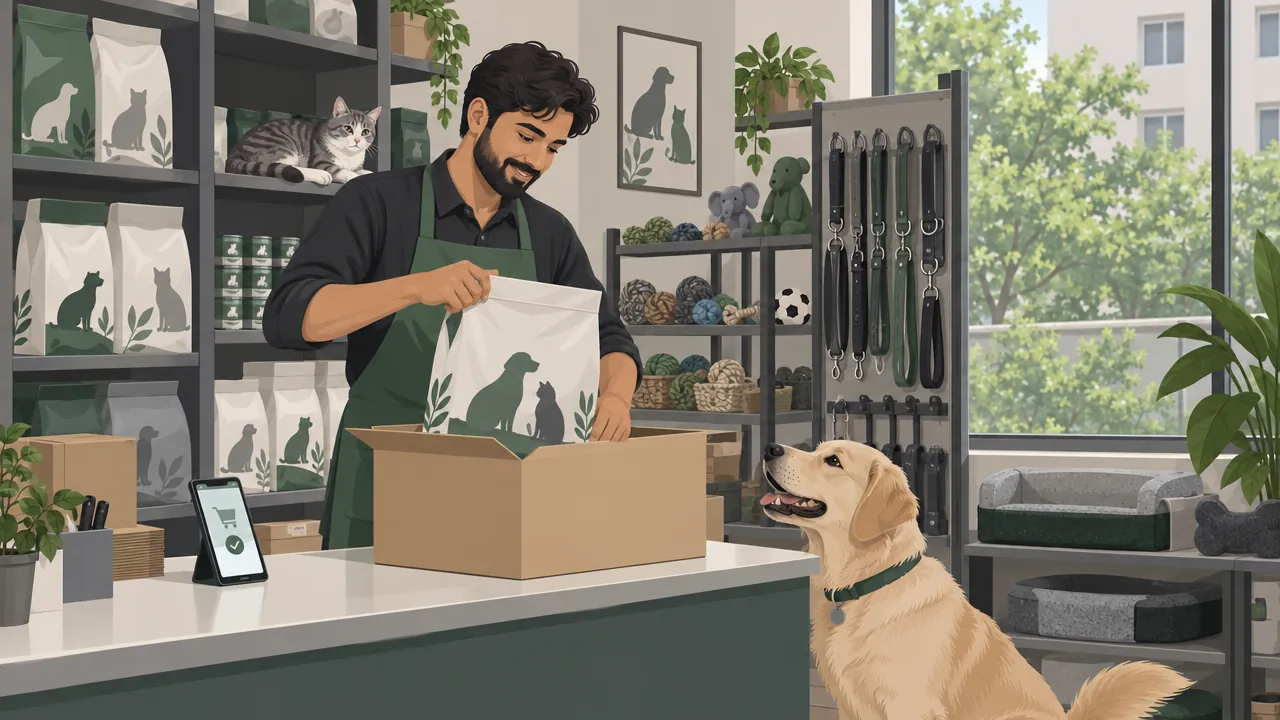
An online pet store sells pet food, supplies and accessories through a website or app, with delivery to customers' homes. This guide covers what to stock, the rules that apply, how to deliver heavy bags profitably, and how to turn first orders into regular ones.
Choose your model
| Model | What you sell | Good for |
|---|---|---|
| Local pet supplies store | Food, treats, litter, grooming, accessories, delivered in your city | New sellers who want repeat orders and fast delivery |
| Specialist brand | Your own treats, beds, collars or apparel, shipped across India | Makers with a distinct product |
| Pet shop with animals | Supplies plus live animals | Only with State Animal Welfare Board registration |
| Pet pharmacy | Veterinary medicines and supplements | Only with a drug licence and a pharmacist |
The local supplies store is the simplest place to start: customers need food every month, and a heavy bag delivered the same day is worth paying for.
Step 1: Pick the products
Start small with what sells repeatedly, then widen.
| Category | Examples | Why |
|---|---|---|
| Core (repeat) | Dog and cat dry food, wet food, treats, cat litter | Bought every few weeks; brings people back |
| Care | Shampoo, combs, tick and flea products (non-prescription), poop bags | Added to food orders |
| Accessories | Collars, leashes, bowls, beds, carriers | Higher margin, bought less often |
| Toys | Chew toys, balls, cat scratchers | Gifts and impulse buys |
Stock the brands your local customers already ask for, in two or three bag sizes. Ask local vets, groomers and pet parents in your area which brands they use. Our guide to managing inventory shows how to set reorder points for fast-moving food.
Step 2: Know the rules
| What you sell | What applies |
|---|---|
| Pet food | BIS's standard for dog and cat food, IS 11968:2019, is a product specification (BIS). A 2023 analysis by law firm Cyril Amarchand Mangaldas called it voluntary and said there were no mandatory standards for domestic pet food production (Cyril Amarchand Mangaldas) |
| Veterinary medicines | Under the Drugs and Cosmetics Act, 1940 and the Drugs Rules, 1945, anyone who sells, stocks or distributes veterinary drugs needs a licence; retail sale of drugs generally uses a licence in Form 20 (same source) |
| Live animals | Under the Prevention of Cruelty to Animals (Pet Shop) Rules, 2018, nobody may operate a pet shop without a certificate of registration from the State Animal Welfare Board. The application fee is ₹5,000, the certificate is valid for five years, and the definition of a pet shop includes online platforms for selling pet animals (Pet Shop Rules) |
| GST | Register once you cross the threshold or sell to other states; see how to sell online without GST. Ask your accountant for the current rate for each category |
Warning: Meta's commerce policies prohibit selling animals on Facebook and Instagram (Meta). If you sell supplies, keep your posts to products.
Step 3: Set up suppliers
- Brand distributors in your city for the main food brands. Ask about minimum order, credit days and delivery days.
- Local makers for treats, beds and accessories, which can give you products the big stores do not have.
- Check dates on every delivery of food and treats, and sell the stock that expires first.
- Keep supplier invoices for every product, so you can trace any batch if a customer has a problem.
Step 4: Build an online store pet owners like using
Organise your store by pet type, life stage and size, the way pet food is labelled:
- Shop by pet: Dog, Cat, Bird, Fish.
- Then by need: Food, Treats, Litter, Grooming, Toys, Accessories.
- Filters: puppy or adult, breed size, veg or non-veg, grain-free.
- Variants: one product page per food with bag sizes and flavours as options.
- Clear photos of the bag front and the nutrition panel; see how to take product photos with a phone.
Step 5: Deliver heavy bags without losing money
A 10 kg bag of dog food is heavy and bulky. Delivery is where pet stores win or lose.
| Approach | How |
|---|---|
| Own delivery in your city | A delivery partner on a scooter can carry a few bags per trip; plan routes by area |
| Free delivery threshold | "Free delivery above ₹999" nudges customers to add treats or litter |
| Weight-based charges | Charge more for orders above a certain weight |
| Courier for far customers | Use courier rates based on weight; see shipping across India |
Our guides on setting delivery charges and planning delivery routes show how to keep delivery profitable.
Step 6: Turn first orders into regular orders
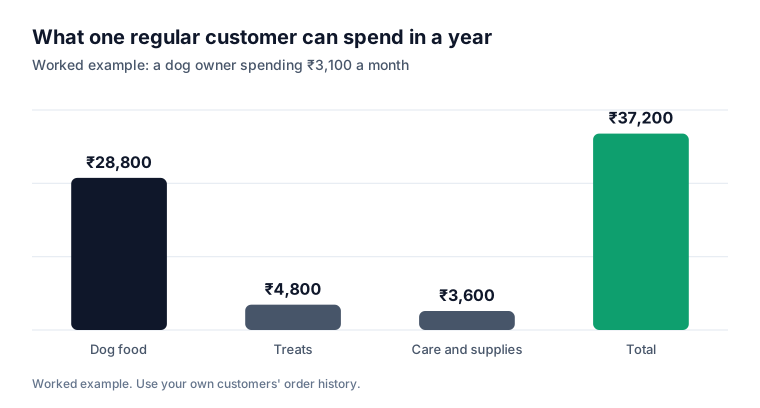
A pet eats every day, so a customer who orders once should order again. Here is a worked example of what one regular dog-owning customer can be worth:
| Item | Per month | Per year |
|---|---|---|
| Dog food | ₹2,400 | ₹28,800 |
| Treats | ₹400 | ₹4,800 |
| Care and other supplies | ₹300 | ₹3,600 |
| Total | ₹3,100 | ₹37,200 |
These are example figures; use your own customers' order history. The point stands: keeping one regular is worth far more than one order.
How to keep them:
- Easy reordering of what they bought before.
- A reminder around when the bag is likely to run out.
- Reward points on every order. Our guide to getting repeat customers explains how.
- Push notifications about new treats or restocks, sent sparingly: see push notification ideas.
Step 7: Get your first customers
- Vets, groomers and boarding centres: offer a discount code for their clients, or a small display.
- Apartment and community groups: a launch offer on free delivery.
- Google Business Profile if you have a shop or pickup point: see getting your business on Google Maps.
- Instagram: post short videos of new products, and repost customers' photos of their pets with permission. See how to sell on Instagram.
Mistakes to avoid
Too many brands too soon. Money gets stuck in slow bags. Start with what customers ask for.
Ignoring expiry dates. Pet food and treats expire; sell the oldest dates first.
Selling medicines without a drug licence. Keep prescription veterinary drugs out unless you are licensed.
Selling animals without registration. The Pet Shop Rules apply online too.
Flat delivery charges on heavy orders. A free 15 kg delivery across town can wipe out the margin.
Your pet store checklist
- Model chosen: supplies, own brand, animals (registered) or pharmacy (licensed)
- Core repeat products in two or three sizes; accessories and toys added
- Distributors and local makers lined up; invoices kept
- Store organised by pet, need and size, with variants and clear photos
- Delivery charges set by area, weight and a free delivery threshold
- Easy reordering, reminders and reward points ready
- Vets, groomers and local groups contacted
How Zepio helps
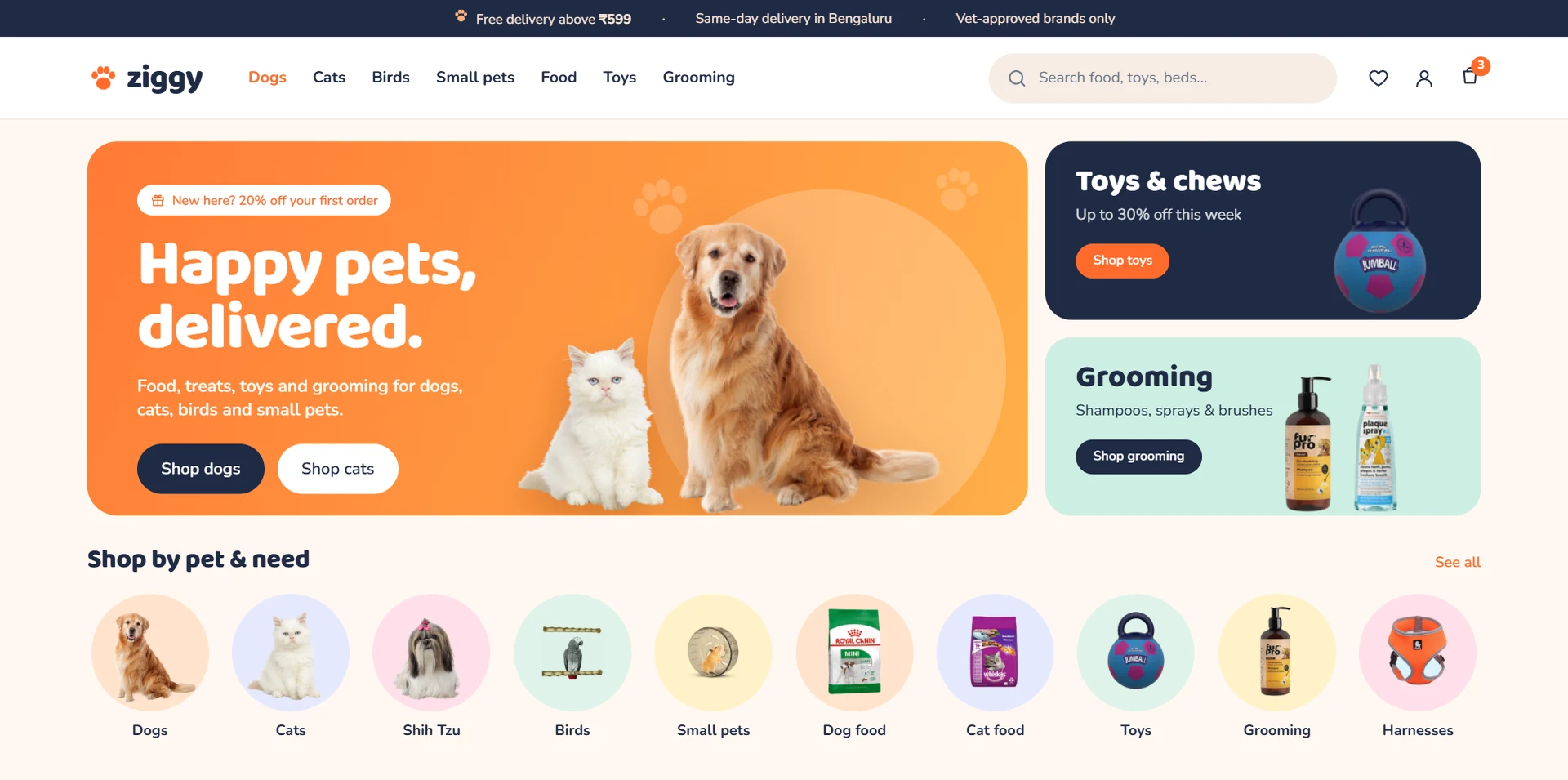
Zepio includes a ready pet store design, Pawsy, with a live demo. Products can have variants such as bag size and flavour, attributes such as life stage and breed size, and collections by pet type. Customers get an Order again page listing products they bought before and reward points on your website and your own Android app, with push notifications in the app and an iPhone app as an add-on. Run deliveries with your own team, with charges by distance or weight and a free delivery threshold, and 0% commission on your sales.
Stock what pets need every month, deliver it fast, and make reordering effortless. That is how a local pet store builds a loyal customer base.
Questions people ask
Do I need a licence to start an online pet store in India?
Is pet food regulated by FSSAI?
Can I sell puppies or kittens online?
What sells best in an online pet store?
How do I compete with big online pet stores?
Sources
- Barking up the right tree: a closer look at India's pet care sector and regulatory grey areas, Cyril Amarchand Mangaldas
- IS 11968:2019 standard details, Bureau of Indian Standards
- Prevention of Cruelty to Animals (Pet Shop) Rules, 2018, LegitQuest (text of the rules)
- Commerce Policies, Meta
Facts were checked against these sources on 22 Oct 2026. Rules and prices change: check the source before you rely on a figure. Read our editorial standards, or write to hi@zepio.io to report a mistake.