
On this page
- Step 1: Choose your recipes
- Step 2: Register with FSSAI
- Step 3: Label every jar correctly
- Step 4: Understand GST
- Step 5: Price every jar from its full cost
- Step 6: Pack so nothing leaks
- Step 7: Sell online
- Step 8: Keep quality the same every batch
- Mistakes to avoid
- Your pickle business checklist
- How Zepio helps
To start a pickle business from home, register with FSSAI, perfect two or three recipes people already love, label every jar with the details the rules require, pack jars so oil cannot leak, price from the full cost of each jar, and sell through your own website, WhatsApp and Instagram. Start in your city, then ship further once your packing is reliable.
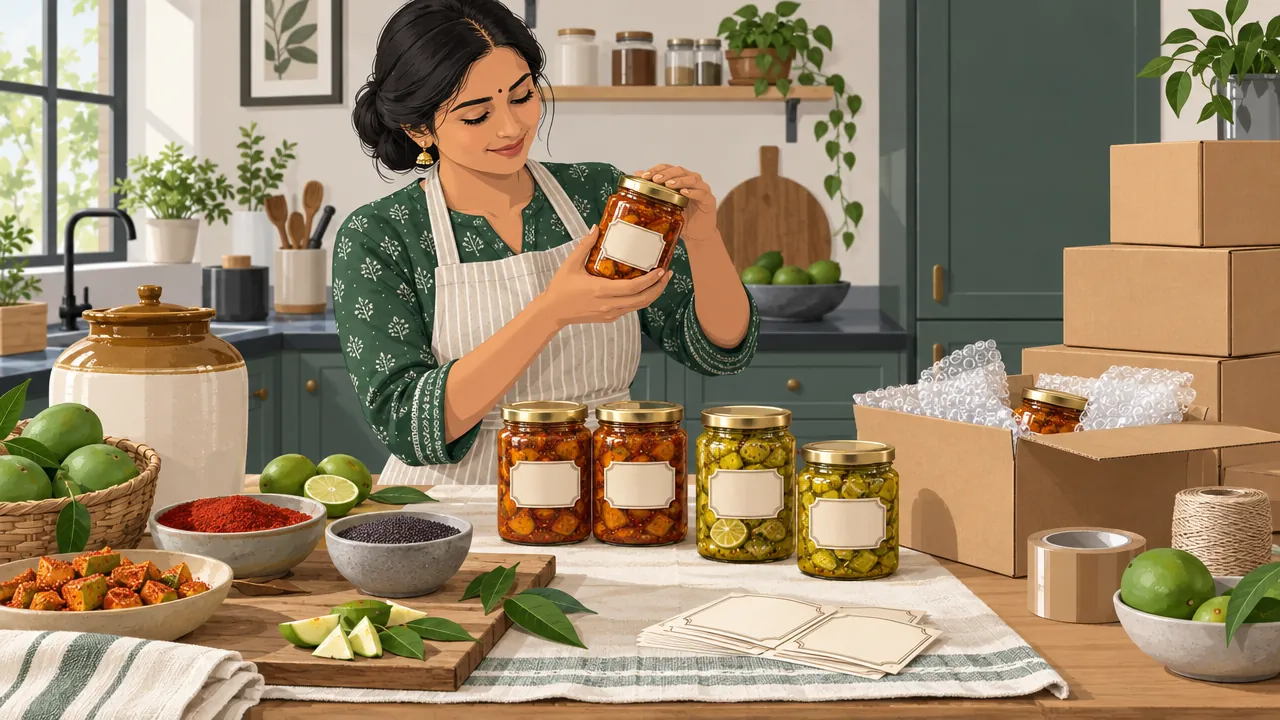
A home pickle business makes pickles in a home kitchen and sells them in jars, locally or by courier. Pickles keep well and travel, which makes them one of the easier homemade foods to sell online, as long as the jars arrive sealed and clean.
Step 1: Choose your recipes
Start narrow. Two or three pickles you make exceptionally well beat fifteen average ones.
- A signature pickle tied to your region: Andhra avakaya, Punjabi mixed, Kerala lime, Rajasthani ker sangri.
- A safe best-seller: mango or lemon.
- One seasonal special: amla in winter, fresh mango in summer.
Write down each recipe with exact weights, oil, salt and curing time, so every batch tastes the same.
Step 2: Register with FSSAI
From 1 April 2026, food businesses with turnover up to ₹1.5 crore need basic registration instead of a licence (FSSAI). Registrations issued from that date have perpetual validity, and the fee is ₹100 a year. Law firm S.S. Rana notes that businesses moving to a new category should update the number on labels and invoices (S.S. Rana).
Our guide to FSSAI registration for a home food business walks through the FoSCoS application.
Step 3: Label every jar correctly
Pickles sold in jars are pre-packed goods, so two sets of rules apply.
Legal Metrology declarations (Rule 6(1) of the Packaged Commodities Rules), as summarised by S.S. Rana (S.S. Rana):
| Declaration | Example |
|---|---|
| Name and address of the manufacturer or packer | Your name and kitchen address |
| Country of origin | India |
| Common or generic name | Mango pickle |
| Net quantity | 500 g |
| Month and year of manufacture | 10/2026 |
| Best before or use-by date | 9 months from manufacture |
| MRP inclusive of all taxes | ₹350 |
| Unit sale price | ₹0.70 per g |
| Consumer care details | Phone and email |
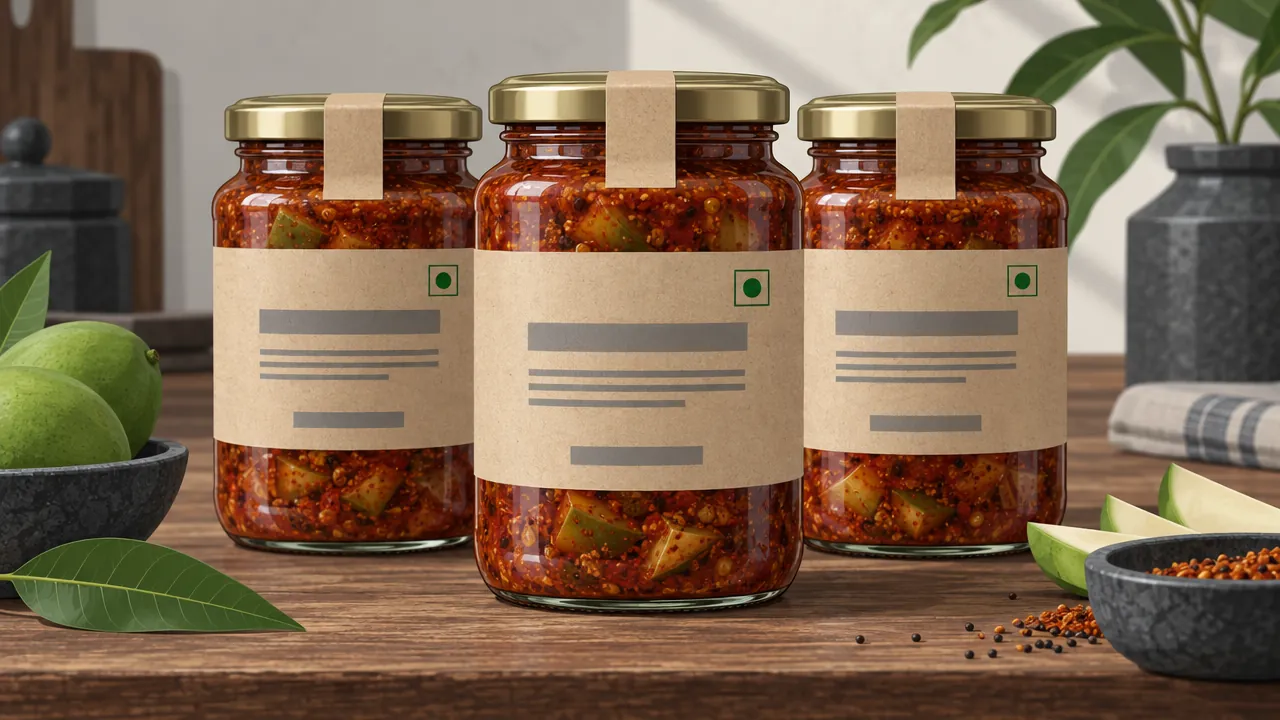
FSSAI label details include the ingredients list, the veg symbol (a green filled circle in a green square), and your FSSAI registration number.
Online, show the same details. Rule 6(10) requires e-commerce sellers to display these declarations on the website (S.S. Rana), and FSSAI's Labelling and Display Regulations say packaged food sold online must show its mandatory label information before sale, except batch number and dates (FSSAI).
Step 4: Understand GST
Under the rates in force from 22 September 2025, vegetables and fruit preserved by vinegar, and other preserved vegetables, are in the 5% slab (CMA Knowledge). Ask your accountant to confirm the HSN code for each of your pickles.
If your turnover is below the GST threshold and you sell only within your state, you may not need to register yet. Selling goods to other states generally requires GST registration whatever your turnover; check with your accountant. See how to sell online without GST.
Step 5: Price every jar from its full cost
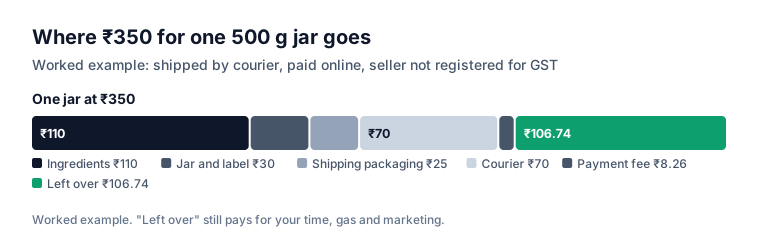
Worked example for a 500 g jar sold at ₹350, shipped by courier, seller not registered for GST:
| Item | Amount |
|---|---|
| Ingredients (mango, oil, spices, salt) | ₹110 |
| Glass jar, lid, inner seal and label | ₹30 |
| Bubble wrap, bag and box | ₹25 |
| Courier | ₹70 |
| Payment fee (2% plus 18% GST on the fee) | ₹8.26 |
| Left over for your time, gas and profit | ₹106.74 |
In this example, courier is the biggest cost after ingredients. Offer combos (two or three jars in one box) and a free shipping threshold so the courier cost is shared across more jars. Our guide on pricing your products covers the method.
Step 6: Pack so nothing leaks
A leaking jar ruins the parcel, the courier's mood and your review.
- Fill below the neck, leaving space for oil to move.
- Wipe the rim and threads clean and dry.
- Add an inner seal or a layer of food-grade film under the lid.
- Close tightly and tape the lid around its edge.
- Put the jar in a sealed zip-lock bag so any leak stays inside.
- Wrap in bubble wrap and pack upright in a box with cushioning on every side.
- Mark the box "Glass, this side up".
Test by shaking a packed box and leaving it on its side overnight. Our guide on shipping products across India covers couriers, weights and cash on delivery.
Step 7: Sell online
- Your own website with clear photos, jar sizes, ingredients and the label details; see writing product descriptions.
- Instagram Reels of pickles being made in season; see how to sell on Instagram.
- WhatsApp for repeat customers; see selling on WhatsApp Business.
- Festive gift boxes for Diwali and weddings; see Diwali marketing ideas.
- Sampling: small 100 g jars at local events or with orders.
Step 8: Keep quality the same every batch
- Use the same suppliers for oil and spices.
- Dry everything: jars, spoons and raw fruit. Moisture spoils pickles.
- Keep a batch log: date, quantities, who made it.
- Taste-test every batch before jarring.
- Sell oldest batches first.
Mistakes to avoid
Too many varieties. Each one needs its own ingredients, labels and stock.
Handwritten labels without the required details. They look homemade in the wrong way and miss what the rules require.
Shipping without a leak test. One oily parcel can mean a refund and a bad review.
Ignoring courier cost. In the worked example it is a fifth of the price of a single jar.
Forgetting the online label details. Show ingredients, net quantity and MRP on the product page too.
Your pickle business checklist
- Two or three recipes written down with exact weights
- FSSAI basic registration done
- Labels with all Legal Metrology declarations, ingredients, veg symbol and FSSAI number
- Same details on every product page
- GST position checked with your accountant
- Each jar priced from ingredients, jar, packing, shipping and payment fee
- Leak-proof packing tested
- Website, Instagram and WhatsApp set up; festive boxes planned
How Zepio helps
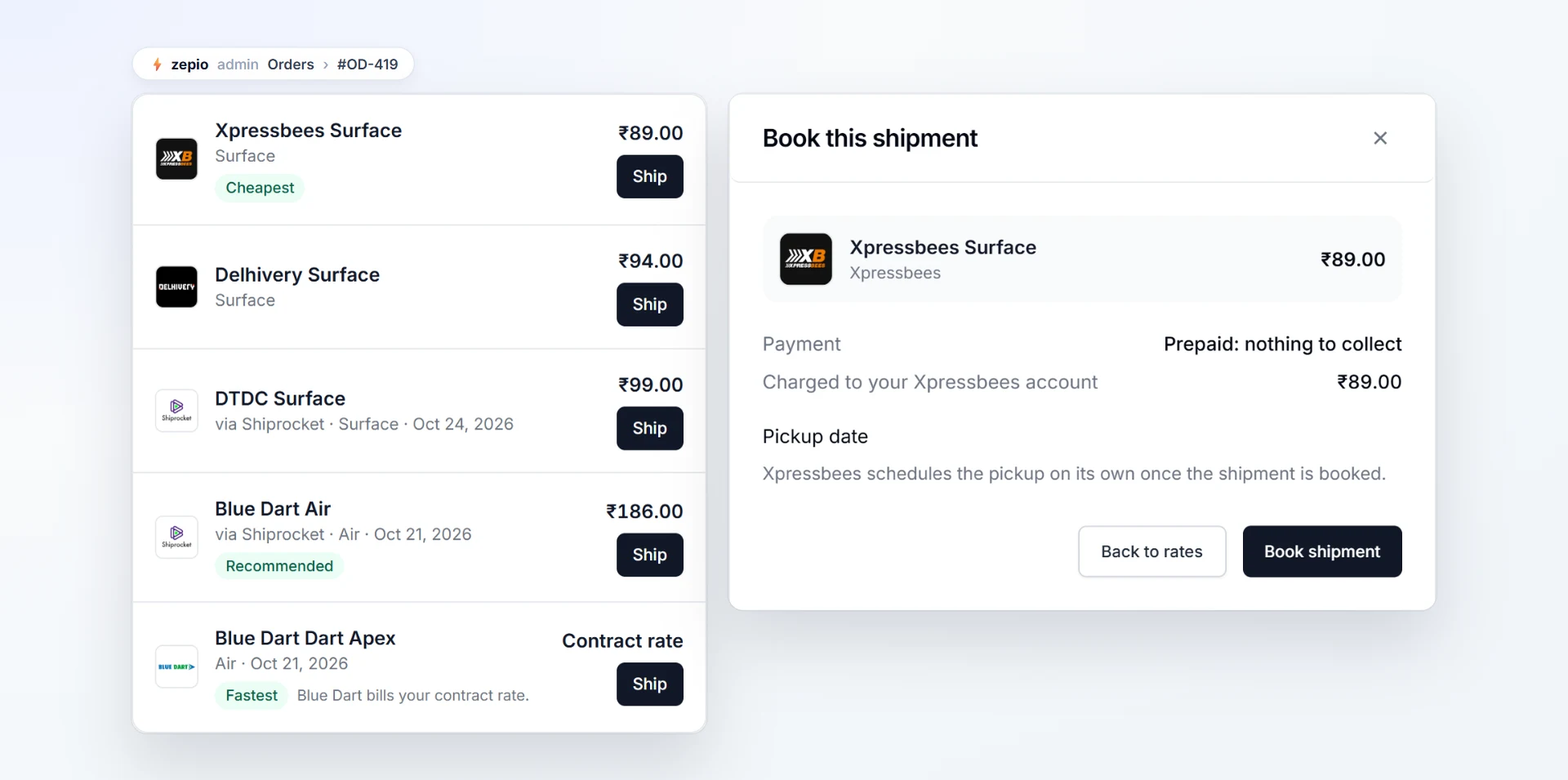
With Zepio you sell pickles from your own website and app with 0% commission on your sales. Offer jar sizes as variants, show ingredients and other details as product attributes, mark products as vegetarian, and set the HSN code and tax for each product when you register for GST. Ship across India through courier partners connected to your own courier accounts, with rates per order and tracking for customers, or deliver locally with your own team.
Great recipes, honest labels and jars that arrive clean. That is how a home pickle business earns repeat orders from across the country.
Questions people ask
Do I need FSSAI registration to sell homemade pickles?
What is the GST rate on pickles?
What should a pickle jar label include?
How do I ship pickles without leakage?
How much can I earn from a pickle business?
Sources
- Order: Implementation of revised turnover threshold for food businesses (13 March 2026), FSSAI
- FSSAI raises turnover limits for food business registration and licensing, S.S. Rana & Co.
- GST rate update September 2025: schedule-wise tables as per Notification 9/2025, CMA Knowledge
- Legal Metrology compliance for e-commerce businesses, S.S. Rana & Co.
- Compendium: Food Safety and Standards (Labelling and Display) Regulations, 2020, FSSAI
Facts were checked against these sources on 22 Oct 2026. Rules and prices change: check the source before you rely on a figure. Read our editorial standards, or write to hi@zepio.io to report a mistake.