
On this page
- Bottler or distributor?
- Step 1: Know the rules in 2026
- Step 2: Understand GST on water
- Step 3: Work out the margin per can
- Step 4: Take deposits and track empties
- Step 5: Find customers who order every week
- Step 6: Run dense delivery rounds
- Step 7: Take orders without the phone ringing all day
- Mistakes to avoid
- Your water can business checklist
- How Zepio helps
To start a 20 litre water can delivery business, first decide whether you will bottle water or distribute sealed cans from a licensed bottler. Starting as a distributor needs far less investment. Get FSSAI registration, take a refundable deposit on every can, run fixed delivery rounds for homes and offices, and track empties so cans come back. Margins per can are small; dense routes make the money.
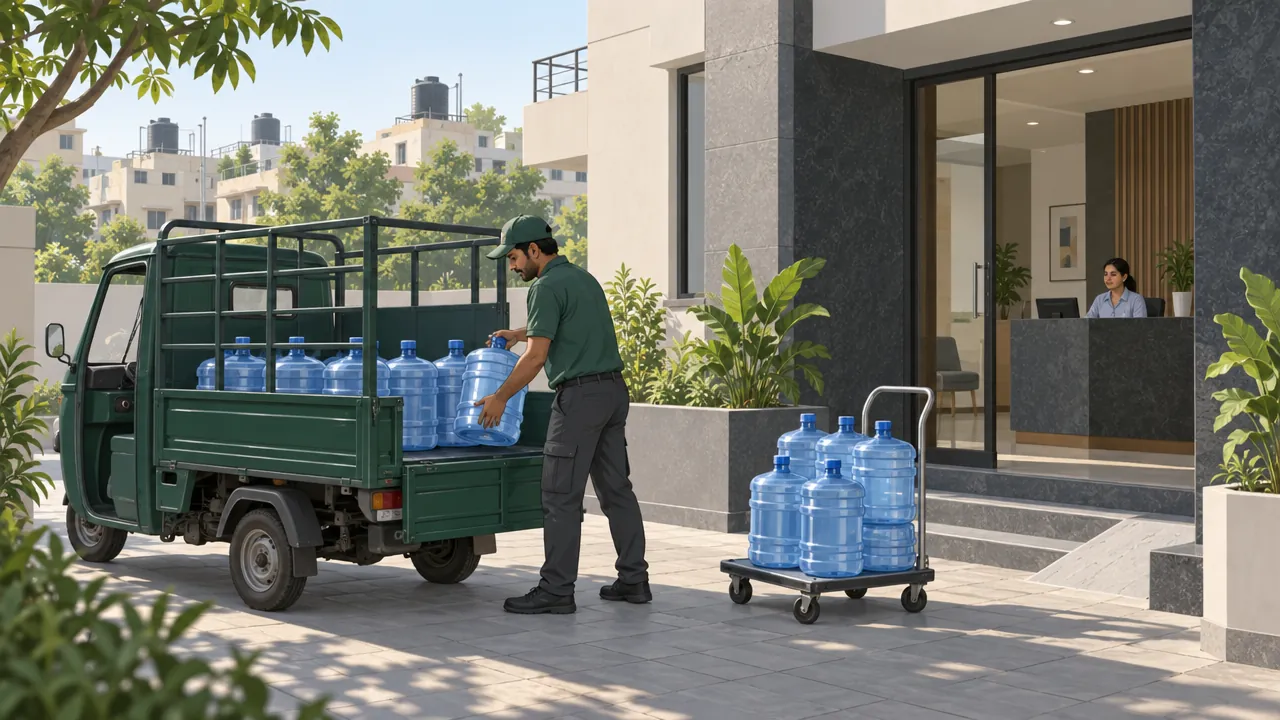
A water can delivery business supplies sealed 20 litre jars of packaged drinking water to homes, offices, shops and clinics, and collects the empties for refilling by the bottler. This guide covers the rules in 2026, the economics per can and how to run the rounds.
Bottler or distributor?
| Bottler (manufacturer) | Distributor | |
|---|---|---|
| What you do | Treat, test and fill water into cans | Buy sealed cans from a bottler and deliver them |
| Investment | Plant, testing lab or tie-up, licence | Vehicle, stock of cans, storage space |
| Main rules | FSSAI licence and FSSAI's testing scheme for packaged water | FSSAI registration or licence by turnover |
| Risk | Water quality and testing | Lost cans, unpaid accounts, route costs |
This guide is mainly for distributors. If you plan to bottle, talk to a food safety consultant about FSSAI's licensing and testing requirements before you invest.
Step 1: Know the rules in 2026
BIS mark no longer required. FSSAI removed the mandatory BIS certification by a gazette notification of 17 October 2024, and its December 2025 notice confirms that the mandatory Bureau of Indian Standards certification mark is no longer required for packaged drinking water and mineral water (FSSAI).
A testing scheme for bottlers. In its place, FSSAI directed packaged water businesses to follow a scheme of testing from 1 January 2026, including monthly tests for coliform bacteria. If a microbiological test fails, the bottler may restart dispatch only after five consecutive batches pass (same source).
Containers. The same scheme says bottlers that reuse containers may refill only plastic containers of 5 litres and above, or glass bottles, that are durable and easy to clean, and must stop using containers that become soiled, misshapen or damaged (same source).
A high-risk category. FSSAI's 2026 FAQs say businesses manufacturing packaged drinking water must keep complying with hygiene, safety and testing requirements under the new registration limits (FSSAI).
Your FSSAI registration as a distributor. From 1 April 2026, basic registration covers turnover up to ₹1.5 crore (FSSAI). See FSSAI registration for a home food business for how to apply.
Tip: Ask your bottler for its FSSAI licence number and recent test reports, and keep copies. Your customers trust the water because they trust you.
Step 2: Understand GST on water
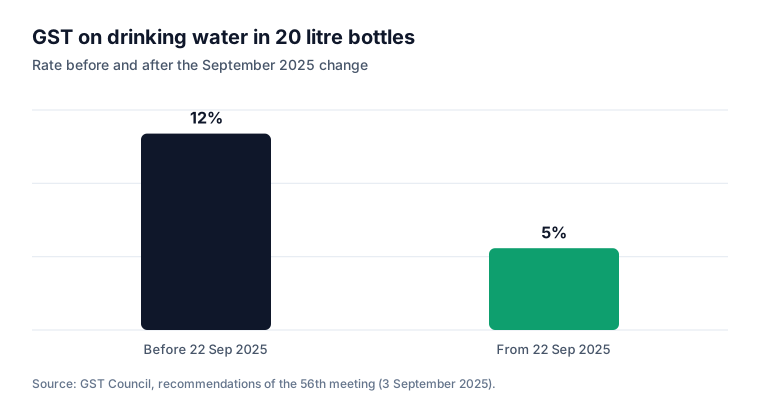
From 22 September 2025, GST on drinking water packed in 20 litre bottles fell from 12% to 5%, and other unflavoured packaged and mineral waters fell from 18% to 5% (GST Council). Plain drinking water not sold in a sealed container is exempt (Maharashtra notification).
If your turnover is under the GST threshold and you sell only in your state, you may not need to register; see how to sell online without GST.
Step 3: Work out the margin per can
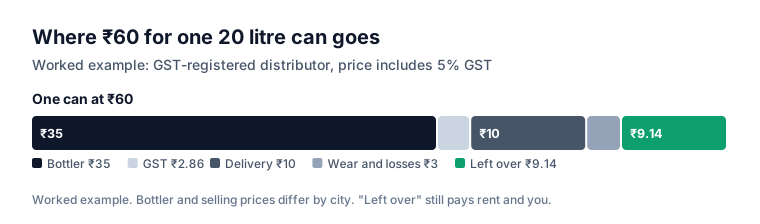
Here is a worked example for a GST-registered distributor selling a can at ₹60, GST included:
| Item | Amount |
|---|---|
| Selling price, GST included | ₹60 |
| GST at 5% (₹60 × 5 ÷ 105) | ₹2.86 |
| Bottler's price per filled can, before GST (you claim the GST you pay as input credit) | ₹35 |
| Delivery cost per can | ₹10 |
| Can wear, breakage and losses | ₹3 |
| Left over per can | ₹9.14 |
At 150 cans a day for 26 days, ₹9.14 a can is about ₹35,646 a month before rent and your own pay. These are example numbers; bottler prices and selling prices differ by city. The lesson is that a few rupees per can decide everything, so route density and few lost cans matter most.
Step 4: Take deposits and track empties
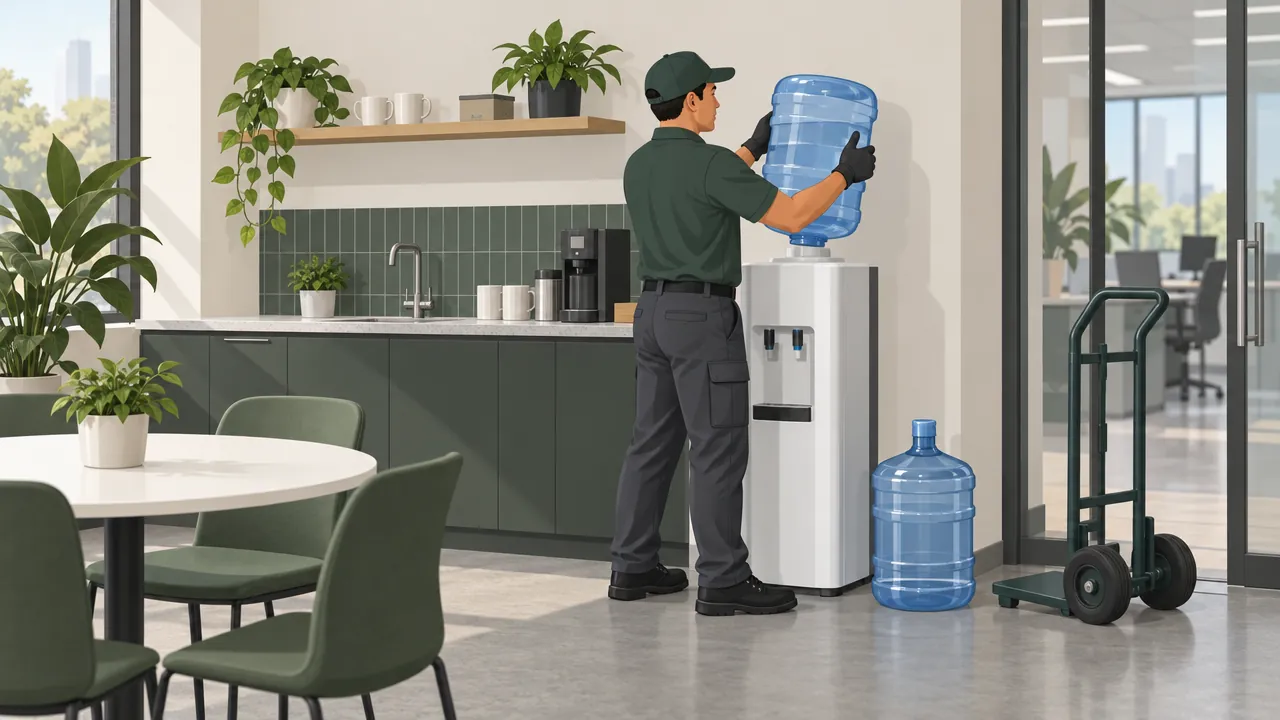
Cans are your biggest asset, and they leave your hands every day.
- A refundable deposit per can for every new customer, recorded against their name.
- One full can delivered, one empty collected. No empty, no new can, or charge for the missing can.
- A can count per customer, updated on every delivery.
- Inspect empties: return cracked or dirty cans to the bottler; FSSAI requires damaged containers to be taken out of use.
Step 5: Find customers who order every week
| Customer | Why they are good | Example order |
|---|---|---|
| Offices and co-working spaces | Steady weekday demand, pay monthly | 5 to 20 cans a week |
| Apartments and gated communities | Many homes on one route | 1 to 2 cans per home a week |
| Shops, salons, clinics | Daytime demand, near each other | 2 to 5 cans a week |
| Gyms and coaching centres | Heavy daily use | Daily delivery |
Visit offices and building managers in person, leave a price card, and offer a free first can with a deposit.
Step 6: Run dense delivery rounds
- Fixed days per area: Monday and Thursday for one area, Tuesday and Friday for the next.
- Load by route: count cans per stop before leaving.
- Plan by weight: a 20 litre can weighs about 20 kg of water alone, so plan how many cans each vehicle and person can carry safely.
- Collect payment at month end for offices, by UPI or prepaid wallet for homes.
Our guides on planning delivery routes and hiring and managing delivery staff cover routes, pay and cash handling.
Step 7: Take orders without the phone ringing all day
Phone and WhatsApp orders are fine at first, but they get lost. An ordering app or website lets customers:
- Reorder cans for the next round from their past orders.
- Pay online or choose cash on delivery.
Keep the can count and deposits in your own records for now. Customers who often refuse deliveries can be moved to prepaid only; see how to reduce fake cash on delivery orders.
Mistakes to avoid
No deposit. Cans disappear, and each one costs you money.
Spreading across the city. One can at the far end of town can cost more to deliver than it earns.
Buying from an unlicensed bottler. One bad batch can end your business.
Refilling cans yourself. Only licensed bottlers following FSSAI's testing scheme should fill cans.
Believing old rules. The BIS mark is no longer required for packaged drinking water, and GST on 20 litre cans is now 5%.
Your water can business checklist
- Model chosen: distributor (the lower-cost start) or bottler
- FSSAI registration; bottler's licence and test reports on file
- GST position checked: 5% on 20 litre cans if registered
- Margin per can worked out, including delivery and losses
- Deposit per can; can count per customer
- Damaged cans returned to the bottler
- Offices, apartments and shops on fixed delivery days
- Monthly billing for offices; UPI or prepaid for homes
How Zepio helps
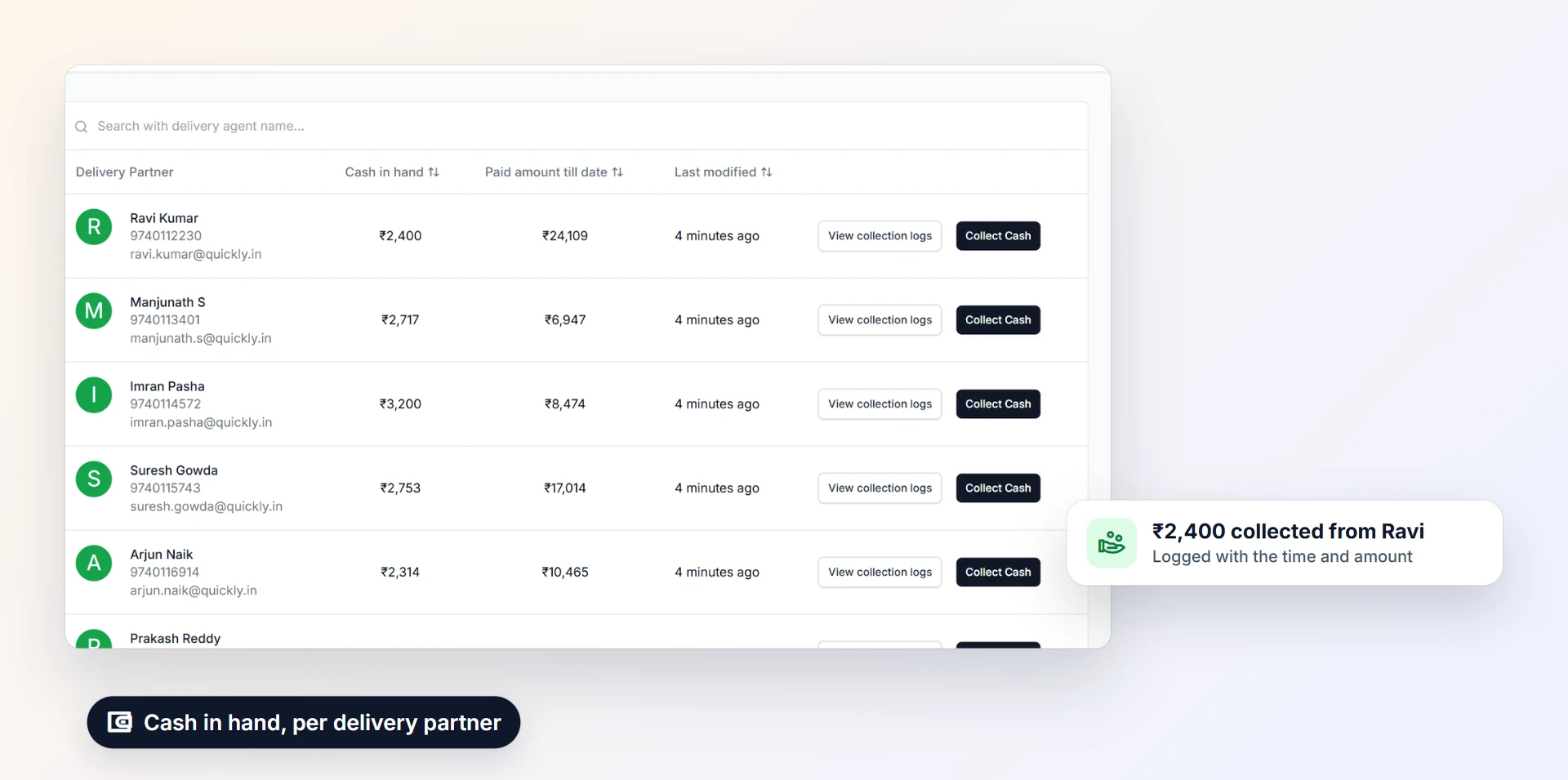
With Zepio, your customers order water cans from your own website and app, with 0% commission on your sales. Set delivery zones by pincode or map, take payment online, by cash on delivery or from a prepaid wallet, and switch off cash on delivery for customers who keep refusing orders. Your delivery team uses the Zepio delivery app, and the cash collected by each delivery partner is tracked in the admin.
A licensed bottler, a deposit on every can, dense routes and empties back on every trip. That is how a water can business stays profitable.
Questions people ask
Do I need a BIS licence to sell 20 litre water cans?
What is the GST on 20 litre water cans?
Is a water can delivery business profitable?
Should I take a deposit for water cans?
Can I refill and sell old water cans?
Sources
- Compliance of scheme of testing for packaged drinking water and mineral water, FSSAI
- Recommendations of the 56th meeting of the GST Council, PIB / GST Council
- Notification No. 10/2025-State Tax (Rate), Government of Maharashtra
- FAQs on FSS (Licensing and Registration of Food Businesses) Amendment Regulations, 2026, FSSAI
- Order: Implementation of revised turnover threshold for food businesses (13 March 2026), FSSAI
Facts were checked against these sources on 22 Oct 2026. Rules and prices change: check the source before you rely on a figure. Read our editorial standards, or write to hi@zepio.io to report a mistake.