
On this page
- How big the problem is
- What one refused order really costs
- Why customers refuse COD orders
- 1. Verify the phone number
- 2. Get the address right
- 3. Confirm before you dispatch
- 4. Take a part payment online
- 5. Make paying online the better deal
- 6. Set limits where refusals hurt most
- 7. Switch off COD for repeat offenders
- 8. Deliver faster
- 9. Confirm delivery with an OTP
- 10. Track your numbers and act on them
- For courier orders: act on every failed delivery report
- Track cash you do collect
- Mistakes sellers make with COD
- How Zepio helps
- Your COD checklist
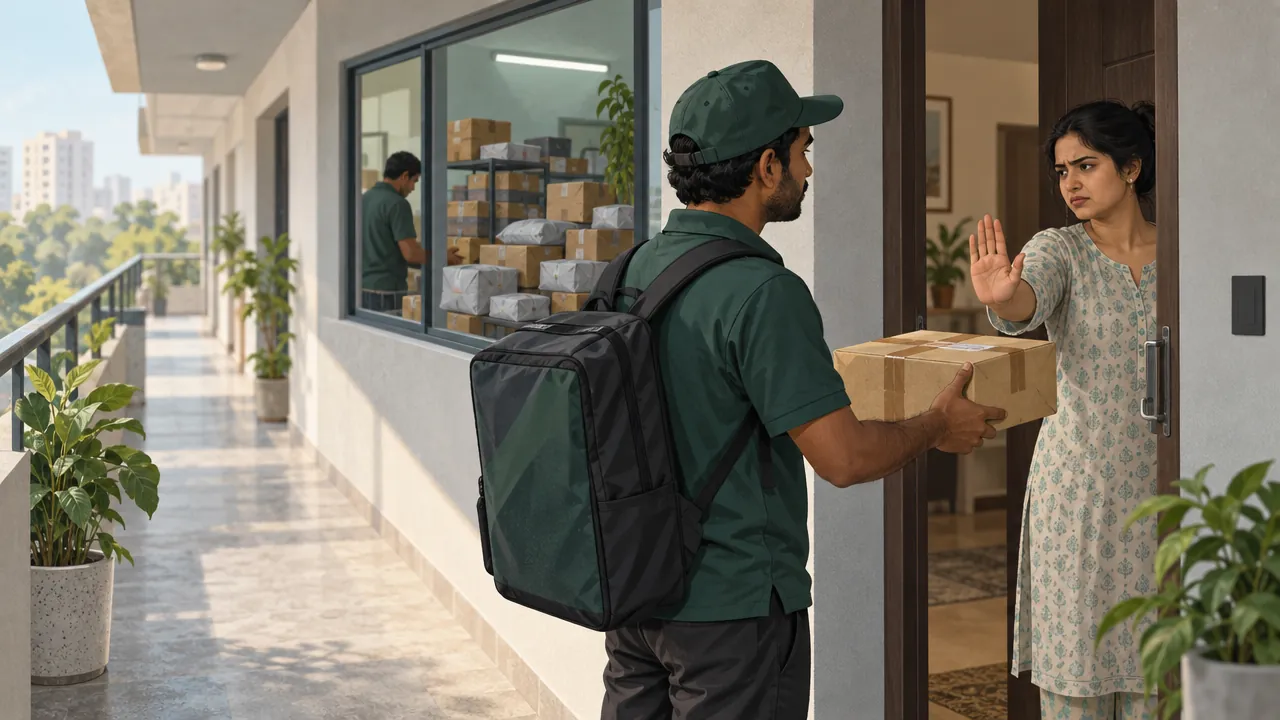
Fake and refused cash on delivery (COD) orders cost you twice: once to send the order out and once to bring it back. To reduce them, verify the customer's phone number, confirm the order before you dispatch it, take a part payment online on larger or riskier orders, make paying online the better deal, and switch off cash on delivery for the few customers who refuse orders again and again.
RTO (return to origin) is an order that could not be delivered, or was refused, and travels back to the seller, who usually pays for both trips. This guide explains how big the problem is, what each refused order really costs, and a ten-step plan that cuts refusals without losing the customers who genuinely want to pay cash.
How big the problem is
Cash on delivery is still how many Indian customers prefer to pay. ET Prime Research (2024), cited by Razorpay, puts COD at around 60% to 65% of e-commerce orders, and Razorpay says 25% to 30% of COD orders are returned undelivered, compared with 2% to 3% of prepaid orders. A logistics analysis cited by Amazon Shipping found about 26% of COD orders returned to the seller.
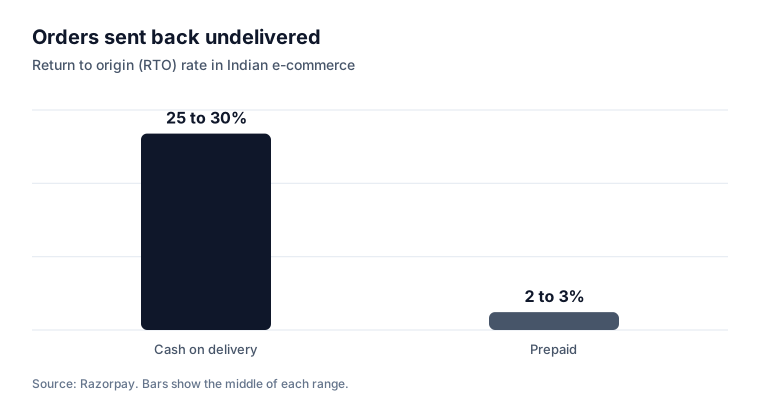
Those are averages across e-commerce. Local delivery businesses with their own delivery team and short delivery times may see fewer refusals, so measure your own rate. The same causes apply, and the same fixes work.
What one refused order really costs
A refused order is never just "no sale".
| Cost | What it covers |
|---|---|
| Forward delivery | The trip out, paid whether or not the customer accepts |
| Return trip | The trip back to you, often charged by couriers as a return fee |
| Packing | Box, tape, label and the time to pack |
| Stock stuck in transit | A product that could have been sold to someone else for days |
| Damage and loss | Items that come back damaged, or perishables that cannot be resold |
One illustrative estimate cited by Amazon Shipping puts the logistics cost alone (forward, reverse and handling) at about ₹180 to ₹240 per return, before packing and lost stock. For food and perishables, the whole order is usually lost.
Why customers refuse COD orders
Customers refuse cash on delivery orders for a few common reasons, and each reason has a different fix:
| Reason | Fix |
|---|---|
| Impulse order, changed mind | Confirm before dispatch; deliver faster |
| Ordered from several shops | Part payment online; deliver faster |
| Wrong or incomplete address | Map location, landmark, a call when unclear |
| Fake order or someone else's number | Phone OTP verification |
| Product not as expected | Better photos, sizes and descriptions |
| No cash at home | Offer UPI at the door; make online payment easy |
1. Verify the phone number
Phone number verification stops cash on delivery orders placed with made-up numbers. Ask customers to verify their phone with a one-time password (OTP) when they sign up or place their first order, so you know you can reach every customer.
2. Get the address right
A wrong or incomplete address fails the delivery even when the customer wants the order.
- Ask customers to pin their location on a map at checkout, not just type an address.
- Require a landmark and a working phone number.
- Call when the address looks unclear, before the delivery person sets out.
- Publish your delivery areas on a shipping policy page; a shipping policy generator gives you a draft.
3. Confirm before you dispatch
Before an order leaves, confirm it:
- For local deliveries, a quick message or call on the morning of delivery.
- For courier orders, confirm before you book the shipment, so you do not pay to ship an order the customer has forgotten. Our guide on shipping products across India covers courier COD payouts.
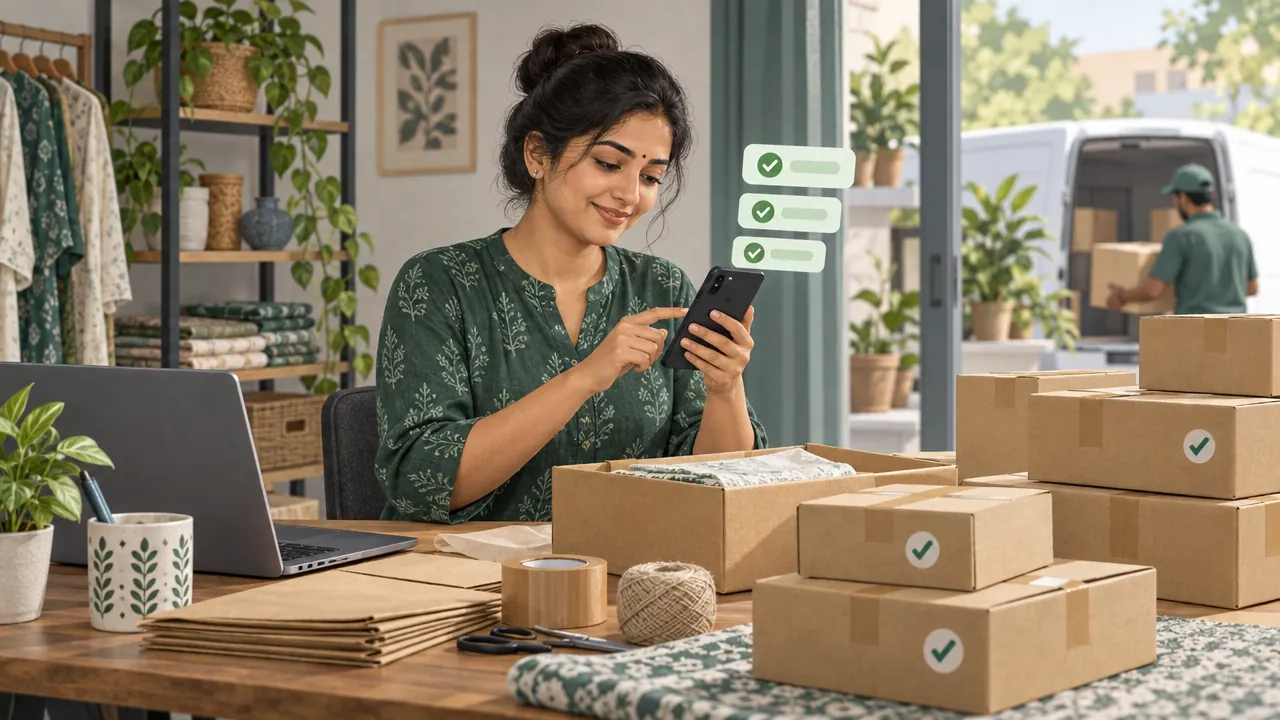
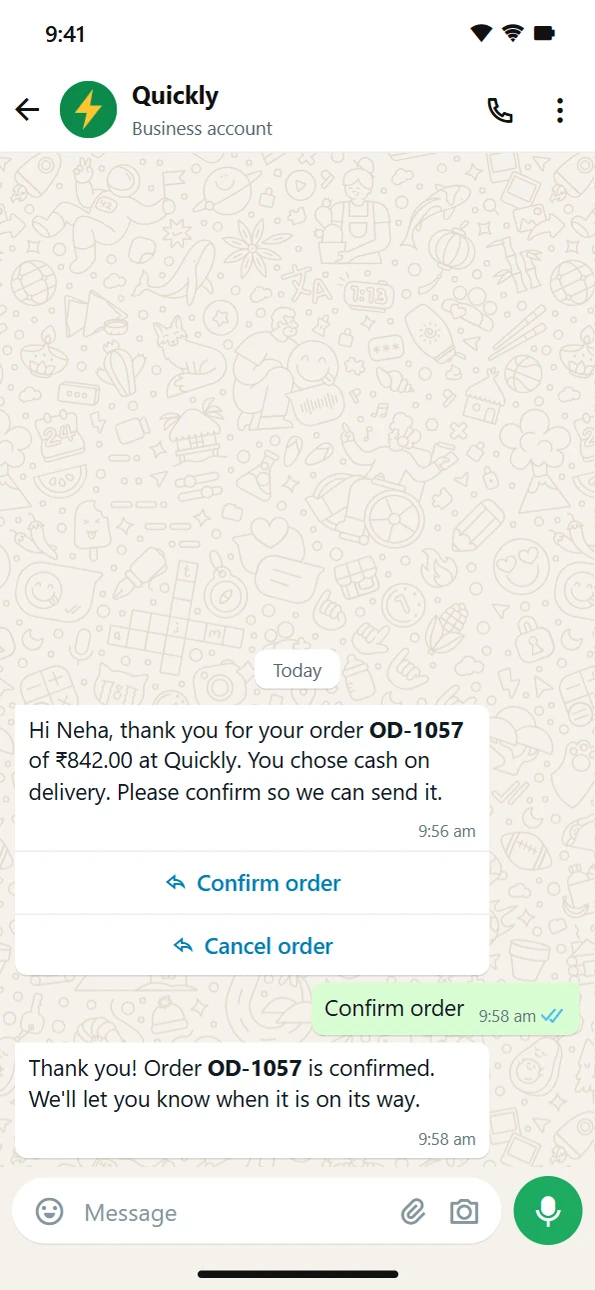
A WhatsApp message with confirm and cancel replies is quicker than calling and easier for the customer. Hold or cancel orders that are not confirmed within a few hours. A message like this works:
Example: "Hi , thank you for your order # of ₹____ (cash on delivery). Reply YES to confirm delivery tomorrow between ____, or NO to cancel. Unconfirmed orders are held for 6 hours."
4. Take a part payment online
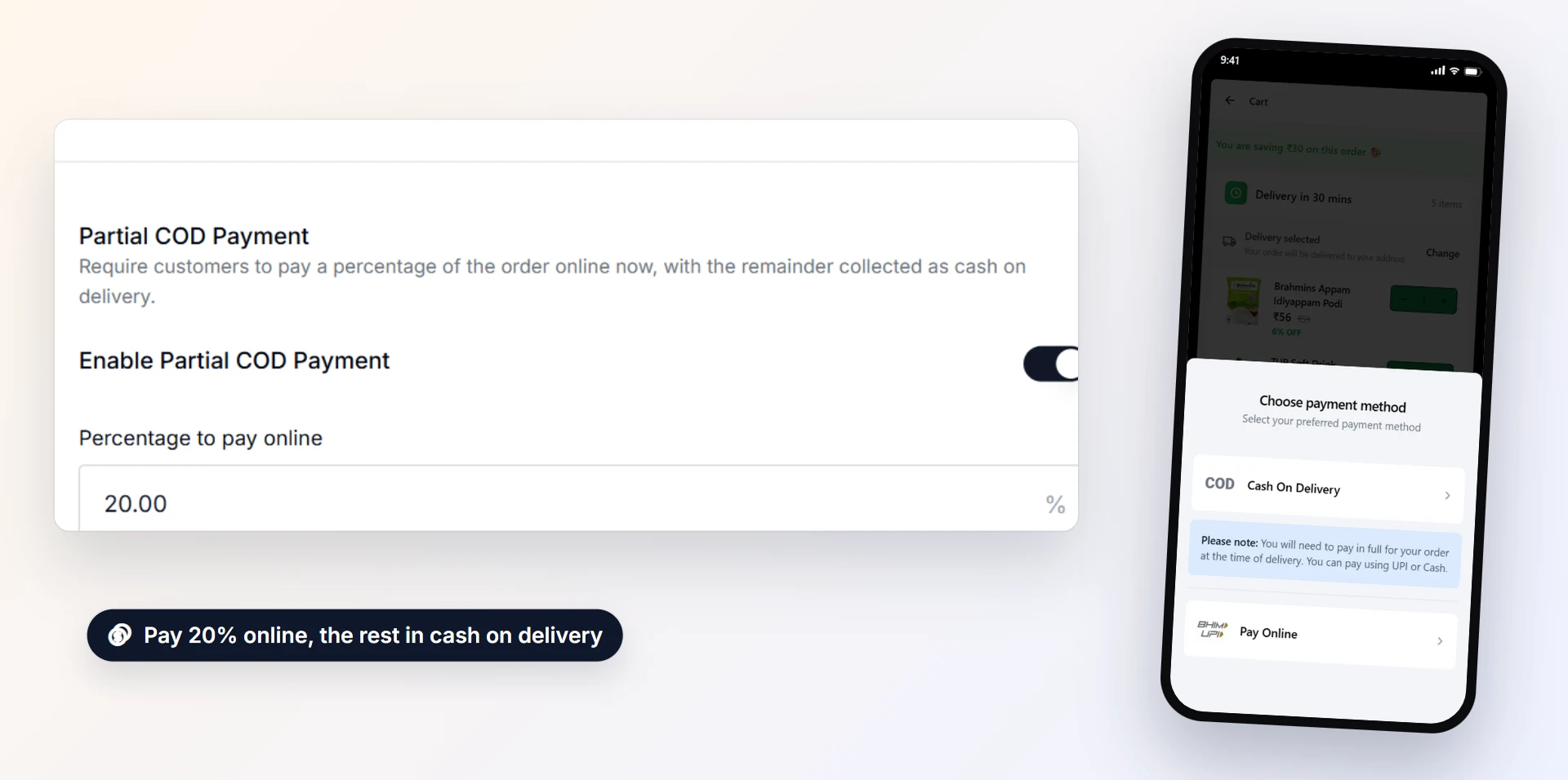
On larger orders, ask for 10% to 20% online when the customer orders, and the rest in cash. Someone who has paid even a small amount has a reason not to refuse the delivery, and you are covered for part of the trip if they do.
Explain it simply at checkout: "Pay ₹100 now to confirm your order, and the rest on delivery."
5. Make paying online the better deal
Give customers a reason to pay online:
- A lower delivery fee for online payment, or a small extra charge for cash on delivery.
- Cashback or reward points on prepaid orders.
- A small discount on prepaid orders, if your margins allow.
- Every UPI app at checkout, so paying online takes one tap.
Online payment has a cost too: a gateway charges a small fee per payment (Razorpay's standard rate is 2% plus GST on the fee, Razorpay). On a ₹500 order that fee is about ₹12, far less than the ₹180 to ₹240 one return can cost. See how to set delivery charges for pricing COD and online delivery differently.
6. Set limits where refusals hurt most
- No cash on delivery above a set order value, where one refusal costs the most.
- Online payment or part payment for first orders on expensive items.
- No COD for custom or made-to-order items, which you cannot resell if refused. Say so in your returns policy; a return policy generator helps you write one.
7. Switch off COD for repeat offenders
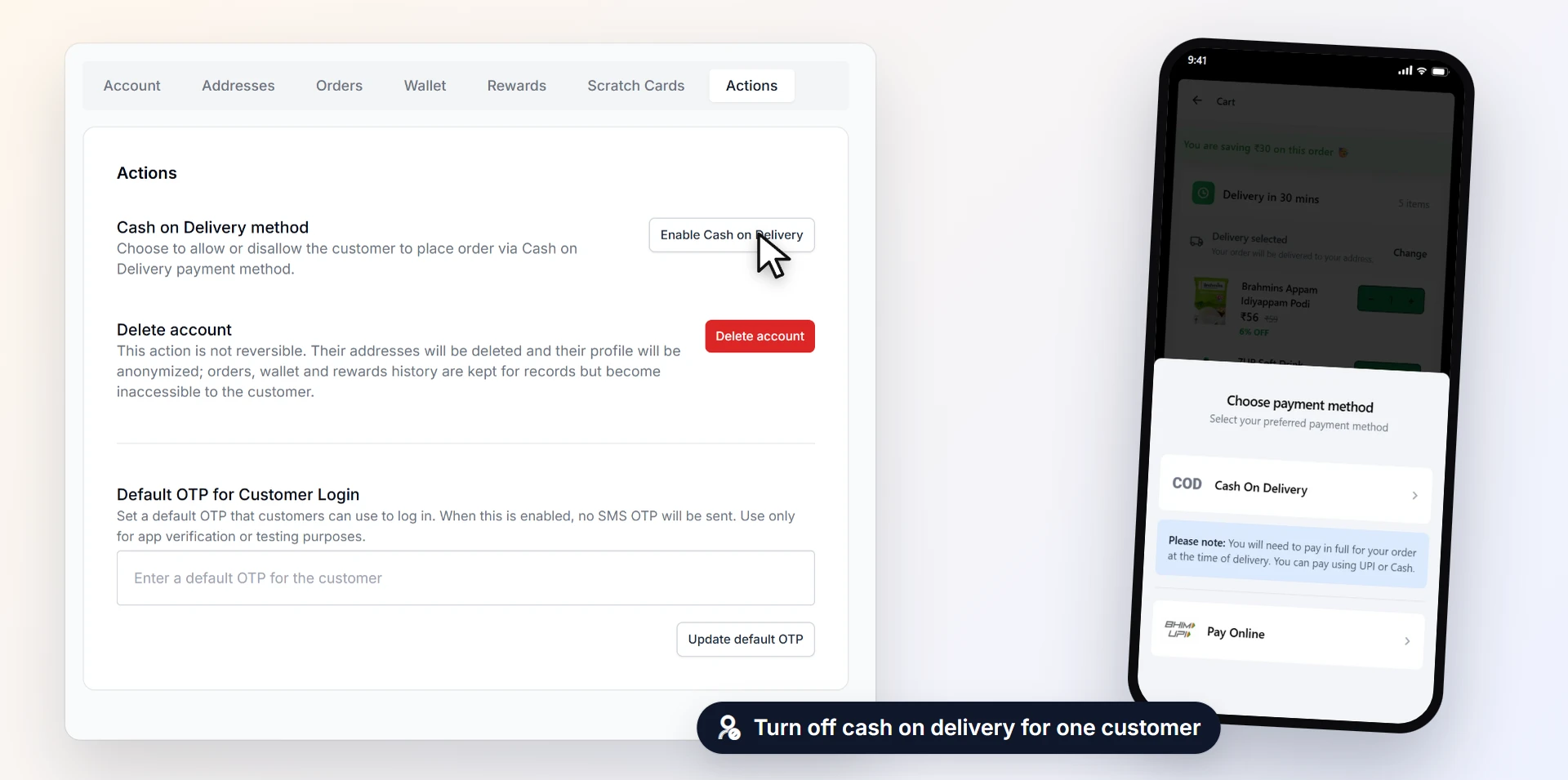
A small number of customers refuse orders again and again. Turning off cash on delivery for a customer who refuses repeatedly keeps them as a customer, but they pay online from then on.
8. Deliver faster
The longer the wait, the more likely the customer changes their mind or buys elsewhere. For local orders, your own delivery team inside a small area is a reliable way to deliver within hours instead of days (how own-team delivery works).
9. Confirm delivery with an OTP
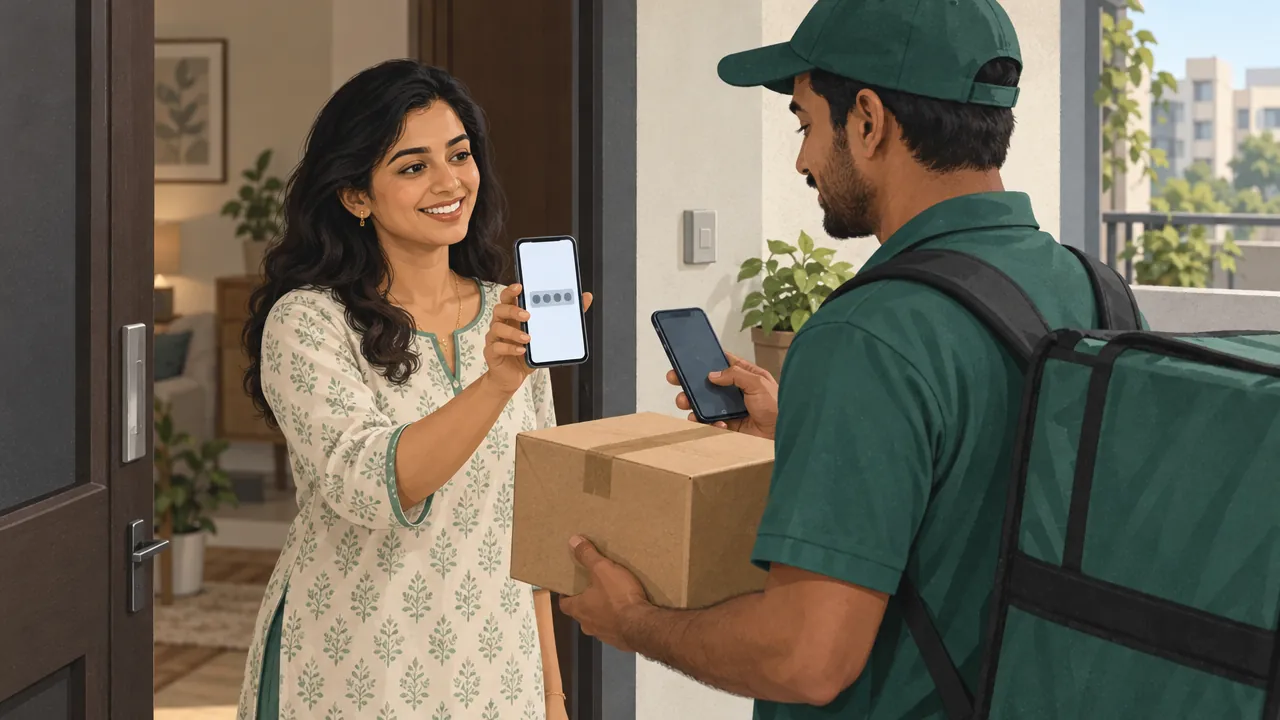
For your own deliveries, ask the customer for a delivery OTP when the order is handed over. It proves the order reached the right person and settles "I never got it" disputes.
10. Track your numbers and act on them
Measure every week:
- COD share of your orders.
- Refusal rate for COD and for prepaid orders.
- Refusals by area or pin code: check whether refusals cluster in a few areas.
- Refusals by product: items with unclear photos or sizes get refused more.
- Customers with two or more refusals.
Fix the biggest cause first. If one area causes most refusals, require part payment there. If one product does, improve its photos and description.
For courier orders: act on every failed delivery report
When a courier cannot deliver, it raises a non-delivery report (NDR): customer not reachable, address not found, customer refused, or asked to reschedule. Each NDR is a last chance before the order turns into a paid return trip.
- Check NDRs every day, in your courier dashboard or your store admin.
- Contact the customer the same day, by WhatsApp or call, using the reason the courier gave.
- Fix what you can: correct the address, share the customer's alternate number, or set a new delivery date.
- Ask for a re-attempt through the courier, quickly, before the parcel is marked for return.
- Note the outcome against the customer, so repeat refusals are easy to spot.
Example: "Hi , our courier could not deliver your order # today (reason: ____). Please reply with the right address or a good time tomorrow, and we will send it again."
Track cash you do collect
COD is not only about refusals. Cash that reaches the door has to reach your bank too.
- Record cash per delivery person for every order.
- Settle every day, at the end of each shift.
- Accept UPI at the door as well as cash, so customers without change can still pay.
Mistakes sellers make with COD
Switching off COD for everyone. It loses genuine customers to avoid a few bad ones.
Dispatching unconfirmed orders. Two minutes of confirmation saves a wasted trip.
Treating all orders the same. A ₹5,000 first order and a ₹300 repeat order carry different risks.
Ignoring the pattern. Check whether refusals cluster in a few areas, products or customers, and fix those first.
How Zepio helps
Zepio includes the controls above:
- Part payment online for cash on delivery orders, at a percentage you choose.
- Cash on delivery switched off for a single customer, who can still order but must pay online.
- Different delivery prices for cash and online payment.
- Customer sign-in with a phone OTP, and a delivery OTP for your delivery team.
- Reward points and cashback to make online payment the better deal.
- COD confirmation on WhatsApp, with Pro, our paid add-on for WhatsApp ordering.
- Cash collected per delivery partner, settled in the admin.
Your COD checklist
- Phone OTP verification for new customers
- Map location and landmark at checkout
- Confirmation message before dispatch, with a hold for unconfirmed orders
- Part payment online for large or first orders
- A reason to pay online: lower fee, cashback or reward points
- COD limits by order value and for made-to-order items
- COD switched off for customers with repeated refusals
- Delivery OTP and daily cash settlement
- A weekly look at refusals by area, product and customer
Cash on delivery will stay important for many of your customers. With these checks in place, you keep those sales and stop paying for the orders that were never going to be accepted.
Questions people ask
Why are so many cash on delivery orders refused?
What is RTO in e-commerce?
Should I stop offering cash on delivery?
What is partial cash on delivery?
How do I confirm cash on delivery orders?
Can I block a customer from using cash on delivery?
Sources
- Cash on delivery and its challenges, Razorpay
- What is RTO and how can Indian SMBs reduce return-to-origin rates?, Amazon Shipping (citing Shipway ShipNotes FY25)
- Razorpay pricing, Razorpay
Facts were checked against these sources on 19 Oct 2026. Rules and prices change: check the source before you rely on a figure. Read our editorial standards, or write to hi@zepio.io to report a mistake.