
On this page
- Step 1: Decide who you cook for
- Step 2: Get FSSAI registration
- Step 3: Plan a menu you can repeat
- Step 4: Price each meal from its full cost
- Step 5: Set up your kitchen and hygiene
- Step 6: Pack food safely
- Step 7: Deliver on time, every day
- Step 8: Get your first 30 customers
- Mistakes to avoid
- Your tiffin service checklist
- How Zepio helps
To start a tiffin service from home, get FSSAI basic registration, plan a simple rotating menu, price each meal from its full cost, sell weekly or monthly plans, pack food safely, and deliver on a fixed route your delivery partner can finish while the food is still hot. Start with a few customers near you, get the food and timing consistent, then grow.
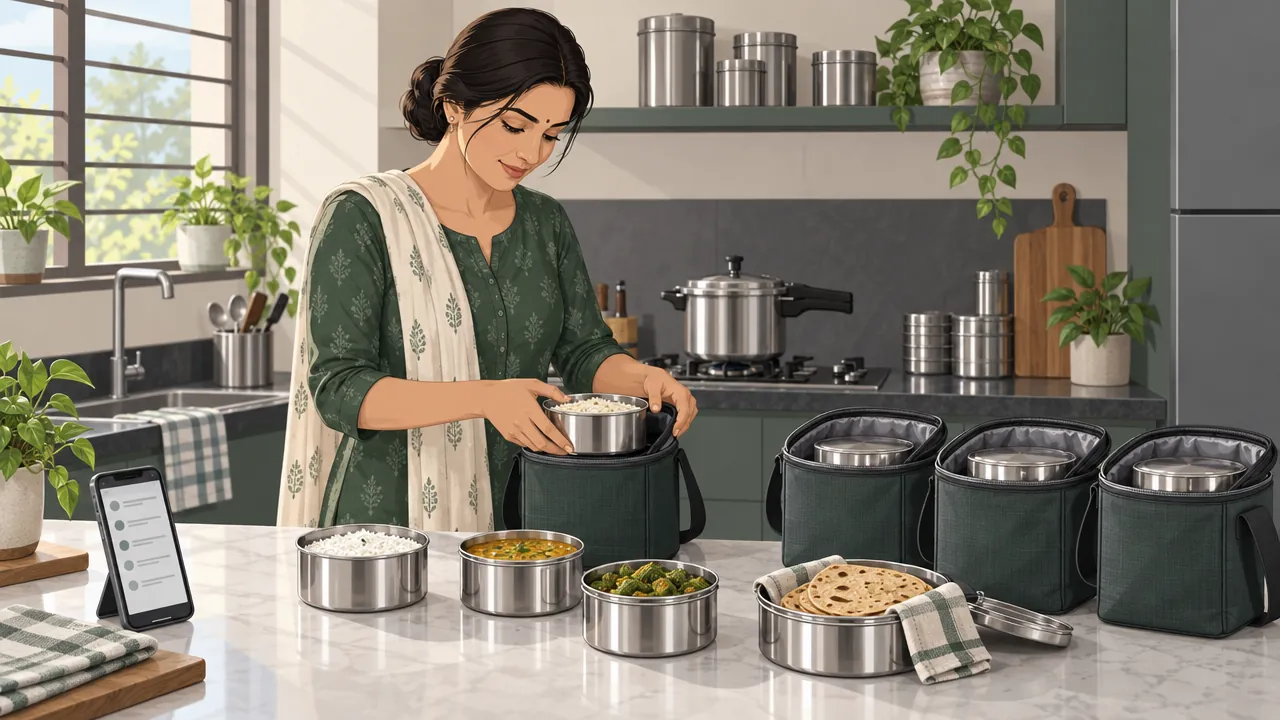
A tiffin service delivers home-cooked meals on a schedule, usually lunch or dinner, to office workers, students and families. Unlike a cloud kitchen, which sells a menu to anyone who orders, a tiffin service sells regular meals to regular customers, so planning and consistency matter more than variety.
Step 1: Decide who you cook for
| Customer | What they want | Typical plan |
|---|---|---|
| Office workers | Lunch delivered by 1 pm, not too oily | Weekdays, monthly |
| Students and PG residents | Filling, affordable, two meals a day | Monthly |
| Elderly people or new parents | Simple, home-style, sometimes low salt | Weekly or monthly |
| Families on busy days | Dinner for 2 to 4 people | Weekly |
Pick one group first. An office lunch service needs punctual delivery to a few business areas; a student service needs low prices and large portions.
Step 2: Get FSSAI registration
A tiffin service is a food business. From 1 April 2026, food businesses with turnover up to ₹1.5 crore need basic registration, not a licence (FSSAI). FSSAI's registration form, Form A, lists "Home based canteens/dabba wallas" as a type of business (FSSAI). Registrations issued from 1 April 2026 have perpetual validity, with the fee charged per year (you can pay for several years at once) (FSSAI FAQs).
Our step-by-step guide to FSSAI registration for a home food business covers the documents and the FoSCoS application.
Step 3: Plan a menu you can repeat
Customers eat your food every day, so the menu must rotate without becoming a burden to cook.
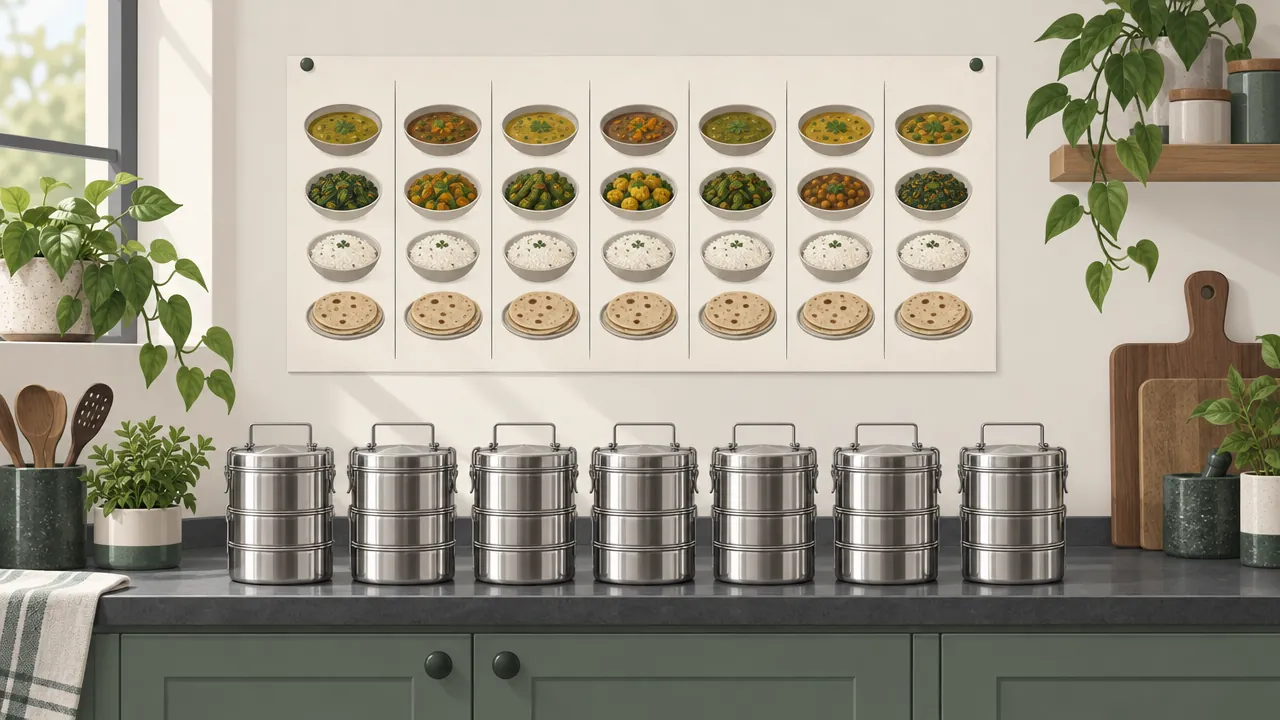
- A weekly cycle: different sabzi and dal each day; rice and rotis every day.
- One fixed combo per day, not a choice of ten dishes. Choice multiplies cooking and wastage.
- A clear standard meal: for example, 4 rotis, rice, dal, one sabzi, salad or pickle.
- Optional add-ons: extra rotis, curd, a sweet on Fridays.
- Publish the week's menu every Sunday.
Step 4: Price each meal from its full cost
Here is a worked example for one lunch tiffin sold at ₹120:
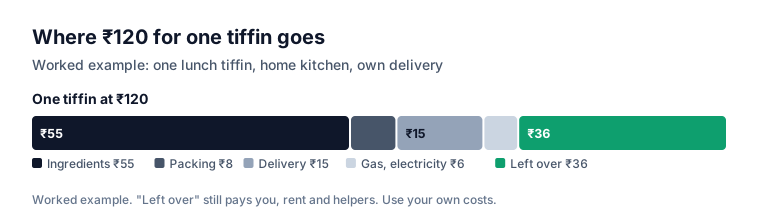
| Cost per meal | Amount |
|---|---|
| Ingredients | ₹55 |
| Packing (disposable or a share of steel tiffins and bags) | ₹8 |
| Delivery | ₹15 |
| Gas and electricity | ₹6 |
| Total cost | ₹84 |
| Left over at ₹120 | ₹36 |
With 30 customers on a 22-day monthly plan, that is 30 × 22 × ₹36 = ₹23,760 a month before paying yourself, rent or helpers. Use your own costs; ingredient prices differ widely by city. Our guide on pricing your products explains margins in more detail.
Plans to offer:
| Plan | Example | Why |
|---|---|---|
| Trial | 3 meals | Lets new customers try before committing |
| Weekly | 5 or 6 meals | Easy to start |
| Monthly | 22 or 26 meals, paid in advance | Predictable cooking and buying for you |
Collect monthly plans in advance, and decide how you handle holidays and missed days (for example, carry forward up to 3 days with a day's notice).
Step 5: Set up your kitchen and hygiene
- Separate shelves for tiffin ingredients, away from family groceries.
- A clean, dry packing area.
- Clean aprons, head covering and gloves when cooking and packing, as Schedule 4, Part I of FSSAI's licensing regulations requires.
- Fresh cooking every day: FSSAI's 2022 directions, which are awaiting final notification, say caterers and restaurants receiving orders online should deliver only fresh food (FSSAI).
Step 6: Pack food safely
| Do | Do not |
|---|---|
| Use food-grade containers or reusable steel tiffins | Wrap rotis or snacks in newspaper; FSSAI repeated this ban in June 2026 (IANS) |
| Seal gravies in leak-proof containers | Use banned single-use plastic cutlery, plates or cups (PIB) |
| Pack hot food straight from the stove | Pack hours in advance |
| Use insulated bags for delivery | Put hot and cold items in the same compartment |
Reusable steel tiffins cut packaging cost and look homely, but you need a system to collect and wash them, and a deposit or charge for lost boxes. Our guide to food packaging for delivery covers containers in detail.
Step 7: Deliver on time, every day
Punctuality is the product. An office lunch that arrives at 2:30 pm is a lost customer.
- Keep the area small. FSSAI's catering norms for licensed caterers, issued in 2022 and awaiting final notification, say high-risk hot food should reach the customer within two hours of preparation (FSSAI). If lunch is cooked at 11 am and you have no way to keep it at 65°C on the road, deliver it all by 1 pm.
- One fixed route. Tiffin customers are the same every day, so plan one route and improve it; see how to plan delivery routes.
- Fixed delivery windows: "12:30 to 1:00 pm" is a promise you can keep.
- Your own delivery partner once you have 20 to 30 customers in one area; see hiring and managing delivery staff.
Step 8: Get your first 30 customers
- Offices and co-working spaces near you: a trial plan for a team.
- PGs, hostels and coaching centres.
- Apartment WhatsApp groups: the week's menu with photos, and a trial offer.
- Google Business Profile if you can meet customers or offer pickup.
- Referrals: a free meal for every friend who takes a monthly plan; see how to start a referral program.
Food delivery apps can bring discovery too, but they charge commission on every order. Our guide to Swiggy and Zomato commission shows what that costs. Regular monthly customers are worth serving directly.
Mistakes to avoid
Too many choices. One combo a day keeps quality high and waste low.
Underpricing. Count packing, delivery and gas, not just ingredients.
Late delivery. Customers forgive a plain sabzi more easily than a late lunch.
No advance payment for monthly plans. Cash at the door every day leads to unpaid tiffins.
Newspaper and banned plastic. Not allowed, and customers notice.
Your tiffin service checklist
- Customer group chosen: offices, students, elderly or families
- FSSAI basic registration done
- Weekly rotating menu with one combo a day
- Cost per meal worked out; trial, weekly and monthly plans priced
- Clean, separate storage and packing area
- Food-grade or steel containers, insulated bags, no newspaper
- Small delivery area and fixed delivery window
- First 30 customers from offices, PGs and local groups
How Zepio helps
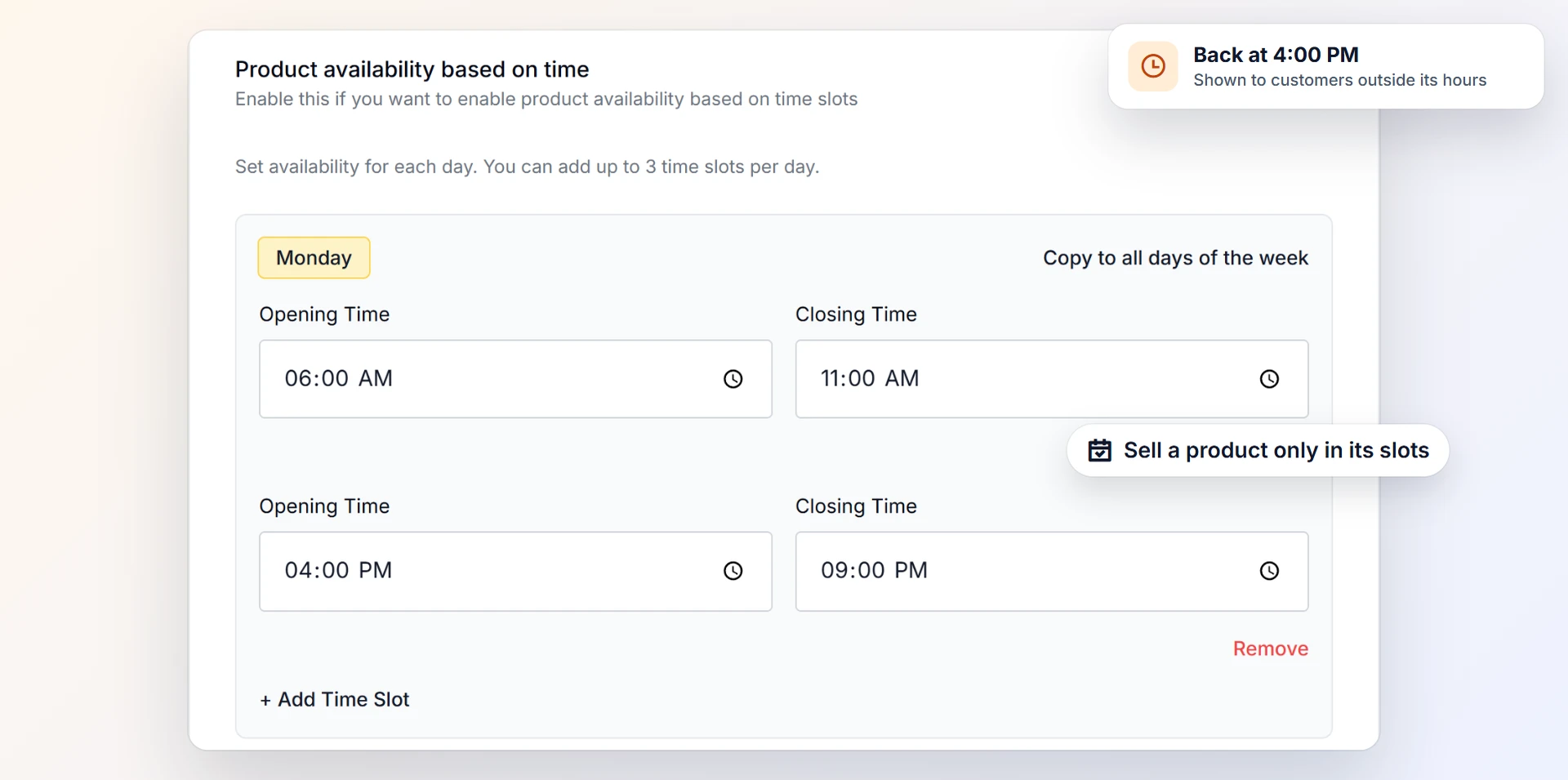
With Zepio your tiffin service gets its own website and app. List daily meals and monthly plans as products, add a start-date or instructions field with custom product fields, set order cut-off times per item so lunch orders close in time, and take payment online or in cash. Deliver with your own team using delivery zones and charges you set, send the week's menu by push notification, and keep 0% commission on your sales.
Cook well, deliver on time, every day. A tiffin service grows on consistency, one regular customer at a time.
Questions people ask
Do I need FSSAI registration to start a tiffin service from home?
How much should I charge for a tiffin?
How many customers do I need to make a tiffin service work?
Can I list my tiffin service on Swiggy or Zomato?
How do I keep tiffin food hot during delivery?
Sources
- Order: Implementation of revised turnover threshold for food businesses (13 March 2026), FSSAI
- FAQs on FSS (Licensing and Registration of Food Businesses) Amendment Regulations, 2026, FSSAI
- Compendium: Food Safety and Standards (Licensing and Registration of Food Businesses) Regulations, FSSAI
- Direction under Section 16(5) on licensing and registration (2022), FSSAI
- FSSAI warns food vendors against using newspapers for food packaging, IANS
- Ban on single use plastic in India, PIB Research Unit
Facts were checked against these sources on 22 Oct 2026. Rules and prices change: check the source before you rely on a figure. Read our editorial standards, or write to hi@zepio.io to report a mistake.