
On this page
- The rules you must follow
- Keep food at a safe temperature
- Choose containers by food
- Pack in the right order
- Seal it so customers trust it
- Make packaging part of your brand
- Price packaging into every order
- Delivery matters as much as the box
- Mistakes to avoid
- Your food packaging checklist
- How Zepio helps
Good food packaging for delivery is food-grade, leak-proof and the right temperature. Never use newspaper, avoid banned single-use plastics, keep hot food hot and cold food cold, pack wet and dry items separately, and seal the bag so customers can see it was not opened. Then deliver fast: no box keeps food at its best for long.
Food delivery packaging is everything between your kitchen and the customer's table: containers, lids, bags, seals and the insulated bag your delivery partner carries. This guide covers the rules in India, safe temperatures, what to use for each kind of food and a packing routine for busy hours.
The rules you must follow
| Rule | What it says | Source |
|---|---|---|
| No newspaper | FSSAI's Packaging Regulations, 2018 say newspaper or similar material must not be used for storing and wrapping food. In June 2026 FSSAI's Western Region directed all food businesses to immediately stop using newspaper to pack or serve food | Food Packaging Forum, AIR News |
| Food-grade packaging | FSSAI's hygiene checklist requires packaging that touches food to be clean and of food-grade quality | FSSAI |
| Single-use plastic ban | From 1 July 2022: plastic cutlery, plates, cups, glasses, straws, trays, wrapping film for sweet boxes and similar items | PIB |
| Thicker carry bags | The minimum went from 50 to 75 microns on 30 September 2021, and to 120 microns from 31 December 2022 | PIB, The Tribune |
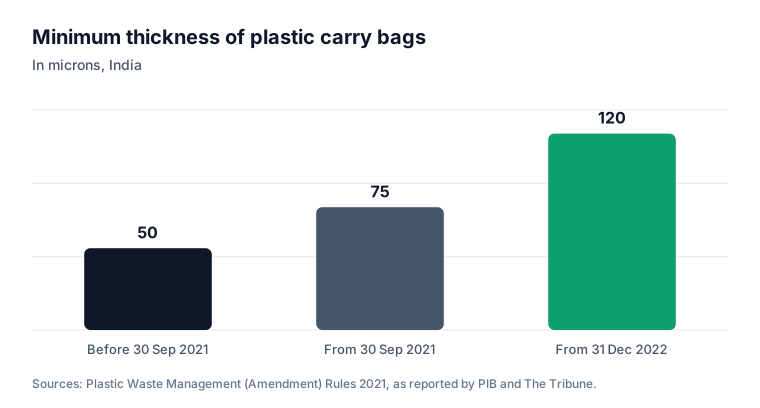
States can ban more items than the central list. Check your state's pollution control board rules before buying packaging in bulk.
Note: FSSAI's Packaging First Amendment Regulations, 2025, published on 28 March 2025, allow recycled PET in food-contact packaging, subject to the standards and guidelines FSSAI notifies (PackagingLaw.com). Buy it only from suppliers who can show it is food grade.
Keep food at a safe temperature
WHO's Five Keys to Safer Food, which aim to stop microbes multiplying, advise not leaving cooked food at room temperature for more than 2 hours, keeping cooked food piping hot (more than 60°C) before serving and refrigerating below 5°C (PAHO/WHO).
FSSAI's hygiene checklist is stricter for holding food (FSSAI):
| Food | Hold at |
|---|---|
| Hot vegetarian food | 65°C or above |
| Hot non-vegetarian food | 70°C or above |
| Cold food | 5°C or below |
| Frozen food | −18°C or below |
FSSAI's hygiene checklist also says hot food should be held at 65°C during transport or transported within two hours of preparation (FSSAI), and its 2022 catering direction for licensed caterers sets the same two-hour limit (FSSAI). Plan your delivery area around that.
Choose containers by food
| Food | Container | Tip |
|---|---|---|
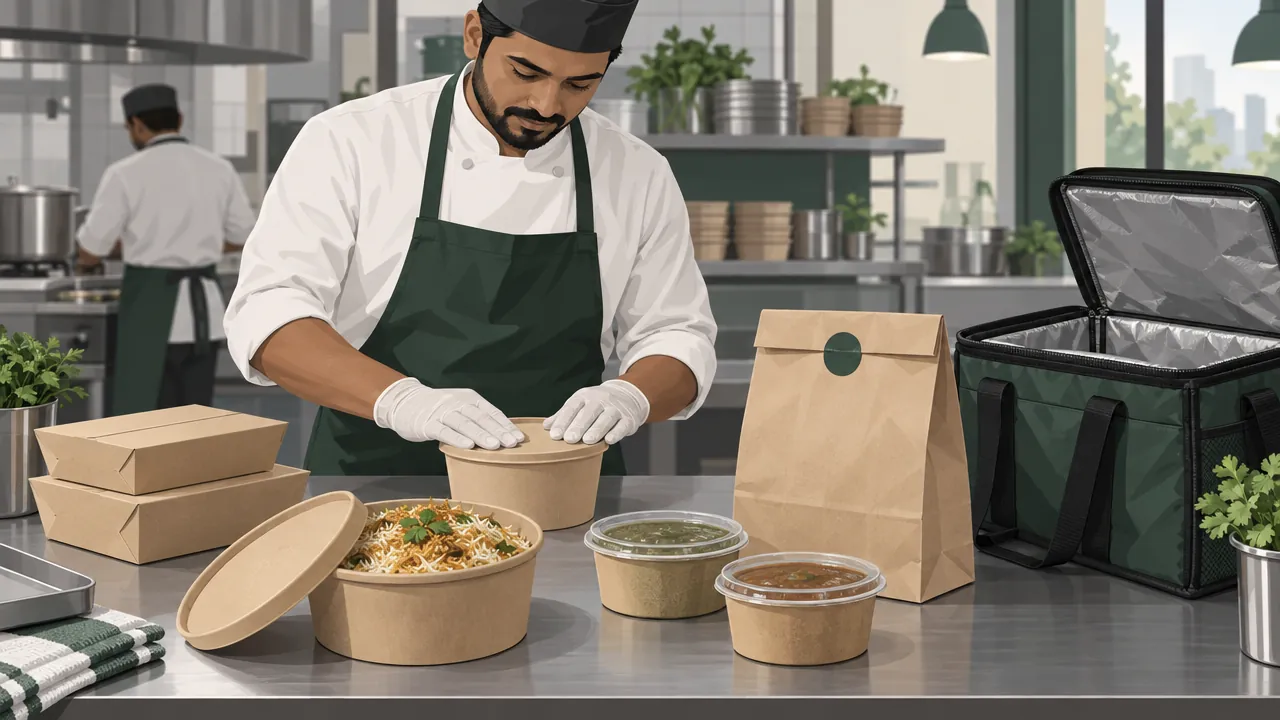
| Curries, dal, gravies | Food-grade container with a tight, leak-proof lid | Leave a little space at the top; keep upright |
| Rice, biryani | Paper or food-grade container with a vented lid | Vents stop rice going soggy |
| Rotis, parathas, dosa | Paper wrap or foil inside a separate box | Keep them away from steam and gravy |
| Fried snacks | Paperboard box with small vents | Steam makes them soggy; pack last |
| Salads, raita, desserts | Separate sealed containers, packed cold | Keep apart from hot food in the bag |
| Drinks | Sealed cups or bottles, in a holder | Pack upright in a separate compartment |
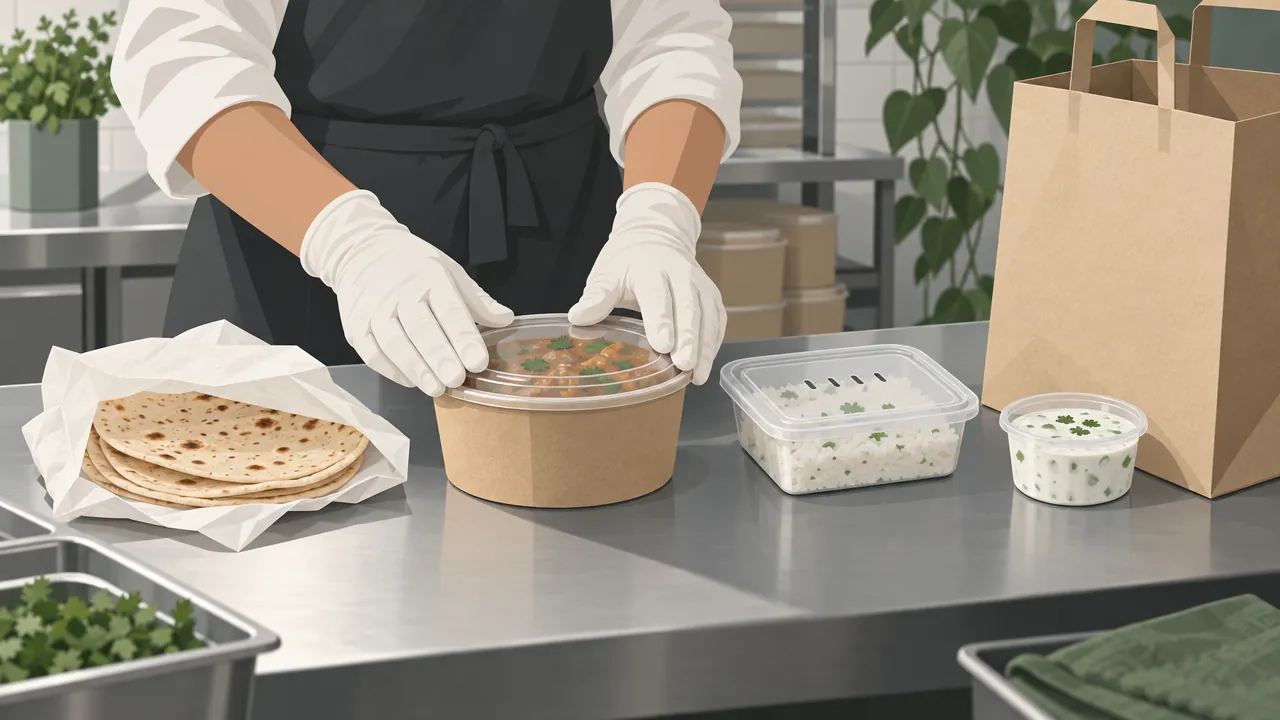
Warning: FSSAI's CEO has warned that low-quality or non-food-grade plastics can be harmful, especially when used with hot food (FoodTechBiz). Do not pour boiling curry into a thin plastic bag or a container not meant for hot food.
Pack in the right order
A simple packing routine for busy hours:
- Check the order slip against what is on the counter.
- Fill hot items last, straight from the stove, and close lids immediately.
- Wipe the outside of every container; spills make the bag look dirty.
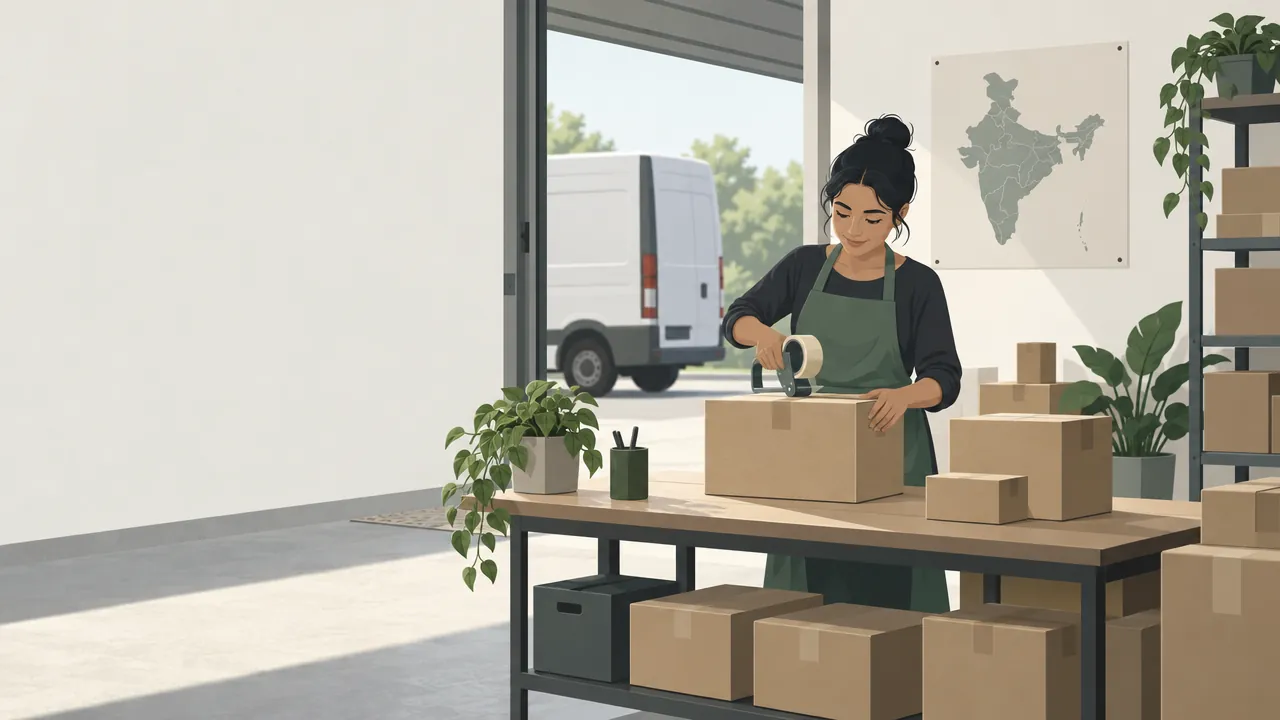
- Bag in layers: heavy and flat at the bottom, light and fragile on top; wet away from dry.
- Add cutlery and napkins only if asked. It saves money and waste.
- Seal the bag with a sticker or tape across the opening.
- Attach the order slip with the order number, not the customer's full phone number.
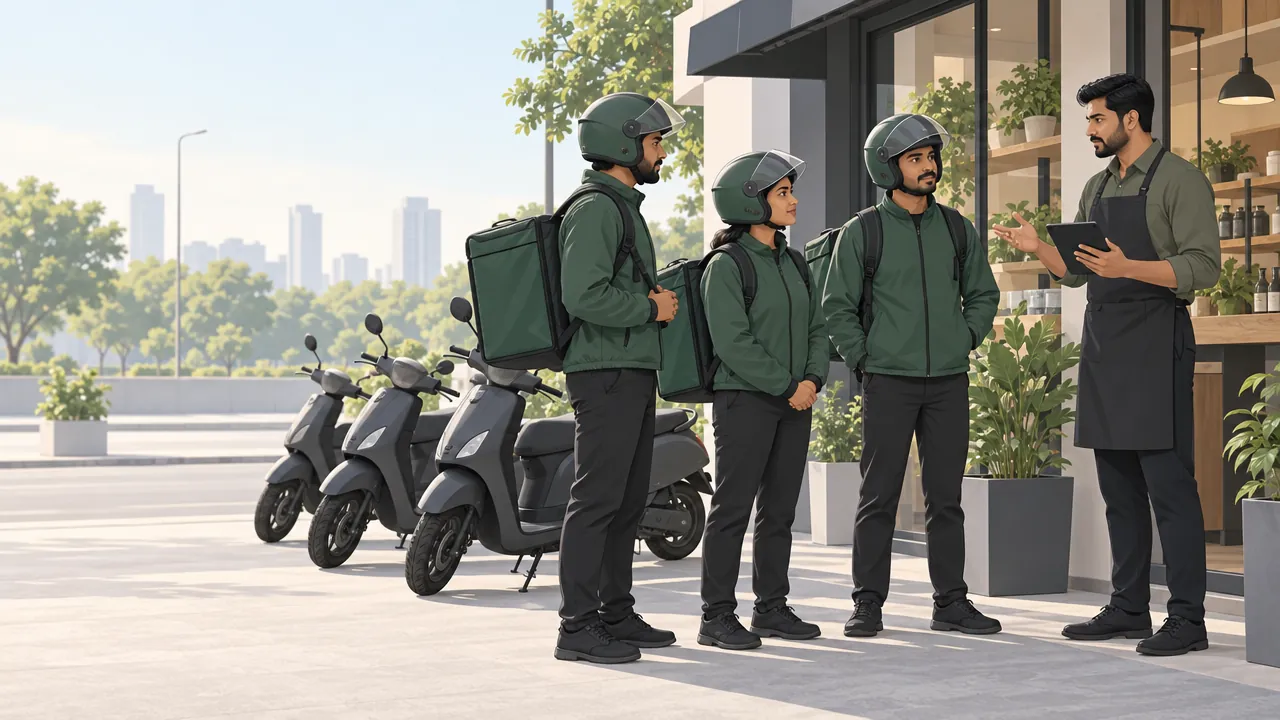
- Hand over to the delivery partner with the bag going straight into an insulated carrier.
Seal it so customers trust it
Tamper-evident seals are not something we found to be legally required. They are a simple promise that nobody opened the food on the way. In 2019 Zomato introduced voluntary tamper-proof packaging in 10 cities, with bags that could only be opened by cutting off a strip (The News Minute).
Cheap options:
- A printed sticker with your logo across the bag fold.
- Tamper-evident tape that tears visibly.
- Stapled bags with a sticker over the staple.
Make packaging part of your brand
How food arrives is the first thing a customer sees. Small touches help:
- Your logo on a sticker, not printed boxes, until volumes justify it.
- A thank-you card with a reorder link or QR code to your app. See how to get more app downloads.
- Reheating instructions for dishes that travel.
- Consistent packaging so regulars recognise your bag.
Price packaging into every order
Packaging is a real cost per order. Add it to your price or charge a small, clearly shown packaging fee. Our guide on how to price your products shows how to include it. If you sell on delivery apps too, see what packaging costs look like after commission in Swiggy and Zomato commission.
Delivery matters as much as the box
The best container cannot save food that spends an hour on the road.
- Limit your delivery area to what you can reach within your time promise.
- Do not hold packed food waiting for a delivery partner; pack when the partner is close.
- Use insulated bags, cleaned daily.
- Keep hot and cold orders apart in the carrier.
Our guides on starting a cloud kitchen from home, starting a tiffin service and hiring and managing delivery staff cover kitchens and delivery teams in more detail.
Mistakes to avoid
Newspaper, even as a blotter. Not allowed for storing, wrapping or serving food.
Thin plastic for hot curry. Use food-grade containers made for hot food.
Rotis on top of curry. Steam and spills ruin both.
Packing too early. Food waits, cools and goes soggy.
No seal. Customers worry when a bag arrives open.
Packaging cost not in the price. It quietly eats your margin.
Your food packaging checklist
- No newspaper anywhere in packing or serving
- All food-contact packaging food grade, from suppliers who can show it
- No banned single-use plastic items; carry bags at least 120 microns
- Leak-proof lids for gravies; vented boxes for rice and fried food
- Wet, dry, hot and cold items packed separately
- Hot food packed last, delivered fast; insulated bags cleaned daily
- Every bag sealed with a sticker or tape
- Packaging cost included in the price
How Zepio helps
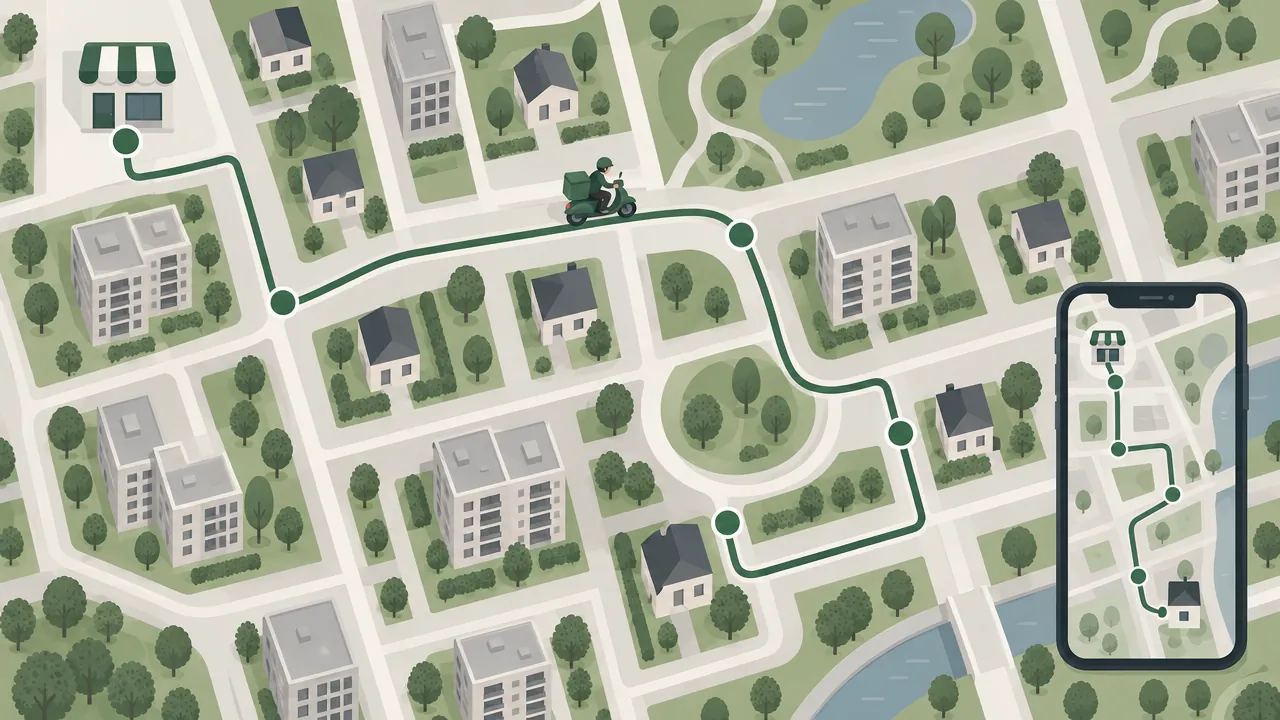
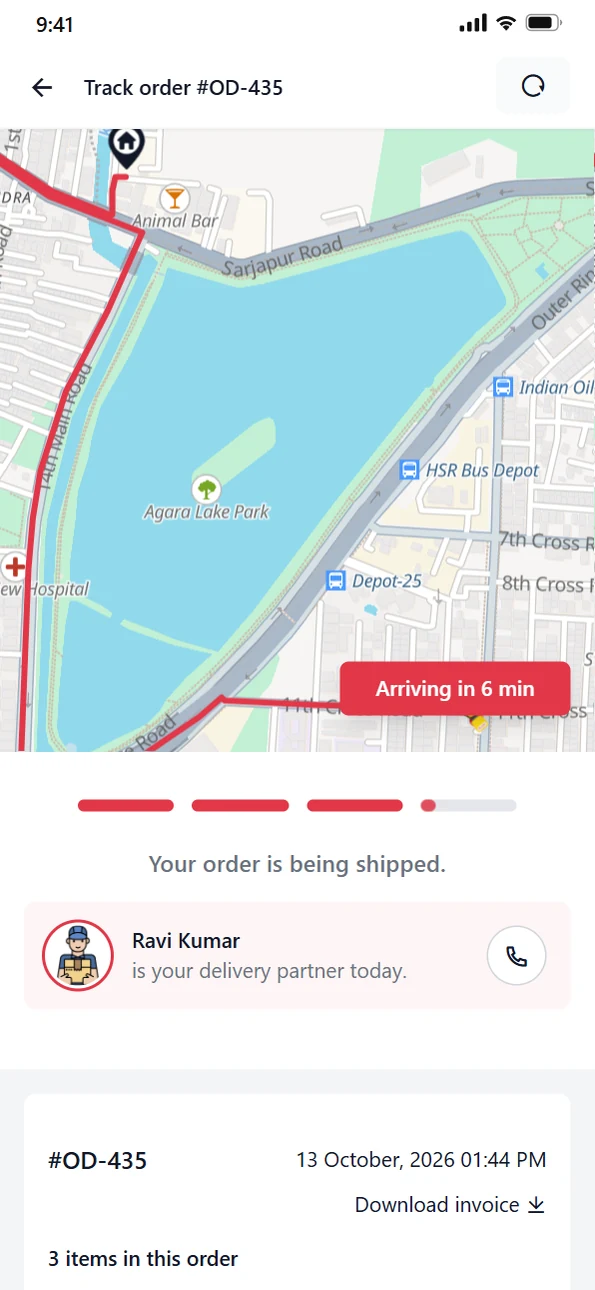
With Zepio you take food orders on your own website and app with 0% commission on your sales. Add a packaging fee that shows clearly before checkout, mark dishes as veg, non-veg or egg, and set opening hours per dish. Delivery times shown to customers can adjust to how many orders are in the queue, so your promise stays realistic at the busiest hour, and customers can follow their order on a live map.
Food-grade boxes, the right temperature, careful packing and a sealed bag. Get those right and every delivery tastes like it does in your kitchen.
Questions people ask
Can I pack food in newspaper?
Are plastic food containers banned in India?
How do I keep food hot during delivery?
Do I need tamper-proof packaging for food delivery?
What is the best packaging for curries and gravies?
Sources
- Newspapers should not be used for food contact, Indian food safety authorities urge, Food Packaging Forum
- FSSAI directs food business operators to discontinue use of newspapers for food packaging, All India Radio News
- Hygiene Rating Checklist: Food Service Establishments, Bakery, Restaurants (sample), FSSAI
- PAHO/WHO recommends five keys to safer food, Pan American Health Organization / WHO
- Ban on single use plastic in India, PIB Research Unit
- Single-use plastic items to be prohibited from July 1, 2022, The Tribune
- Zomato introduces tamper-proof packaging across 10 cities, The News Minute
- India amends regulations to allow use of recycled PET in food contact materials, PackagingLaw.com
- FSSAI addresses concerns regarding plastic use in idli preparation, FoodTechBiz
- Direction under Section 16(5) on licensing and registration (2022), FSSAI
Facts were checked against these sources on 22 Oct 2026. Rules and prices change: check the source before you rely on a figure. Read our editorial standards, or write to hi@zepio.io to report a mistake.