

On this page
- Why referrals work
- Step 1: Choose a two-sided reward
- Step 2: Size the reward from your margin
- Step 3: Set simple rules
- Step 4: Make sharing one tap
- Step 5: Ask at the right moments
- Step 6: Disclose paid promotions
- Step 7: Measure what referrals bring
- Mistakes to avoid
- Your referral program checklist
- How Zepio helps
To start a referral program, give both the customer and their friend a reward, release the customer's reward only after the friend's first order is completed, make sharing one tap on WhatsApp, and track whether referred customers stay. Start with a reward you can afford on one first order, then adjust based on results.
A referral program rewards existing customers for bringing in new ones, usually through a personal code or link. For a local business it turns the word of mouth you already get into something you can encourage, track and reward.
Why referrals work
People trust people they know. In Nielsen's 2021 research across more than 40,000 respondents, 88% said they trust recommendations from people they know more than any other channel (Nielsen).
Referred customers can also be worth more. A study of a German bank that paid €25 per referral, published in the Journal of Marketing in 2011, found referred customers were 16% to 25% more valuable over time and about 18% more likely to stay with the bank (Knowledge at Wharton). The researchers found the margin advantage faded after about 1,000 days, but the retention advantage lasted, and the bank earned roughly a 60% return over six years on each €25 reward (same source).
One bank is not your business, but the direction is clear: a friend's recommendation brings customers who trust you from day one.
Step 1: Choose a two-sided reward
Two-sided means both people get something: the friend gets a welcome reward and the customer gets a thank-you reward. Dropbox's founder Drew Houston reported that its two-sided referral incentive permanently increased sign-ups by 60%, inspired by PayPal's earlier sign-up bonus (Drew Houston).
| Reward type | Example | Good for |
|---|---|---|
| Store credit | ₹100 for each person | Any shop; keeps the money in your store |
| Free delivery | Next order delivered free | Delivery businesses with a delivery fee |
| Free product | A free dessert or sample | Restaurants, bakeries, beauty |
| Percentage off | 10% off the next order | Higher-priced items; see discount and coupon ideas |
| Cash | Rarely recommended | Easy to misuse |
Step 2: Size the reward from your margin
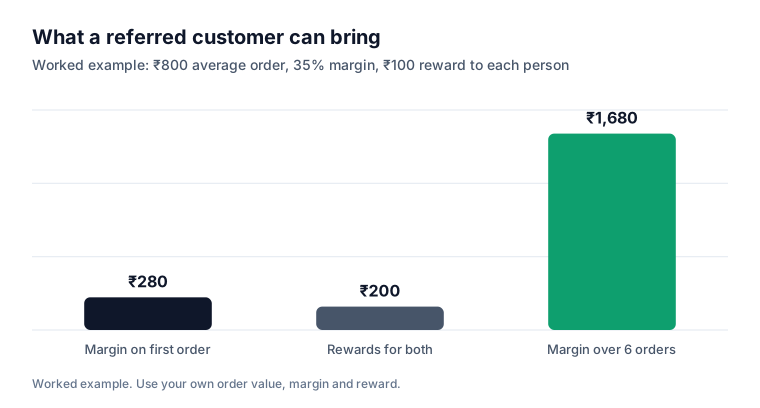
Worked example: an average first order of ₹800 with a 35% margin:
| Amount | |
|---|---|
| Margin on the friend's first order (35% of ₹800) | ₹280 |
| Friend's welcome reward | ₹100 |
| Customer's thank-you reward | ₹100 |
| Left on the first order | ₹80 |
| Margin over a year if the friend orders six times (including the first, before rewards) | ₹1,680 |
The first order still makes a small profit, and every repeat order after that is margin you would not otherwise have. Use your own average order value and margin.
Step 3: Set simple rules
Write rules a customer can read in ten seconds:
- Who can refer: any customer with at least one completed order.
- Who counts as new: a phone number that has never ordered before.
- When the friend's reward applies: on their first order above a minimum value.
- When the customer's reward is released: after the friend's first order is delivered and not returned.
- Limits: for example, up to 10 rewarded referrals per customer a month.
- Expiry: rewards valid for 60 or 90 days.
Mistake: Paying the referrer as soon as the friend signs up. People create fake accounts to collect rewards. Pay after a completed order.
Step 4: Make sharing one tap
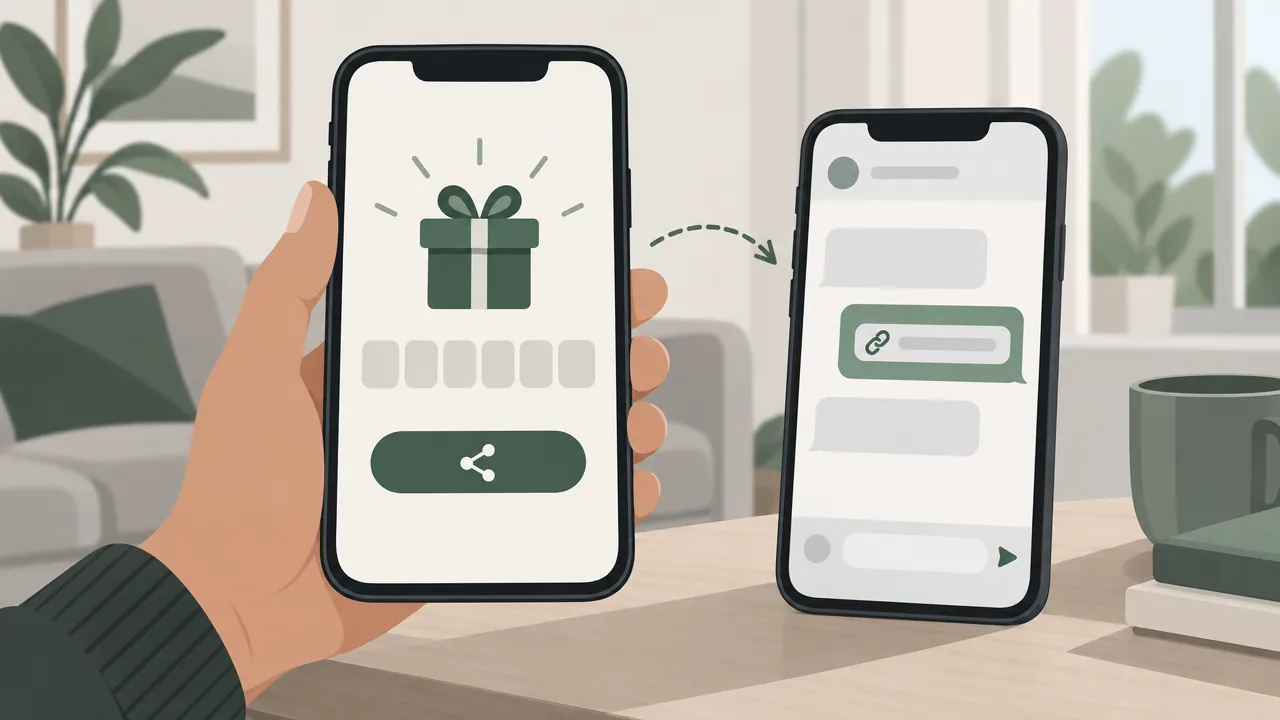
Make sharing take as few steps as possible.
- A personal code or link in the app and on the website.
- A ready message for WhatsApp: "I order my groceries from ____. Use my code ____ for ₹100 off your first order: ____"
- Share buttons for WhatsApp, Instagram and SMS.
- A thank-you note when someone's friend orders, so they share again.
Step 5: Ask at the right moments
Customers share when they are happy:
- Right after a delivery that went well.
- After a 5-star review.
- In the order confirmation message.
- On festivals, when people are buying gifts and talking about shops; see Diwali marketing ideas.
Our guide to getting repeat customers covers the experience that makes customers want to refer.
Step 6: Disclose paid promotions
A customer sharing a code with a friend is ordinary word of mouth. If you pay influencers or give them free products or discounts to promote you, ASCI's Guidelines for Influencer Advertising in Digital Media (2021) treat that as a material connection. Under those guidelines, labels such as "Ad", "Collaboration" or "Free gift" should make it clear, and the advertiser carries primary responsibility for compliance (Nishith Desai Associates).
If you run a large referral program with valuable rewards, ask your accountant whether any tax applies.
Step 7: Measure what referrals bring
| Number | Why |
|---|---|
| Codes shared and used | Is the program being used? |
| New customers from referrals | The main result |
| Cost per referred customer | Total rewards ÷ new customers |
| Second orders from referred customers | Do they stay? |
| Rewards on returned or cancelled orders | Spotting misuse |
Compare the cost per referred customer with what you pay for a customer through ads. Our guide to Facebook and Instagram ads shows how to work out ad cost per order.
Mistakes to avoid
A reward too small to notice. ₹10 off will not make anyone share.
A reward bigger than your margin. You lose money on every referral.
Paying before the order is completed. It invites fake accounts.
Complicated rules. If customers cannot explain it to a friend, they will not share it.
Never mentioning it. A referral program nobody knows about brings nothing.
Your referral program checklist
- Two-sided reward chosen, sized from your margin
- Rules written: who counts, minimum order, when rewards are released, limits, expiry
- Personal code or link for every customer
- Ready WhatsApp message and share buttons
- Referral asked for after good deliveries, reviews and in confirmations
- Paid promotions disclosed
- Referred customers, cost per customer and second orders tracked monthly
How Zepio helps
Zepio's refer and earn plugin runs the whole program on your own website and app. Each customer gets a referral code to share, with a share message you write. You set the amount for the friend and for the referrer, and which wallet it goes to. The friend gets their reward at signup, and the referrer gets theirs after the friend's first completed order. Reward points, scratch cards and push notifications from the same admin help keep referred customers coming back, with 0% commission on your sales.
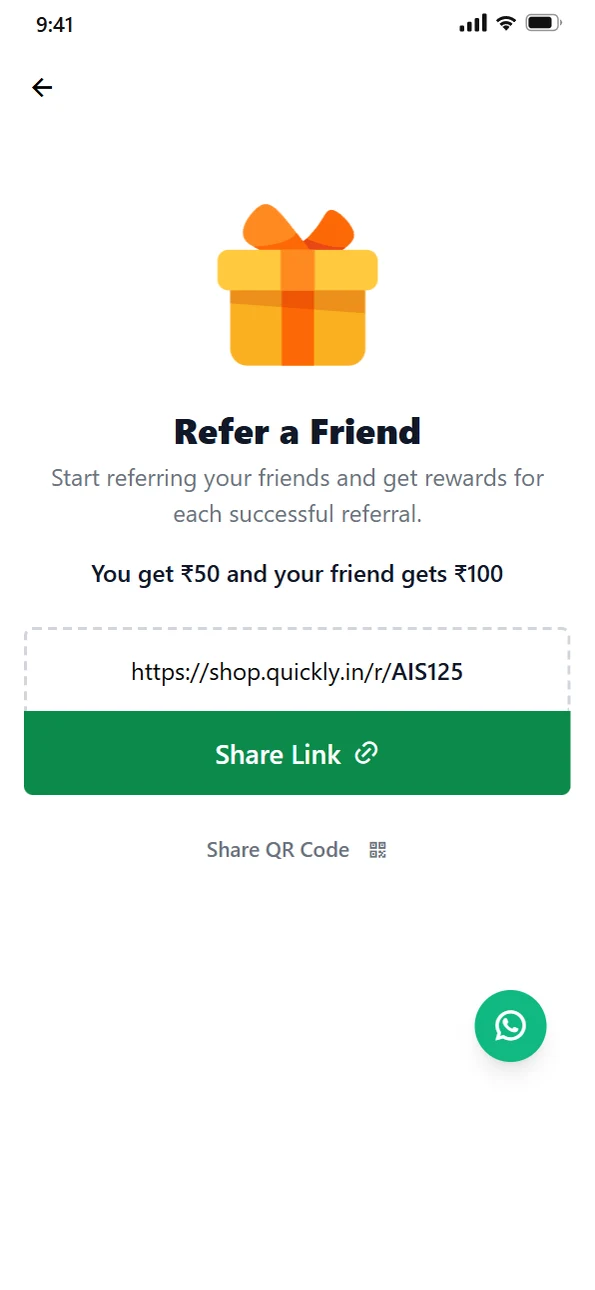
Reward both sides, pay after a real order, and make sharing easy. Your happiest customers will do the rest.
Questions people ask
What is a referral program?
What reward should I give for referrals?
How do I stop people misusing referral rewards?
Are referred customers really more valuable?
How do I promote my referral program?
Sources
- Beyond martech: building trust with consumers and engaging where sentiment is high, Nielsen
- Turning social capital into economic capital: straight talk about word-of-mouth marketing, Knowledge at Wharton
- Referral programs and customer value (Journal of Marketing, 2011), Journal of Marketing (SAGE)
- Dropbox: startup lessons learned, Drew Houston (SlideShare)
- Social media vs reality check: ASCI's new influencer guidelines, Nishith Desai Associates
Facts were checked against these sources on 22 Oct 2026. Rules and prices change: check the source before you rely on a figure. Read our editorial standards, or write to hi@zepio.io to report a mistake.