
On this page
- What a regular customer is worth
- How to measure your repeat rate
- 1. Make the first order excellent
- 2. Give a reason for the second order
- 3. Make reordering one tap
- 4. Reward loyalty with points
- 5. Turn regulars into referrers
- 6. Remind people at the right time
- 7. Win back customers who stopped
- 8. Fix complaints fast, and generously
- 9. Ask for honest reviews
- 10. Be consistent
- The tools, side by side
- Mistakes to avoid
- Your repeat customer checklist
- How Zepio helps
To get repeat customers, measure how many come back, give a clear reason for the second order, make reordering one tap, reward loyalty with points, ask happy customers to refer friends, send reminders people opted in to, and fix complaints the same day. A customer who already trusts you needs no ad to order again.
A repeat customer is a customer who has ordered from you more than once. This guide shows how to measure your repeat rate, what a regular customer is worth, and ten ways local businesses that sell online bring people back.
What a regular customer is worth
The money in a local business is in the customers who come back. Take a regular who orders once a month:
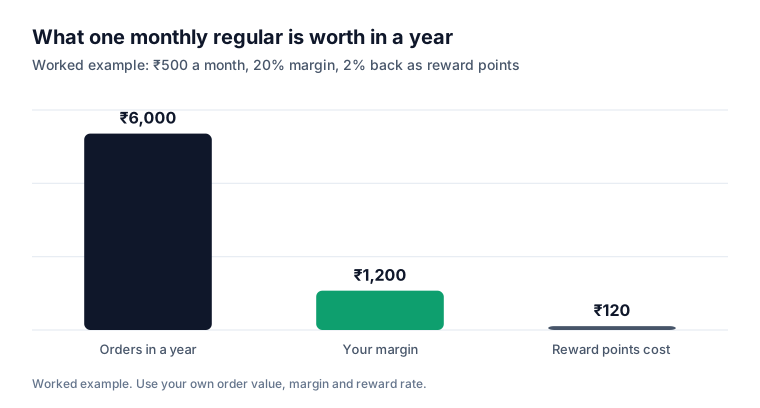
| Worked example: one monthly regular | Amount |
|---|---|
| Average order | ₹500 |
| Orders a year | 12 |
| Orders in a year | ₹6,000 |
| Margin at 20% (an assumption) | ₹1,200 |
| Reward points at 2% of each order | ₹120 |
A hundred customers like this bring ₹6 lakh of orders a year. Losing them after one order means finding a hundred new customers every month, and paying to find them.
Research on loyalty points the same way. In an older Bain & Company article, Fred Reichheld noted that in financial services a 5% increase in customer retention produced more than a 25% increase in profit, because returning customers tend to buy more over time, cost less to serve and refer others (Bain & Company). Your numbers will differ, but Reichheld notes that across a wide range of businesses, customers generate increasing profits each year they stay.
How to measure your repeat rate
Count it before you try to change it. Once a month:
- Count customers who ordered in the last 90 days.
- Count how many of them ordered more than once in that time.
- Divide the second by the first. That is your repeat rate for the period.
Also watch:
- Time to second order: how long after the first order a customer usually orders again.
- Customers who stopped: regulars who have not ordered for twice their usual gap.
Tip: If your store admin can export customers with their order counts, a spreadsheet with "orders" and "last order date" columns is enough to start.
1. Make the first order excellent
A bad first order is hard to recover from. Get the basics right every time: the right items, on time, packed well, and a friendly message after delivery. If something goes wrong, fix it before the customer has to complain twice.
2. Give a reason for the second order
The jump from one order to two needs a push. Plan it:
- A small offer for the second order, sent a few days after the first delivery.
- Points earned on the first order that the customer can spend on the second.
- A "you might also like" suggestion based on what they bought.
3. Make reordering one tap
Customers who buy the same things again, such as groceries, medicines, pet food or a favourite meal, want to repeat their last order without searching.
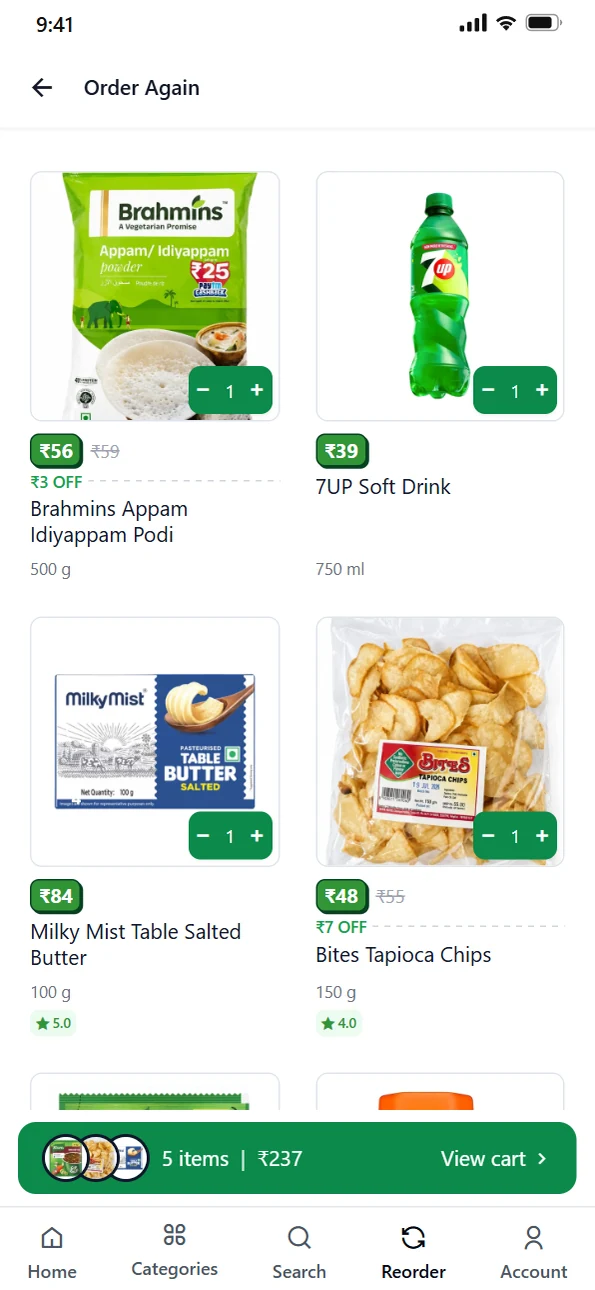
- Save addresses and payment preferences, so checkout takes seconds.
- Show past orders with a reorder button.
- Show "buy again" products on the home screen.
An app on the customer's phone makes this even quicker. Our guide on creating a mobile app for your business covers how to get one.
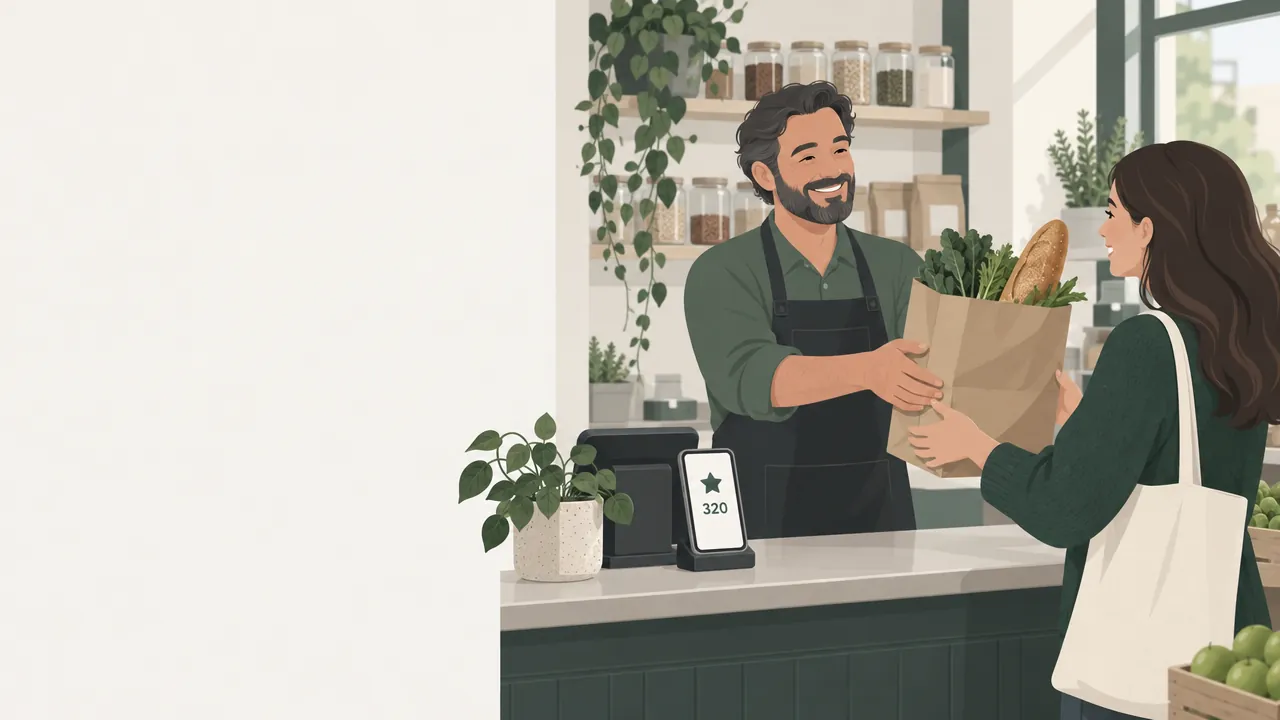
4. Reward loyalty with points
A reward points programme gives customers a share of each order back as points they spend on later orders. Keep it simple:
- A fixed rate, such as 2% of every order, shown at checkout: "You earn 10 points on this order."
- Points that are easy to spend, at checkout, on the next order.
- An expiry date, such as 6 or 12 months, with a reminder before points expire.
- No complicated tiers to start. Add customer levels later if your regulars respond.
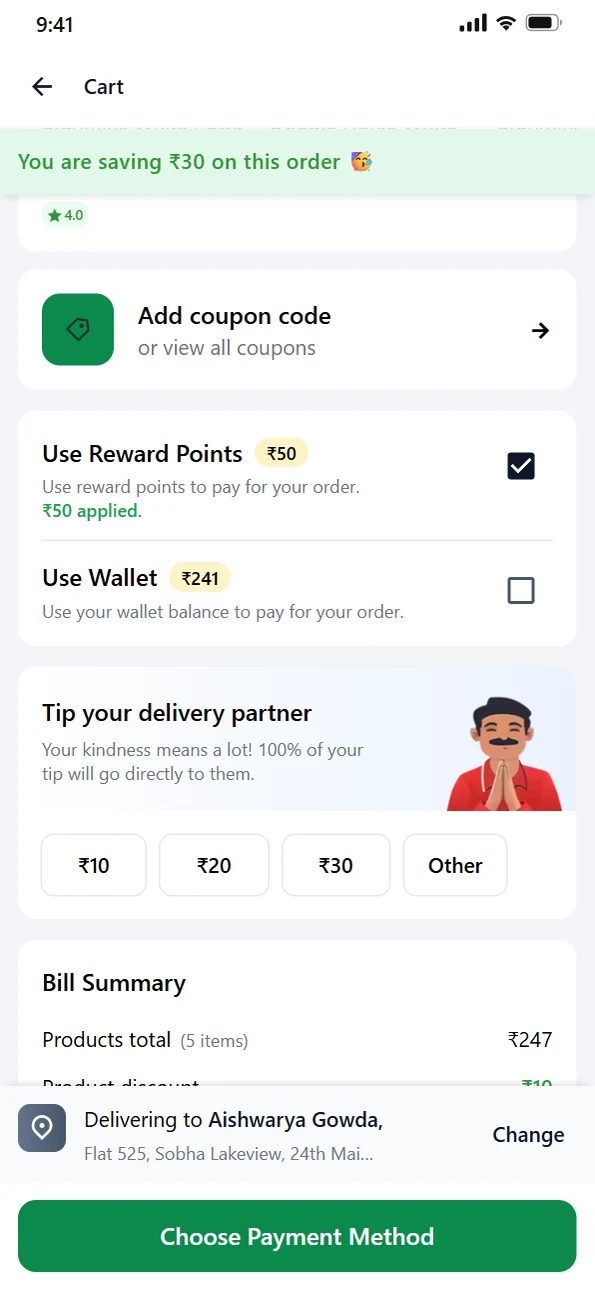
As the worked example above shows, 2% back costs ₹120 a year for a monthly regular worth ₹1,200 in margin. It is cheaper than a discount for everyone, because only customers who come back spend the points.
5. Turn regulars into referrers
Happy regulars know people like them. A refer-and-earn offer rewards both sides: the friend gets something off their first order, and the regular gets points or wallet money when the friend orders.
- Make it a one-tap share to WhatsApp, with a ready message.
- Reward after the friend's first order, not after signup.
- Keep the amounts small and equal, so it feels fair.
6. Remind people at the right time
A reminder works when it is useful and expected. Good reasons to message:
- Their usual item is back in stock, or a new batch has arrived.
- It is about time to reorder, based on their usual gap.
- Their points are about to expire.
- They left items in their cart. Our guide on recovering abandoned carts covers reminder timing.
- A festival or weekend special they would care about.
Use the channel the customer chose: push notifications in your app, WhatsApp, SMS or email. On WhatsApp, the business policy requires opt-in, and messages sent through the WhatsApp Business Platform are charged by Meta per message, so send fewer, better ones. Our guide on selling on WhatsApp Business covers the rules.
Warning: Daily offers to everyone risk getting your app muted and your number blocked. Start with once or twice a week, to the right people, and watch how many people opt out.
7. Win back customers who stopped
Some regulars drift away. Find them and ask:
- List customers who have not ordered for twice their usual gap.
- Send one personal message: "We have not seen you for a while. Was anything wrong with your last order?"
- Offer a small reason to return if there was no problem: bonus points or free delivery on the next order.
- Fix the problem if there was one, and tell them you did.
8. Fix complaints fast, and generously
A customer who complains is giving you a chance to keep them. Reply the same day, apologise without arguing, and put it right: a replacement, a refund or credit on the next order. Then fix the cause, so the next customer does not hit it.
9. Ask for honest reviews
Reviews help regulars feel good about choosing you and help new customers find you. Ask every happy customer, a day after delivery, for a review on your website and on Google. Google's Maps content policy does not allow offering discounts, free goods or payment in exchange for reviews, so ask without a reward. Our guide on getting your business on Google Maps covers reviews and replies.
10. Be consistent
Regulars come back partly because they know what they will get. Keep quality, portion sizes, packing and delivery times the same every time. When you must change something, such as a price or a delivery area, tell your regulars first.
The tools, side by side
| Tool | What it does | Best for |
|---|---|---|
| Reorder button | Repeat a past order in one tap | Groceries, medicines, pet food, food |
| Reward points | A share of each order back as points | Every business with repeat purchases |
| Refer and earn | Rewards a regular and their friend | Businesses where customers talk to each other |
| Cashback or scratch cards | A surprise reward after an order | Lifting the second and third order |
| Push notifications | Messages inside your app | Restocks, new items, points reminders |
| WhatsApp messages | Messages to people who opted in | Personal follow-ups, order updates |
| Customer levels | Better rewards for your best customers | Businesses with a clear group of top buyers |
Mistakes to avoid
Discounting for everyone. It trains customers to wait for offers and costs you margin on people who would have paid full price.
Rewards nobody understands. If the rule takes more than one sentence, simplify it.
Messaging people who did not opt in. It breaks WhatsApp's policy and annoys customers.
Not counting. Without a repeat rate, you cannot tell whether anything is working.
Ignoring the customers who stopped. One message can uncover a problem you can fix.
Your repeat customer checklist
- Repeat rate and time to second order measured every month
- A planned reason for the second order
- Saved addresses, past orders and a reorder button
- A simple reward points programme with clear rules
- A refer-and-earn offer with a ready WhatsApp message
- Reminders only to people who opted in, only when useful
- A monthly list of lapsed regulars, and a message to each
- Complaints answered the same day
- A habit of asking every happy customer for an honest review
How Zepio helps
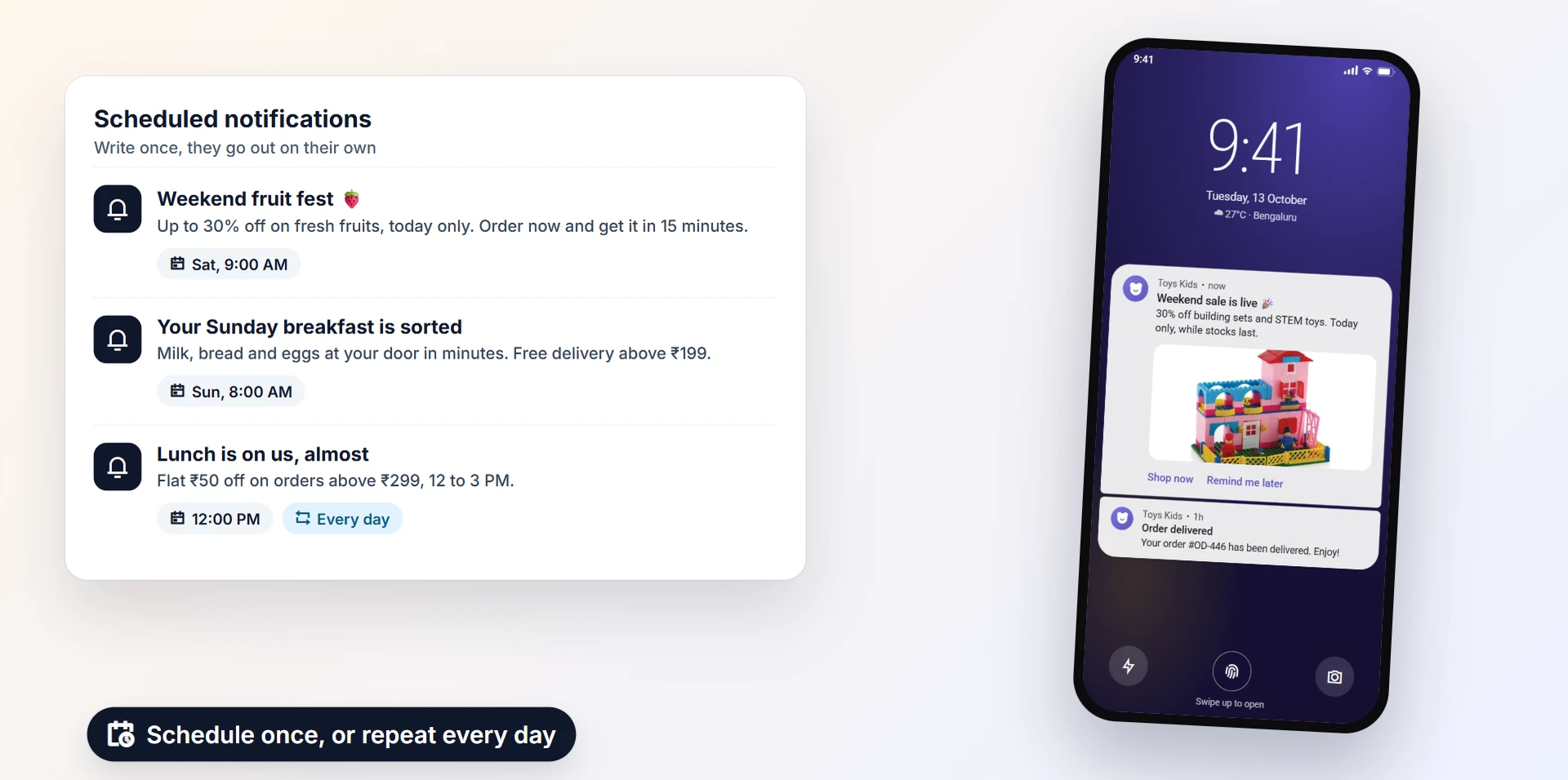
With Zepio your website and app come with reorder from past orders, reward points, refer and earn, cashback, scratch cards and customer levels, plus push notifications you can schedule for a group of customers. Every customer's orders sit in your admin, and the All-in-One report exports your orders with each customer's phone and email, so you can count your repeat rate in a spreadsheet.
Count your repeat rate this month, pick two of the ideas above, and count again next month. Small, steady improvements in repeat orders add up month after month.
Questions people ask
How do I get customers to come back to my business?
What is a good repeat customer rate?
Do reward points work for small businesses?
How often should I message my customers?
Can I give discounts in exchange for Google reviews?
Sources
- Prescription for cutting costs: loyal relationships, Bain & Company (Fred Reichheld)
- Pricing on the WhatsApp Business Platform, Meta for Developers
- WhatsApp Business Messaging Policy, WhatsApp
- Prohibited and restricted content (fake engagement), Google Maps user contributed content policy
Facts were checked against these sources on 20 Oct 2026. Rules and prices change: check the source before you rely on a figure. Read our editorial standards, or write to hi@zepio.io to report a mistake.