
On this page
- How a hyperlocal delivery business works
- Step 1: Pick your town and category
- Step 2: Sign your first vendors
- Step 3: Build your delivery team and zones
- Step 4: Handle tax and licences
- Step 5: Work out what each order earns
- Step 6: Launch in your town
- Step 7: Pay vendors on time, every time
- Where ONDC fits
- Mistakes to avoid
- Your launch checklist
- How Zepio helps
To start a hyperlocal delivery business, pick one town and one category, sign 20 to 40 local shops people already like, run your own delivery team inside tight zones, and price each order so commission and fees cover the delivery with something left over. Register as an e-commerce operator for GST, and pay your vendors on a fixed, clear cycle.
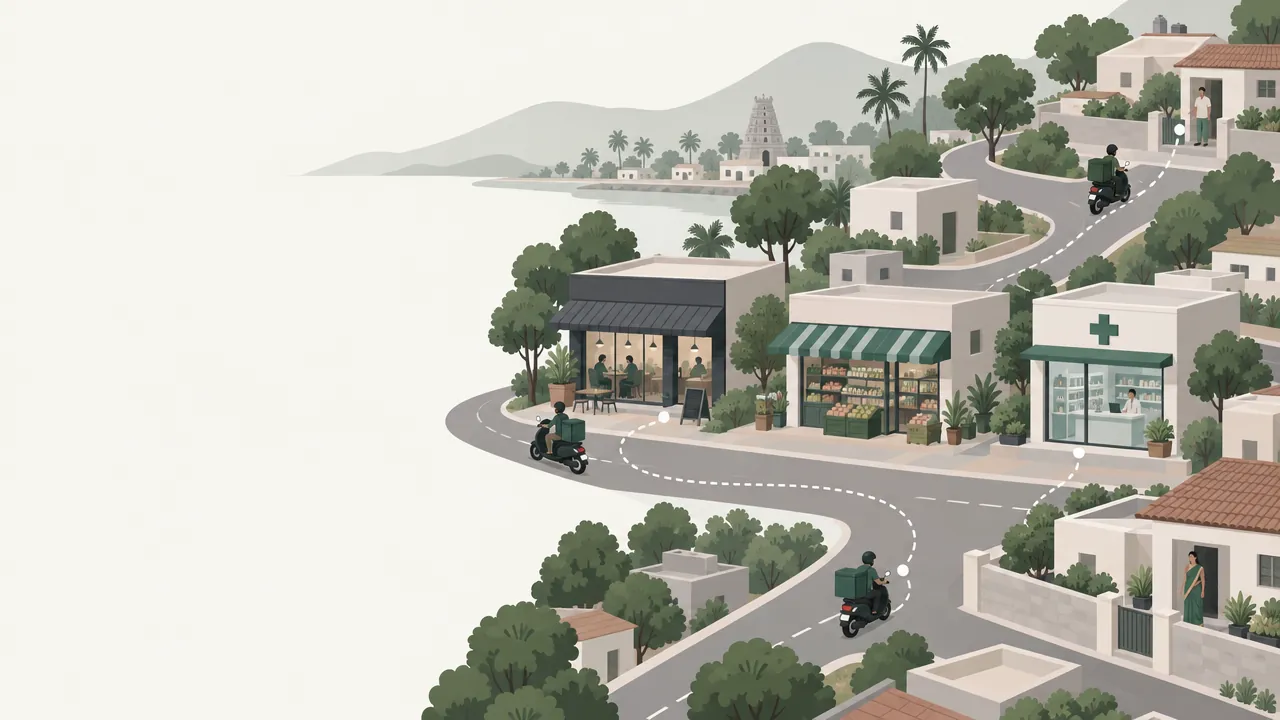
A hyperlocal delivery business is a local app or website where customers order from many nearby shops, such as restaurants, grocery stores and pharmacies, and a delivery team brings each order within an hour or so. Saurabh Shah's team launched Foodomaa in 2019, software for people starting this kind of business in their own town, beginning with food delivery. This guide covers how to choose your town and category, sign vendors, run delivery, handle tax, and work out whether each order makes money.
How a hyperlocal delivery business works
There are three sides to every order, and the business only works when all three are happy.
| Who | What they want | What you give them |
|---|---|---|
| Customers | Their favourite local shops, delivered quickly | One app with many shops, live tracking, easy payment |
| Vendors (shops) | More orders without hiring delivery staff | Orders on a tablet or phone, delivery handled, regular payouts |
| Delivery partners | Steady orders and fair, prompt pay | Orders close together, clear pay per order, incentives at peak times |
You earn from a commission on each order (paid by the shop) and from customer fees such as delivery, packaging or a small platform fee. Out of that you pay the delivery partner, payment gateway fees, support and marketing.
Step 1: Pick your town and category
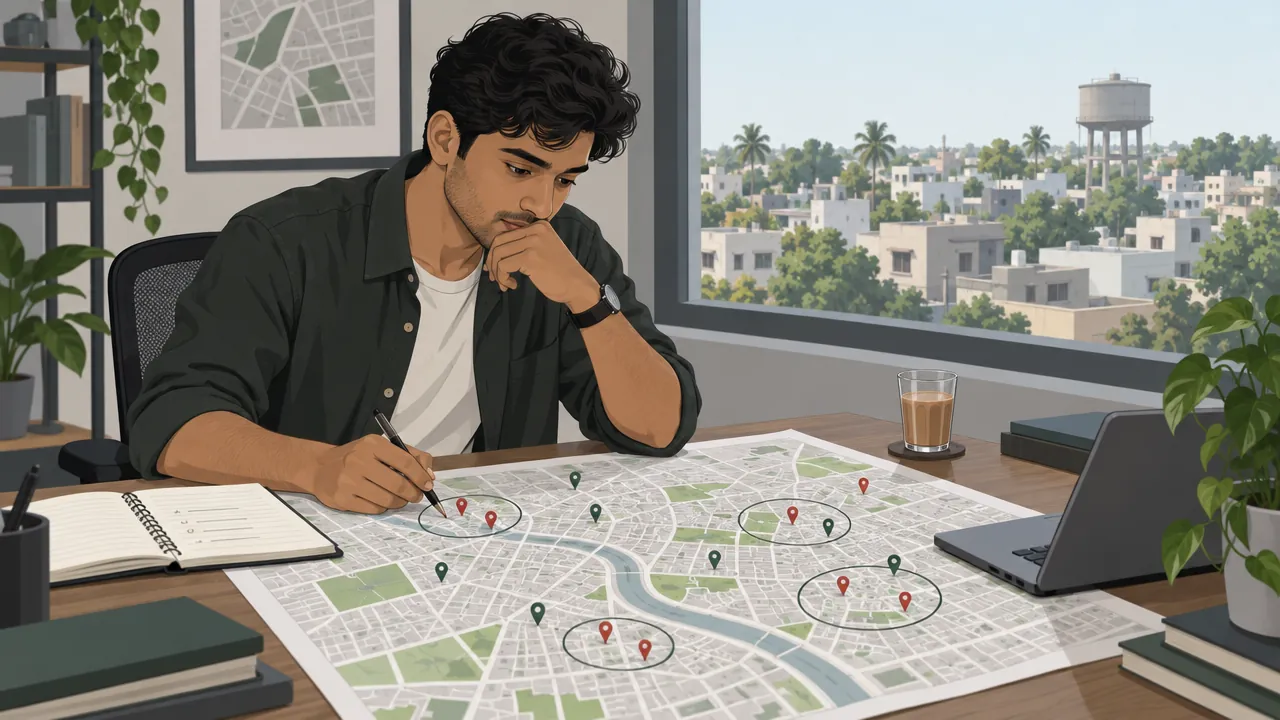
Start where you live or know well. You need to understand which shops people trust, how roads move at lunch and dinner, and where orders will cluster.
Choose one category to start:
| Category | Why it works | What to watch |
|---|---|---|
| Food from restaurants | Frequent orders, evening and weekend peaks | Preparation time; you pay the GST on restaurant orders |
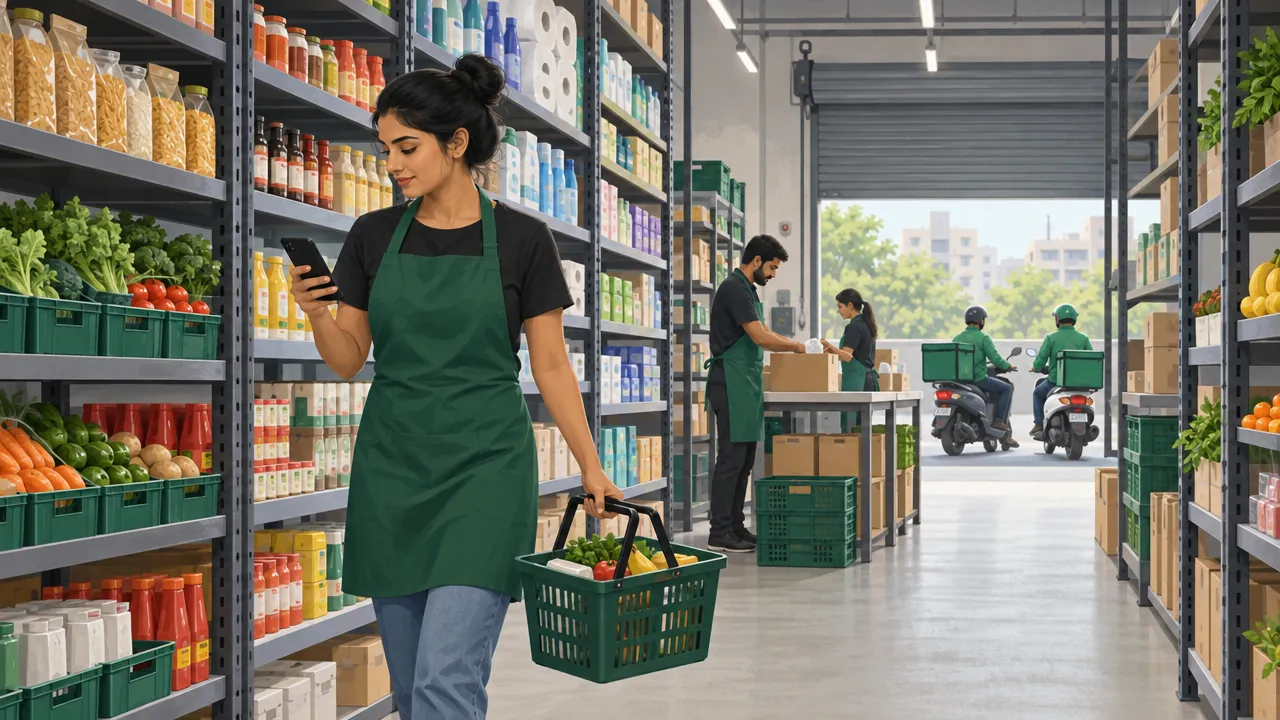
| Groceries and daily needs | Large baskets, regular customers | Stock accuracy; heavier orders (grocery guide, dark stores) |
| Medicines | Urgent, repeat orders | Prescription and licence rules for the pharmacy |
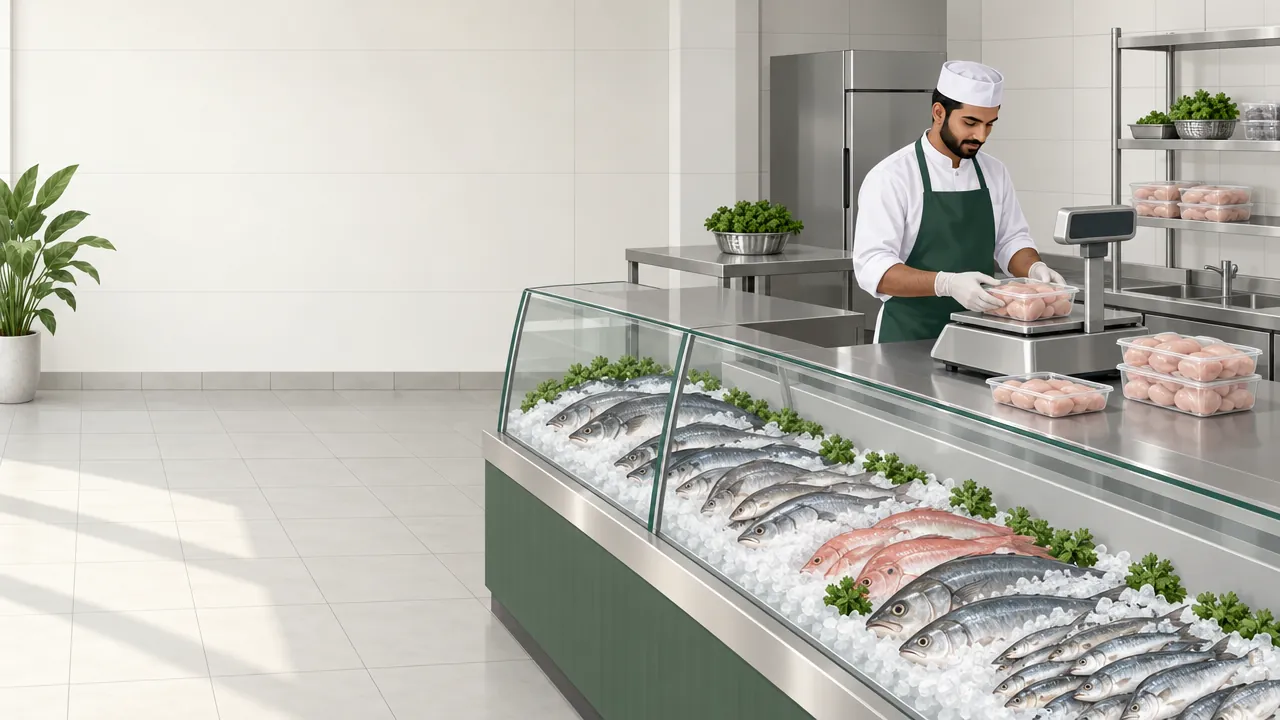
| Meat and fish | Weekly buyers, few good options in many towns | Cold chain; short delivery times (meat and fish guide) |
One category done well beats four done badly. Add the next one when the first runs smoothly.
Step 2: Sign your first vendors
The shops you launch with decide whether customers come back. Aim for the places people already queue at, not just the ones that say yes first.
What to agree with each vendor, in writing:
- Commission: a percentage of each order, which can differ per vendor or per product.
- Prices: whether app prices match counter prices, and who funds any discount.
- Preparation time and opening hours, so the app shows honest delivery times.
- Packaging: who provides it, and whether a packaging charge is shown to the customer.
- Payout cycle: how often you pay them, and what the statement shows.
- Cancellations and refunds: who pays when an order is wrong or late.
- Licences: their FSSAI number for food businesses, and any other licence their category needs.
The Consumer Protection (E-Commerce) Rules, 2020 also expect a marketplace to have written terms with its sellers, show seller details to customers, and run a grievance process.
Tip: Photograph each vendor's menu or products yourself on the first visit. Good photos and correct prices on day one matter more than the number of shops listed.
Step 3: Build your delivery team and zones
Speed is the product. Run your own delivery team: fast delivery is what customers pay for, and your own team is how you control it.
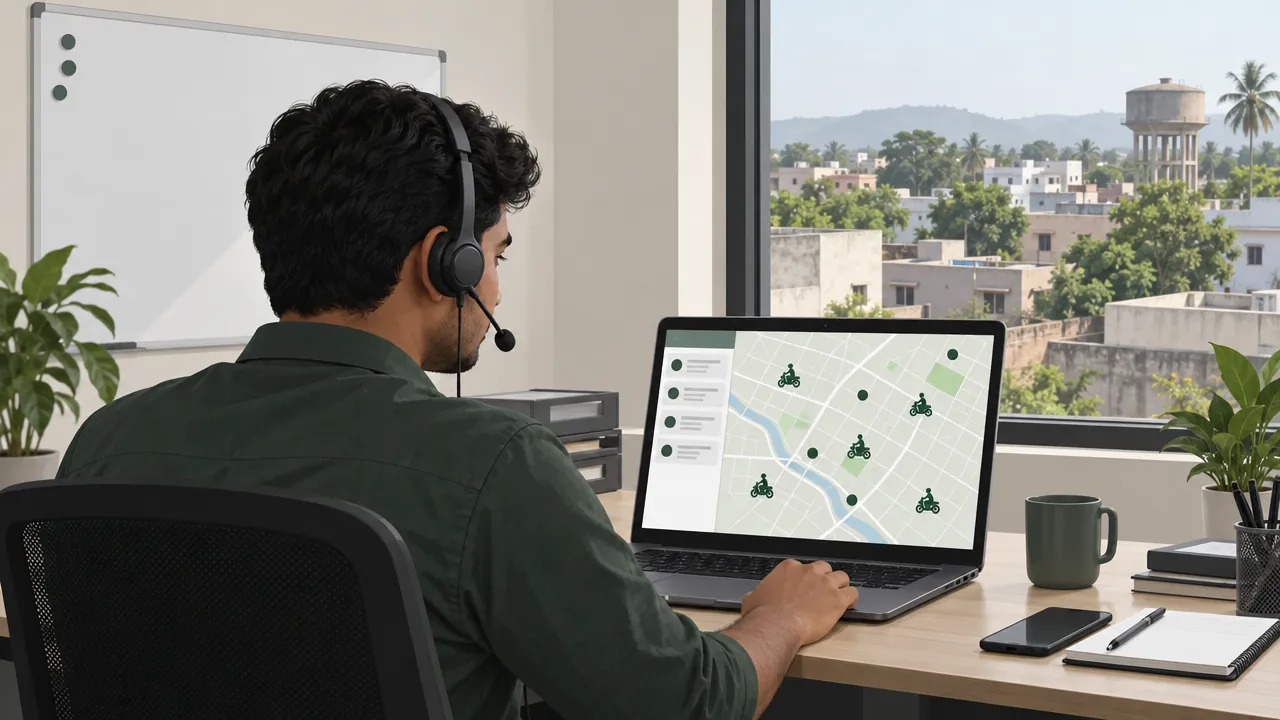
- Draw zones around the areas you can serve quickly, and assign vendors to the zones they can reach.
- Start with a few delivery partners at lunch and dinner peaks, and add people as orders grow.
- Assign orders automatically to the nearest free delivery partner, with a manager able to step in.
- Pay per order, or a base plus per order, with incentives for peak hours and full attendance.
- Track cash each delivery partner collects, and settle it every day.
- Confirm each delivery with an OTP.
Our guides on hiring and managing delivery staff and setting delivery charges go deeper.
Step 4: Handle tax and licences
Running a platform for other shops is different from selling your own products. Get an accountant who understands e-commerce before launch.
| What | The rule | Source |
|---|---|---|
| GST registration | Every e-commerce operator that collects TCS or pays GST on restaurant orders must register, whatever its turnover | CGST Act, section 24 |
| TCS on vendors' sales | You collect tax at source on the net value of vendors' taxable supplies through you: 0.5% since 10 July 2024. Not on restaurant food, where you pay the GST instead | Notification 15/2024, via Taxmann |
| GST on restaurant orders | Since 1 January 2022, the e-commerce operator collects and pays the 5% GST on restaurant food ordered through it, not the restaurant | CBIC Circular 167/23/2021-GST; rate: Tally Solutions; see also what restaurants pay on delivery apps |
| GST on your own fees | Your commission, delivery and platform fees are your own taxable services | Your accountant |
| FSSAI | If you handle food, check which registration or licence your platform needs | FSSAI order of 13 March 2026 |
FSSAI's 2026 order sets licence categories by turnover and says it supersedes earlier criteria. Earlier FSSAI guidance had placed e-commerce food businesses under a Central licence (Inc42, 2017), so confirm the right category for your platform on FoSCoS or with a food licensing consultant.
Warning: The 5% GST on restaurant orders is yours to pay. Build it into your checkout and your accounts from the first day, or a busy month becomes a tax bill you did not plan for.
Step 5: Work out what each order earns
A hyperlocal order brings in money from the shop and the customer, and a large share of it goes to the delivery partner. Know this number before you spend on marketing.
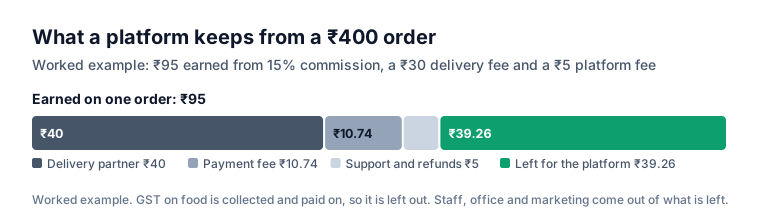
| Worked example: one ₹400 food order | Amount |
|---|---|
| Commission from the restaurant at 15% (an assumption) | ₹60.00 |
| Delivery fee paid by the customer | ₹30.00 |
| Platform fee paid by the customer | ₹5.00 |
| Earned on the order | ₹95.00 |
| Delivery partner pay for the trip (an assumption) | − ₹40.00 |
| Payment gateway fee on ₹455, including the ₹20 food GST (2% plus 18% GST, Razorpay's standard rate) | − ₹10.74 |
| Allowance for support, refunds and wrong orders (an assumption) | − ₹5.00 |
| Left for staff, office and marketing | ₹39.26 |
The 5% GST on the food is collected from the customer and paid on, so it is left out of the earnings. The delivery and platform fees here are before your own 18% GST on them; that ₹6.30 of GST, and the few paise of gateway fee on it, are left out to keep the example simple. These are worked numbers; use your own.
Break-even. If your team, office and marketing cost ₹1,50,000 a month, you need about 3,820 orders a month at ₹39.26 each, or around 127 a day, to break even. That is why three numbers matter most:
- Orders per delivery partner per hour. Two orders in one trip halve the delivery cost per order.
- Average order value. A minimum order or a small-order fee keeps tiny orders from losing money.
- Repeat customers. Each repeat order needs no new marketing.
Try your own numbers in the break-even calculator.
Step 6: Launch in your town
Local businesses grow through trust and word of mouth, not big ad budgets.
- Launch with your best shops listed, with correct prices and good photos.
- Ask each vendor to tell their regulars: a counter poster with a QR code, a message to their WhatsApp contacts.
- Give a reason to try the app: free delivery on the first order, or a small first-order discount you fund.
- Deliver every early order perfectly. In a small town, people talk about the first few weeks.
- Watch reviews and complaints daily, and fix them the same day.
- Bring customers back with reward points, cashback and push notifications for new shops and offers.
Step 7: Pay vendors on time, every time
Vendors stay when payouts are predictable and easy to check.
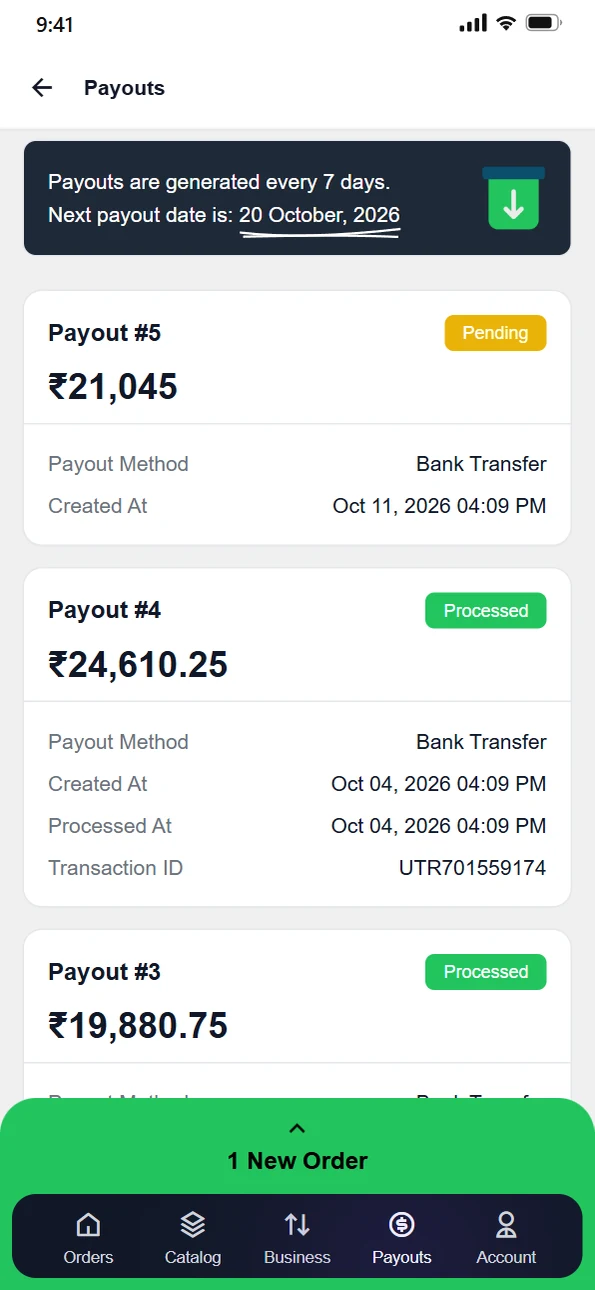
- A fixed cycle, such as weekly, with the same day every week.
- A statement for every payout: orders, order value, commission, fees, refunds and the amount paid.
- A minimum payout amount, so tiny balances roll into the next cycle.
- One person who answers vendor questions about payouts within a day.
Where ONDC fits
ONDC (the Open Network for Digital Commerce) is a government-backed network that lets buyer apps and seller apps connect, so a shop listed through one app can be found from another. A government statement in December 2025 said more than 1.16 lakh retail sellers from over 630 cities and towns were live on it (IANS). It can be another source of orders later; your own app, brand and delivery team are what make a local business last.
Mistakes to avoid
Launching in too many categories at once. Do one category well first.
Signing every shop that says yes. A few bad shops ruin the app's reputation.
A delivery area that is too wide. Long trips kill both delivery times and margins.
Forgetting the GST on restaurant orders. It is your liability as the operator.
Unclear or late vendor payouts. Unhappy vendors tell other vendors.
Spending on ads before orders make money. Fix the per-order numbers first.
Your launch checklist
- One town and one category chosen
- 20 to 40 good vendors signed, with written terms and correct menus or products
- Zones drawn, and vendors assigned to the zones they can reach
- Delivery partners hired for peak hours, with pay and incentives set
- GST registration as an e-commerce operator; TCS and restaurant GST set up with an accountant
- FSSAI category confirmed if you handle food
- Per-order numbers and a break-even target worked out
- A weekly payout cycle and statement for vendors
- Customer support and a grievance contact published
How Zepio helps
The Zepio Multivendor plan gives you the customer website and apps, a store partner app where each shop accepts orders and sees payouts, and an admin where you set commission per vendor or per product, run payout cycles with statements, draw zones on a map and dispatch your own delivery team automatically.
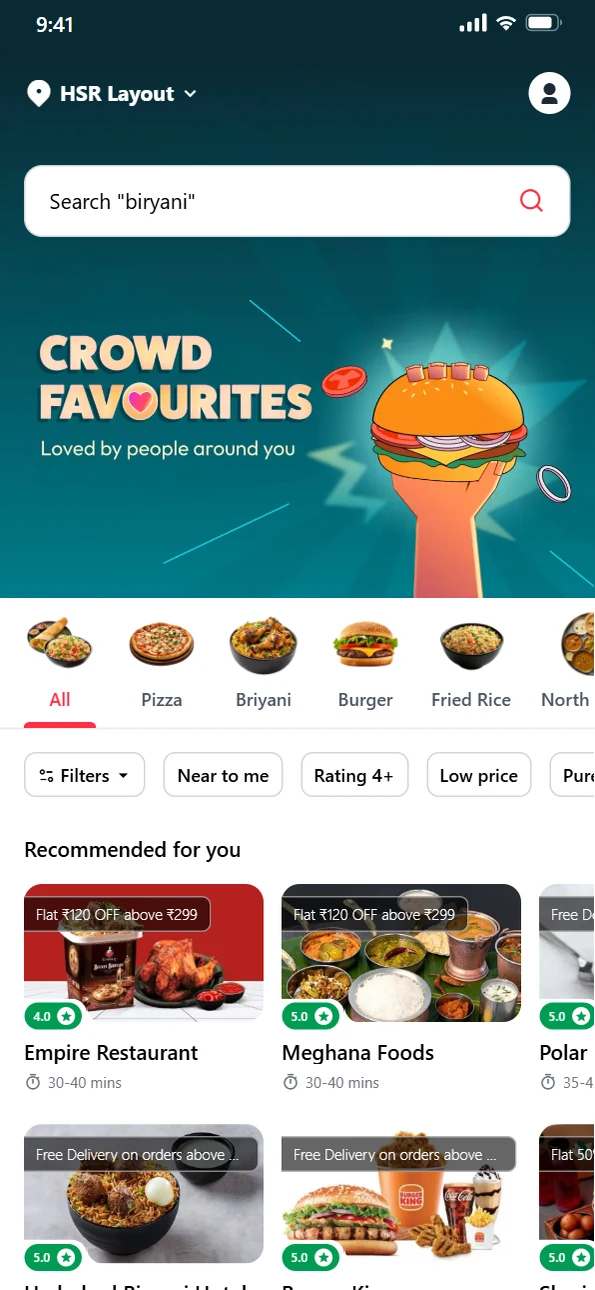
Start with one town, one category and the shops people already love. Get each order right and each payout on time, and word of mouth will do much of your marketing.
Questions people ask
What is a hyperlocal delivery business?
How does a hyperlocal delivery business make money?
Do I need GST registration to run a local delivery app?
How many shops do I need before launching?
Should I hire delivery partners or use a delivery company?
Can a small town support a delivery app?
Sources
- CGST Act, section 24: compulsory registration in certain cases, CBIC
- ECOs to collect 0.5% TCS on net value of taxable supplies (Notification 15/2024-Central Tax), Taxmann
- Circular 167/23/2021-GST: restaurant services through e-commerce operators, CBIC (hosted by the GST Council)
- GST on restaurant services: dine-in vs takeaway vs delivery apps, Tally Solutions
- Consumer Protection (E-Commerce) Rules, 2020 (Gazette copy), PRS Legislative Research
- Order on revised turnover thresholds for registration and licensing (13 March 2026), FSSAI
- FSSAI issues guidelines for e-commerce food operators; makes licence mandatory (2017), Inc42
- Over 1.16 lakh retail sellers from 630 cities and towns live on ONDC: Govt, IANS
- Razorpay pricing, Razorpay
Facts were checked against these sources on 20 Oct 2026. Rules and prices change: check the source before you rely on a figure. Read our editorial standards, or write to hi@zepio.io to report a mistake.