

On this page
- Choose your model
- Step 1: Get your licences
- Step 2: Buy from authorised sources and keep records
- Step 3: Set up a clean, cold shop
- Step 4: Keep the cold chain unbroken
- Step 5: Sell by weight and cut, clearly
- Step 6: Price for wastage, packing and delivery
- Step 7: Set cut-off times and delivery slots
- Step 8: Run delivery so every order arrives cold
- Step 9: Get regular customers
- Mistakes to avoid
- Your launch checklist
- How Zepio helps
To start a meat and fish delivery business, get FSSAI registration and your local meat shop licence, buy only from authorised slaughterhouses and licensed suppliers with records, and keep the cold chain unbroken from shop to door. Sell by clear weights and cuts with a daily cut-off time, and deliver inside a small area with insulated boxes so every order arrives cold.
A meat and fish delivery business is a shop or store room that sells raw meat, poultry and seafood by weight and delivers it to customers' homes, usually the same day. This guide covers the licences, the hygiene rules FSSAI sets for meat shops, pricing by weight, and how to run delivery so customers order again.
Choose your model
You can start a meat and fish business that delivers in one of three ways.
| Model | How it works | Good for |
|---|---|---|
| Existing shop plus delivery | A meat or fish shop adds online orders and delivery | Owners who already have suppliers, a licence and regulars |
| Delivery-first store | A small shop or cold room that mostly serves online orders, much like a dark store | Areas with many homes and few good shops |
| Fish and seafood only | Fresh fish and seafood from the morning market or landing centre | Coastal and river cities, communities that eat fish daily |
Some businesses also sell marinated or ready-to-cook products. FSSAI's rules for retail meat shops say no food of any type should be prepared inside the meat sale outlet, so marination usually needs a separate, suitably licensed space. Ask your food safety officer before you add it.
Step 1: Get your licences
A meat and fish business is a food business, and FSSAI sets specific hygiene rules for meat shops.
| What | From whom | Notes |
|---|---|---|
| FSSAI registration or licence | FoSCoS portal | From 1 April 2026, registration covers turnover up to ₹1.5 crore; above that, a State licence up to ₹50 crore and a Central licence beyond |
| Meat shop trade or health licence | Your municipality, corporation or panchayat | FSSAI's rules refer to a veterinary health trade licence granted by the local body |
| No objection certificate | Police or the local body | FSSAI's rules require one before a licence for buffalo meat and pork shops |
| GST | GST portal, with your accountant | Depends on what you sell and in what form; have each product classified |
| Shop and establishment registration | Your state's labour department | Check whether your state's shop and establishment law covers your shop |
FSSAI's rules for retail meat shops (Schedule 4, Part IV of the licensing regulations) also cover where a shop can be:
- Not less than 50 metres from a place of worship, and 100 metres if directly opposite its entry gate.
- Away from vegetable, fish or other food markets, and free of smoke, dust and bad smells.
- Not used for living, and not connected to a residential space.
The same rules say nothing but meat should be sold at a meat shop. If you plan to sell meat and fish from one place, ask your local body how this applies before you sign a lease.
Warning: Rules and their enforcement differ between cities. Visit your local body's health or veterinary department before you sign a lease, and ask exactly which licences they require for a meat or fish shop at that address.
Step 2: Buy from authorised sources and keep records
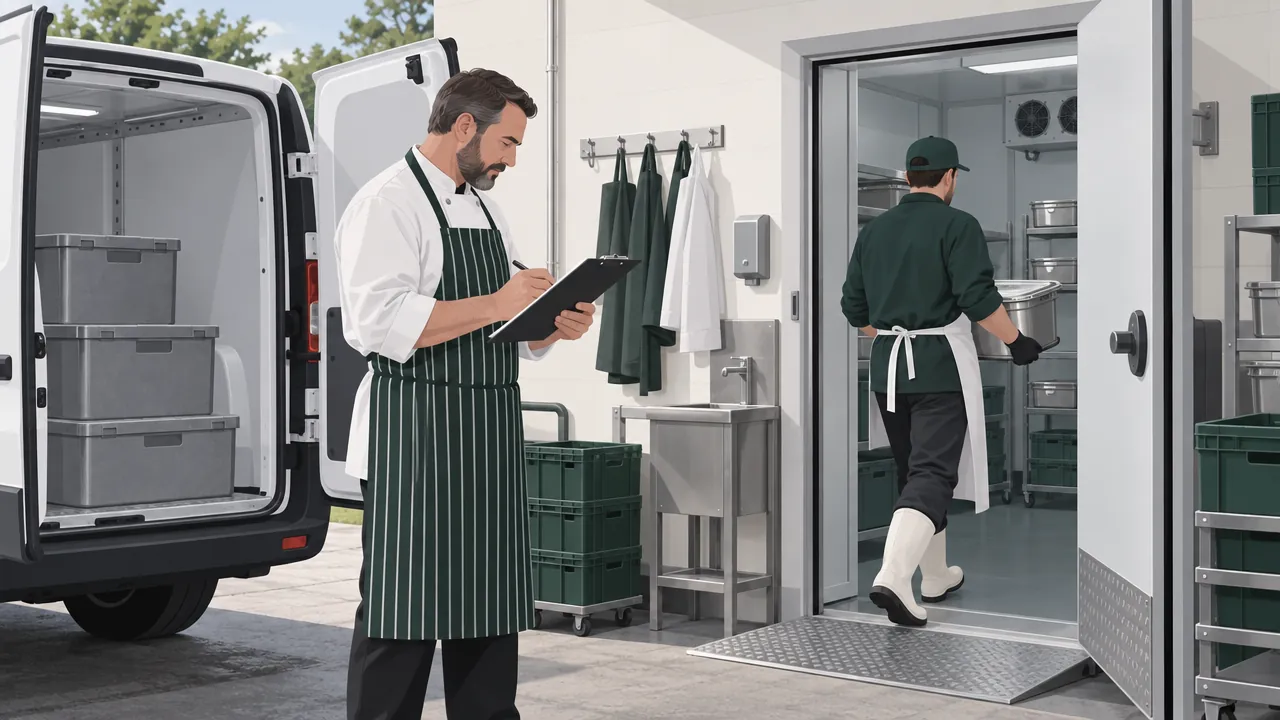
FSSAI's rules are clear on where meat comes from: only wholesome meat from an authorised slaughter house may be sold at a meat shop, and a record must be kept at the premises for inspection. Meat from unauthorised sources or unstamped meat is liable to be confiscated and destroyed.
In practice:
- Buy from licensed suppliers who give you a bill for every delivery.
- File the bills by date, so you can show where any batch came from.
- Check every delivery before it goes into storage: colour, smell, temperature and the stamp.
- For fish, buy from licensed wholesalers or the morning market, and check for clear eyes, red gills and firm flesh.
- Never slaughter animals or birds inside the shop. The rules prohibit it.
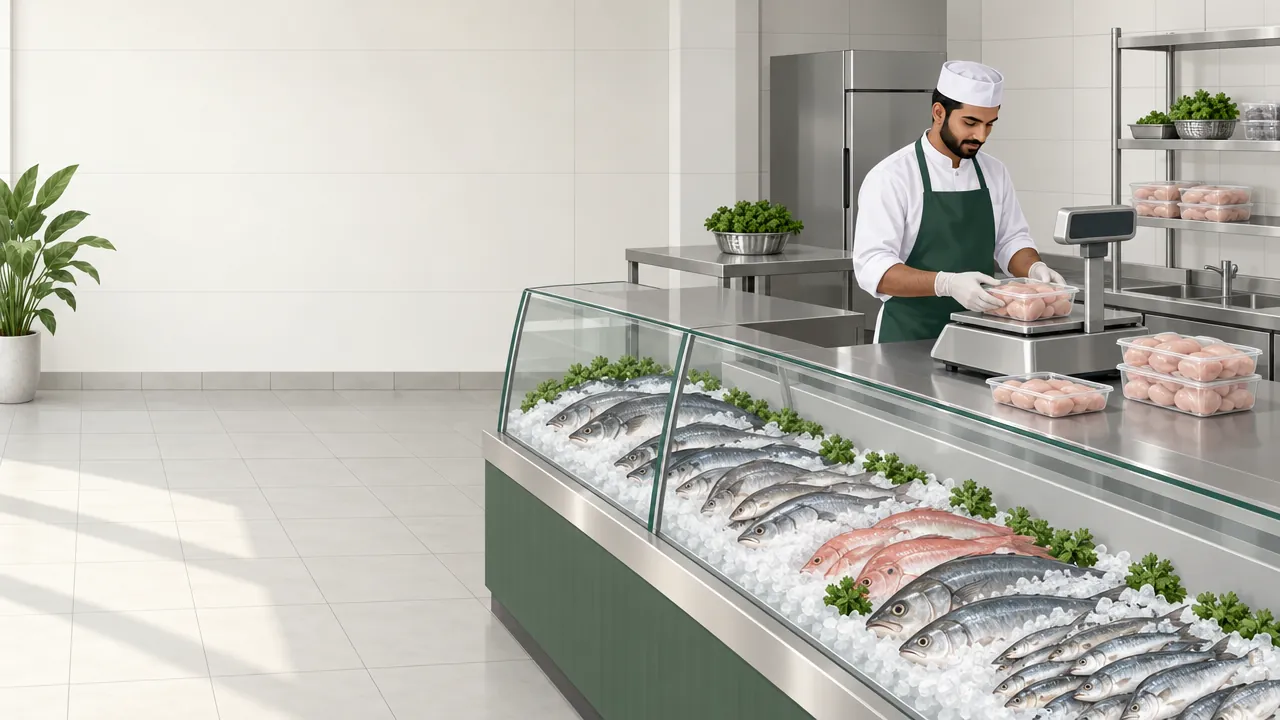
Step 3: Set up a clean, cold shop
The same FSSAI rules list what a retail meat shop needs. The main points:
| Area | What the rules ask for |
|---|---|
| Walls and floor | Impervious material such as glazed tiles up to at least 5 feet; a non-slip floor that slopes to a drain |
| Surfaces and tools | Stainless steel or similar for tables and racks; stainless steel knives and hooks; a food-grade chopping block |
| Cold storage | A display refrigerator at 4 to 8 degrees C, or a freezer if meat is kept more than 48 hours |
| Hot water | A geyser giving water at not less than 82 degrees C to clean equipment and the premises |
| Hygiene | Fly proofing, a washbasin with soap, a pedal bin, a pest control record |
| Staff | An annual medical check for everyone handling meat, with records kept at the shop |
| What not to do | No slaughtering, no food preparation, no live animals or birds inside the shop |
The rules also say the door should be self-closing and that carcasses should not be visible from outside.
Step 4: Keep the cold chain unbroken
Meat and fish spoil fast when they warm up. The cold chain is every step that keeps them cold: from the supplier, in your shop, while packing and on the way to the customer.
- Supplier to shop. FSSAI's rules ask for carcasses to be moved in insulated, refrigerated vans, never in vehicles used for people or in the open.
- In the shop. Keep meat and fish in the display refrigerator or freezer, not on the counter. Take out only what you are cutting.
- Packing. Pack each order in food-grade bags or containers, sealed and labelled, at the last moment before dispatch.
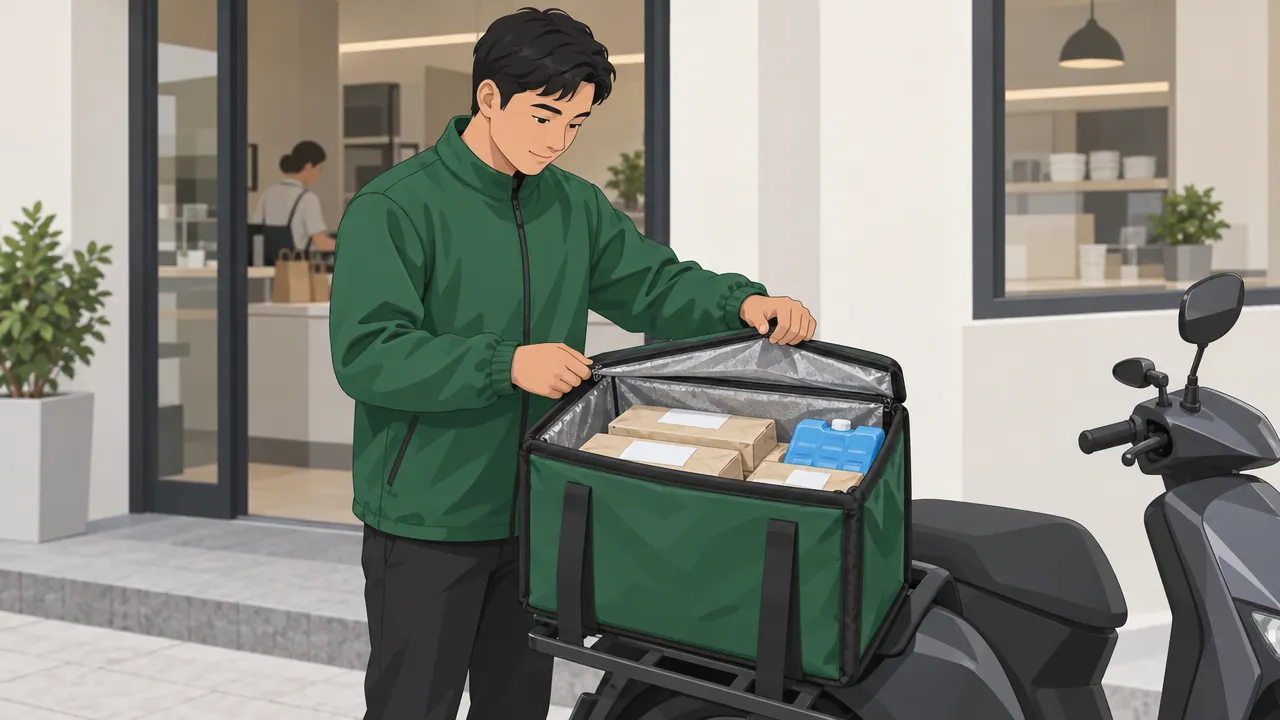
- Delivery. Use insulated bags or boxes with ice packs or gel packs. Keep raw meat and fish apart from other items.
- Time. Keep each trip short; a small delivery area keeps every order cold.
Tip: Pack fish and meat in separate bags, and put a small absorbent pad in each pack. Customers notice a clean, dry bag at the door.
Step 5: Sell by weight and cut, clearly
Online meat customers cannot see the piece before they buy, so your product page has to answer every question a counter customer would ask.
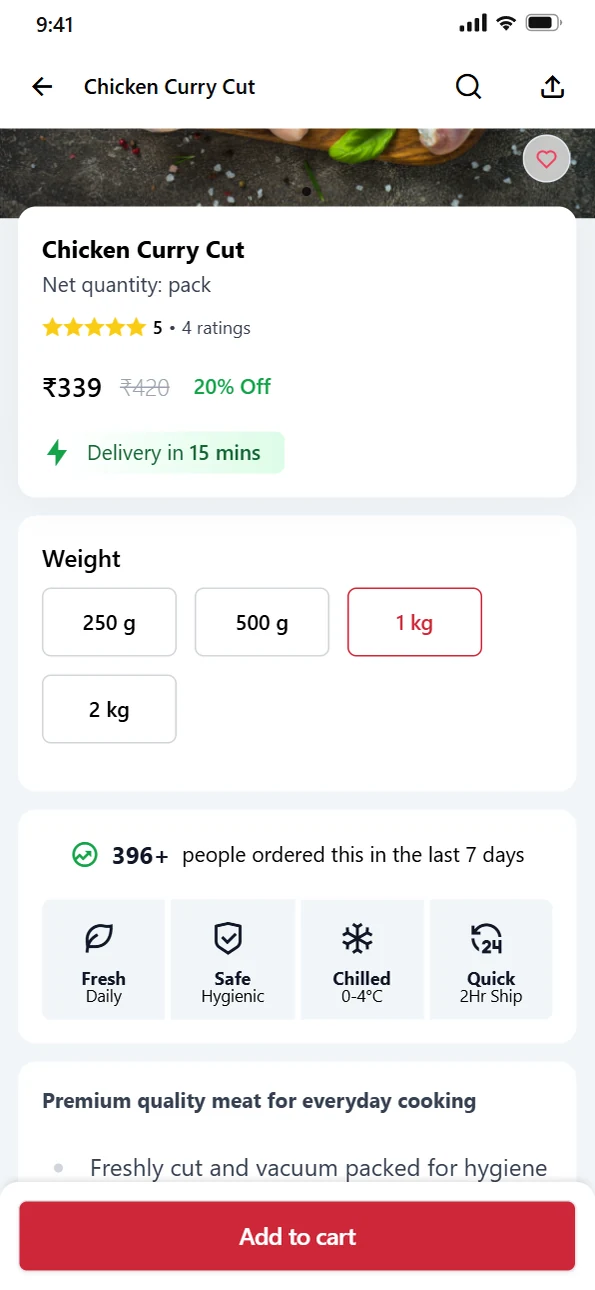
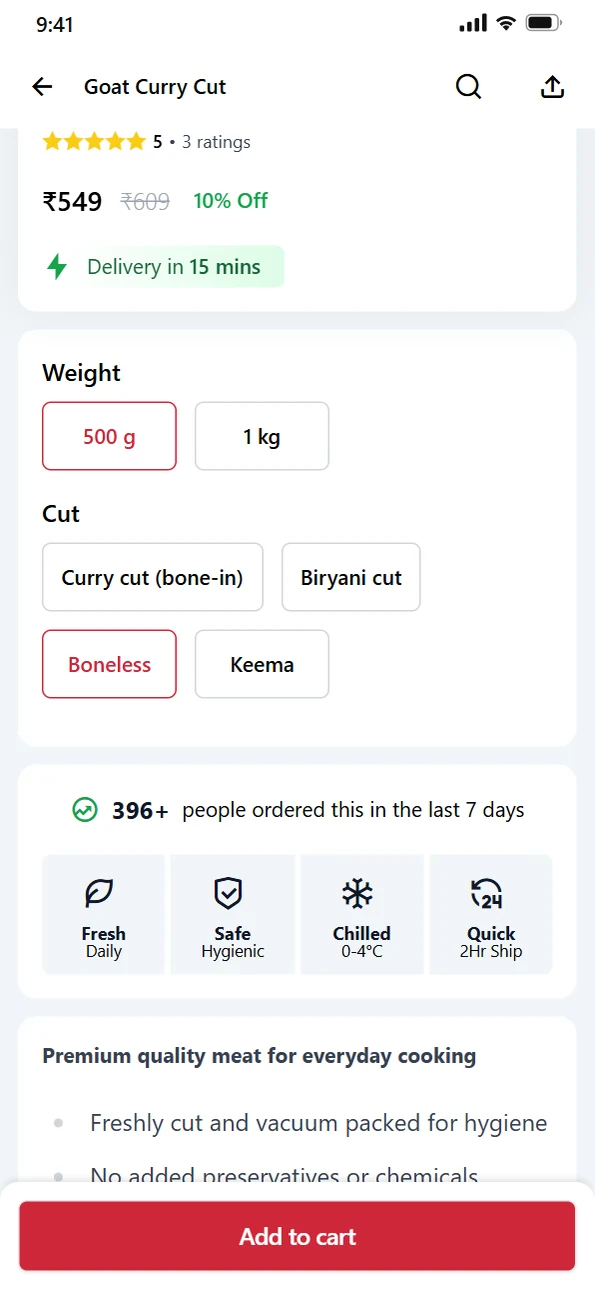
- Sell in fixed weights, such as 250 g, 500 g and 1 kg, with the price for each.
- Offer the cuts people cook with: curry cut, boneless, mince, whole; for fish, whole, steaks or fillets.
- Say whether the weight is before or after cleaning. For fish, cleaning removes the head, scales and insides, so the cleaned weight is lower, and a customer who expected 1 kg of cleaned fish feels cheated by less.
- Show the source and freshness: "chicken cut this morning", "fish from today's market".
- Photograph your own products on a clean tray, not stock photos.
Step 6: Price for wastage, packing and delivery
Meat and fish carry costs that dry groceries do not: trimming and cleaning wastage, ice and insulated packing, and spoilage of unsold stock. Price every product after all of them.
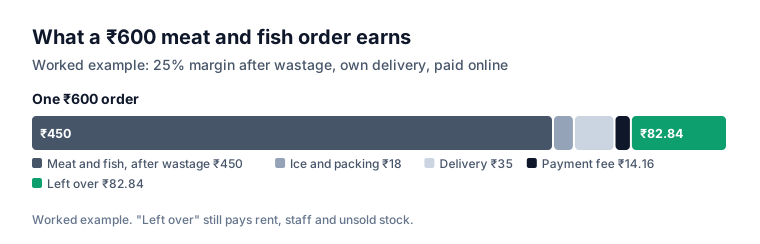
| Worked example: one ₹600 order, paid online | Amount |
|---|---|
| Order value | ₹600.00 |
| Cost of meat and fish, after wastage (an assumption: a 25% margin) | ₹450.00 |
| Ice packs, bags and labels | ₹18.00 |
| Delivery by your own delivery person (an assumption) | ₹35.00 |
| Payment gateway fee (2% plus 18% GST, Razorpay's standard rate) | ₹14.16 |
| Left for rent, staff and unsold stock | ₹82.84 |
This is a worked example. Use your own buying prices and wastage. Two habits protect the margin:
- Work out wastage per product. Weigh what you buy and what you can sell after cleaning and trimming, for a week, and price from the sellable weight.
- Buy for the orders you expect, not for the counter you hope to fill. Unsold fresh stock eats into your margin quickly.
A profit margin calculator helps you test prices.
Step 7: Set cut-off times and delivery slots
Fresh meat and fish work best with a rhythm. Customers order by a set time, you buy and cut for those orders, and deliveries go out in slots.
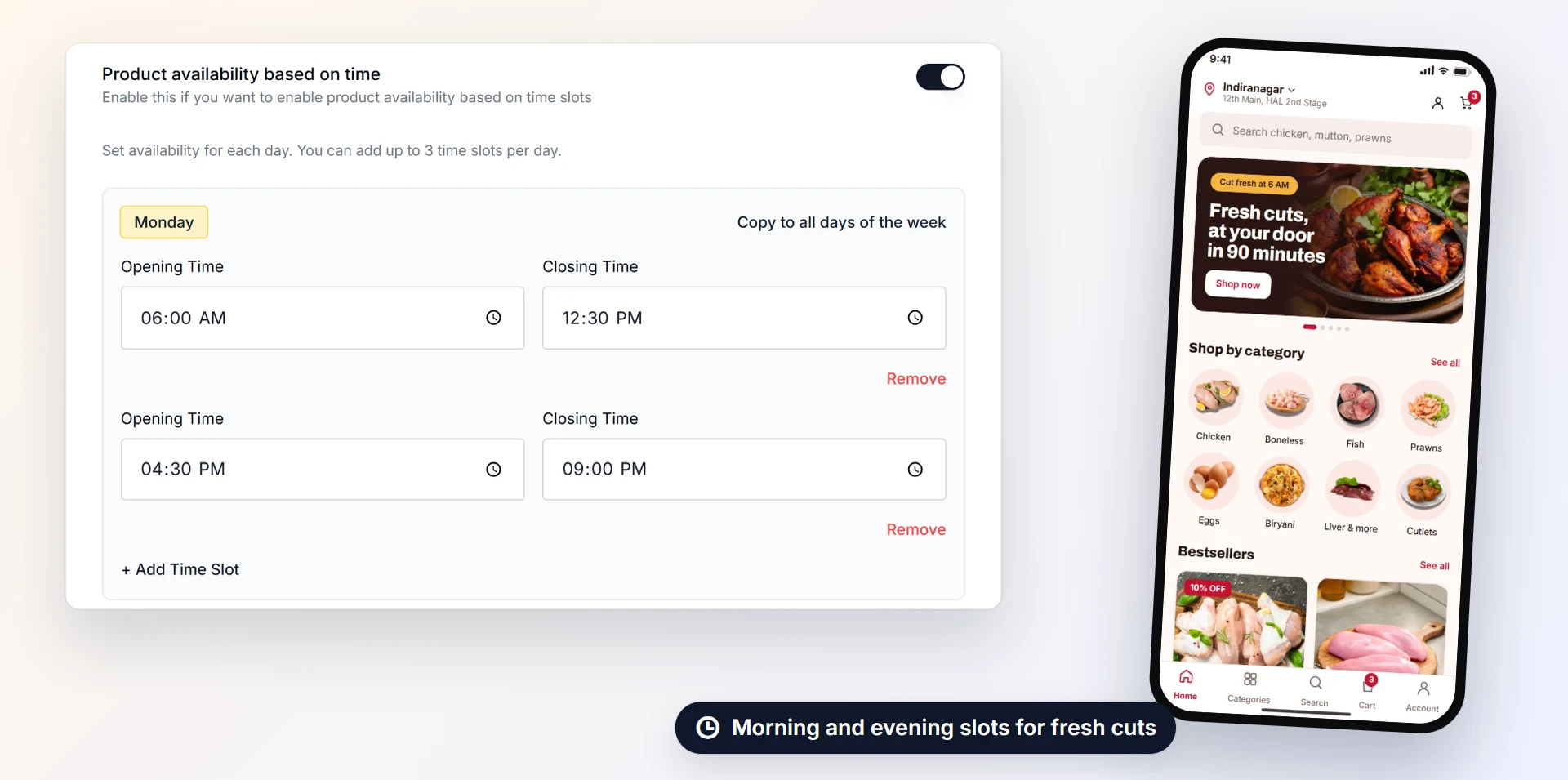
- A cut-off time, such as 10 pm for next-morning delivery, or 11 am for same-day delivery.
- Morning and evening slots, matched to when people cook.
- Per-product hours: some products, such as fish from the morning market, only sell until stock runs out or until a set time.
- Weekends and festivals can bring more orders; check your own order history and plan stock and staff for them.
Step 8: Run delivery so every order arrives cold
Meat and fish delivery is a short-distance job. Use your own delivery team or a local same-day service; a regular courier is too slow for fresh meat.
- Start with 3 to 5 km, and widen the area only when you can keep trips short.
- Group orders by area and slot, so one trip carries several orders.
- Confirm each delivery with an OTP, so there are no "I never got it" disputes.
- Call before leaving for large or first orders paid in cash.
Our guides on setting delivery charges and hiring and managing delivery staff cover fees, pay and the daily routine.
Step 9: Get regular customers
A family that orders every week is worth more to you than one large order.
- Save their usual order, so they can reorder in a few taps.
- Send a short message when fresh fish arrives or a weekend special is ready, to people who agreed to hear from you.
- Reward repeat orders with points or a small cashback.
- Fix complaints fast: replace a bad piece the same day without argument.
Our guide on getting repeat customers goes into reward points, reminders and reorders.
Mistakes to avoid
Buying from an unauthorised source to save money. The meat can be confiscated, and you risk your licence.
Not saying whether the weight is before or after cleaning. It leads to complaints about short weight, and it is easy to prevent.
A delivery area that is too big. Meat that arrives warm can lose you the customer.
Cutting everything in the morning. Cut to order or to expected orders, and keep the rest cold.
Skipping the paperwork. Supplier bills, pest control records and staff medical records are part of the rules, and inspectors ask for them.
Your launch checklist
- FSSAI registration or licence, and the local meat shop licence
- Premises that meet the location, hygiene and cold storage rules
- Authorised suppliers, with every bill filed
- Display refrigerator at 4 to 8 degrees C, and a freezer if you store longer than 48 hours
- Insulated delivery bags and ice packs
- Products listed by weight and cut, with "before or after cleaning" stated
- Prices worked out after wastage, packing, delivery and payment fees
- A cut-off time, delivery slots and a small delivery area
- A reorder and reminder routine for regular customers
How Zepio helps
With Zepio you get your own meat and fish website and Android app with weight options and cuts for each product, selling hours per product for items that run out, cart notes for cleaning instructions, and a delivery app with OTP confirmation for your own team.
Start small, keep it clean and cold, and be honest about weight. Those three things bring meat and fish customers back every week.
Questions people ask
What licence do I need to sell meat online in India?
Can I run a meat delivery business from home?
At what temperature should meat be stored in a shop?
How do I price meat and fish sold online?
How far should a meat delivery business deliver?
Do I need GST registration for a meat shop?
Sources
- Food Safety and Standards (Licensing and Registration of Food Businesses) Regulations, 2011, Schedule 4 Part IV: retail meat shops, FSSAI
- Order on revised turnover thresholds for registration and licensing (13 March 2026), FSSAI
- FoSCoS: FSSAI registration and licensing portal, FSSAI
- Razorpay pricing, Razorpay
Facts were checked against these sources on 20 Oct 2026. Rules and prices change: check the source before you rely on a figure. Read our editorial standards, or write to hi@zepio.io to report a mistake.