
On this page
- What kind of grocery business should you start?
- Step 1: Map your area and your customers
- Step 2: Get your licences in order
- Step 3: Set up suppliers and stock
- Step 4: Choose your first products
- Step 5: Set your delivery area, slots and charges
- Step 6: Get your online store and app
- Step 7: Run deliveries with your own team
- Step 8: Price for profit, not just for sales
- Step 9: Get your first 100 orders
- Mistakes that sink new grocery stores
- Your launch checklist
An online grocery delivery business takes orders for groceries on a website, an app or WhatsApp and delivers them from a shop or small warehouse to homes nearby. The simplest way to start is from a shop you already run: register with FSSAI, put your best-selling products online, deliver inside a small area with your own staff, and tell the customers who already trust you that they can now order from home.
That is the short version. The rest of this guide goes through every step in the order you will need it, with the rules that changed in 2026, worked numbers, and the mistakes that commonly sink new grocery stores.
What kind of grocery business should you start?
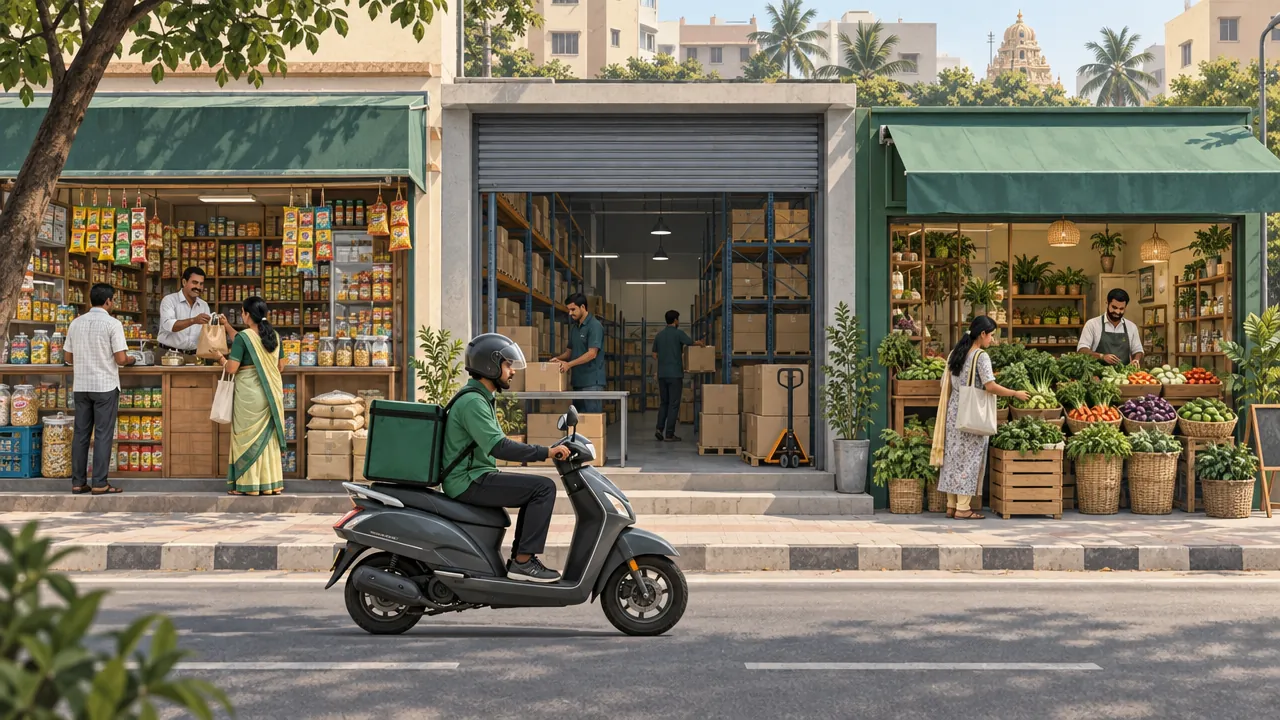
An online grocery business works in one of three ways, and the right one depends on what you already have.
| Model | How it works | Best for | What it costs to start |
|---|---|---|---|
| Shop plus delivery | Your existing shop takes orders online and delivers nearby | Shop owners with regular customers | Low: you already have stock and staff |
| Delivery-only store (dark store) | A small warehouse with no walk-in customers, laid out for fast packing | Dense areas with many orders an hour | Medium to high: rent, stock and staff before sales |
| Speciality store | One category done well, such as organic vegetables, dry fruits or regional foods | Owners with a niche that customers travel for | Low to medium: smaller range, wider delivery area |
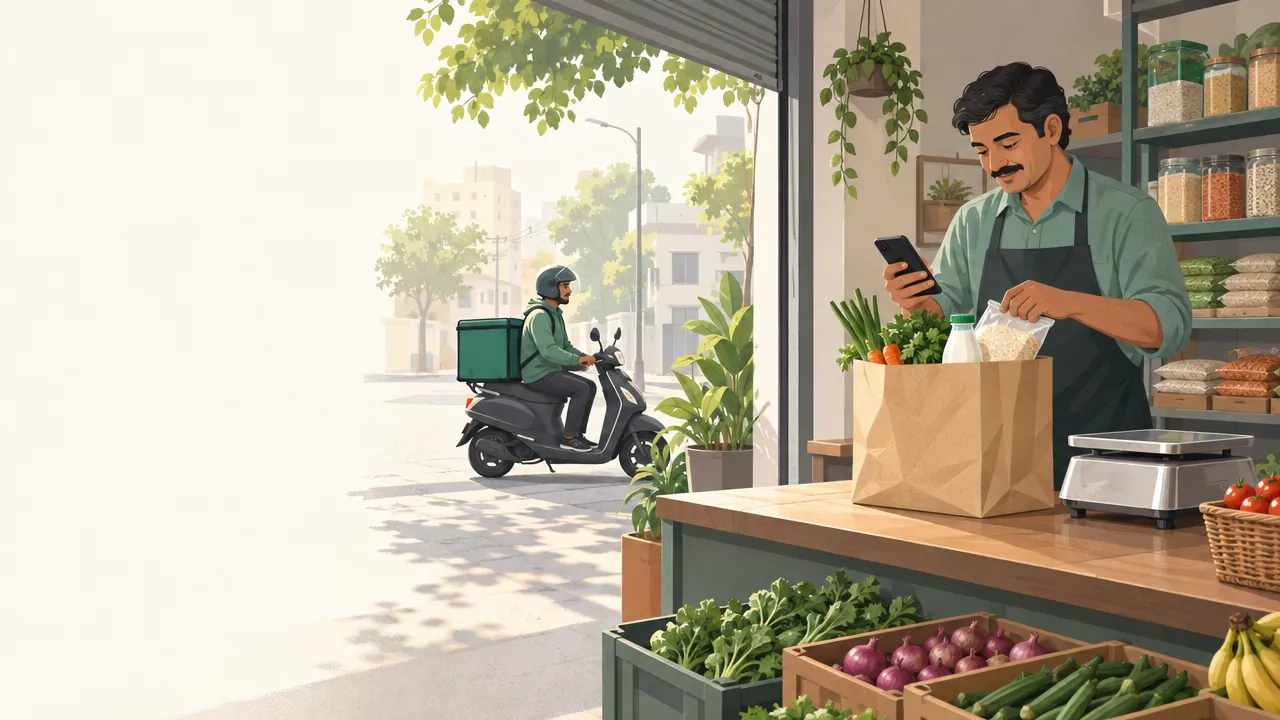
Shop plus delivery is the safest start for most people. You already have suppliers, stock and customers who know you. Going online adds a new way to order, not a second business to fund. Some regular customers may move part of their weekly shopping online, and people nearby can find you through search.
A delivery-only store makes sense when you are sure of demand and want to deliver very fast. These "dark stores" have grown quickly in Indian cities: a Savills India study counted about 2,525 of them across more than 100 cities in October 2025 (Storyboard18). If that is your plan, read our guide on how to start a quick commerce dark store as well.
A speciality store sells fewer products to people who care about them, and can deliver further or ship by courier because the customer is willing to wait for the right product.
Step 1: Map your area and your customers
Before you spend anything, write down who will order and from where.
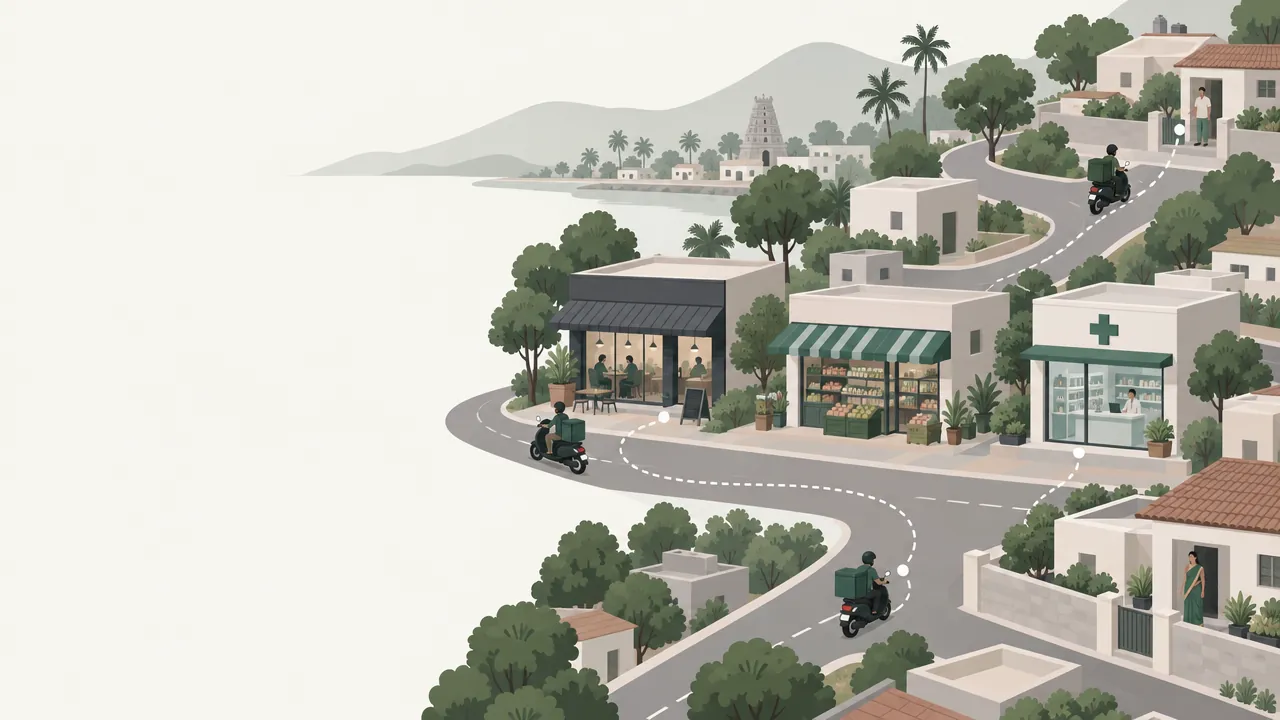
- Draw a 2 to 3 km circle around your shop on a map. Count the apartment blocks, gated societies and busy streets inside it. Grocery delivery works where many homes are close together.
- List what people near you already buy online. Ask ten regular customers which apps they use for groceries and what annoys them: late slots, missing items, minimum orders, substitutions.
- Pick the gap you will fill. It is rarely price. It is usually trust and service: the right brand of atta, fresh vegetables picked by someone who knows them, a shop that calls before substituting, delivery at the same time every morning.
- Decide your hours. A morning slot for milk and bread and an evening slot for the main shop is easier to run than "anytime".
This is also the moment to decide whether you will deliver yourself or use a courier for some orders. For a local grocery store, your own delivery team is usually the better fit; couriers suit speciality products shipped to other cities.
Step 2: Get your licences in order
Selling groceries online needs the same food safety registration as selling them across the counter. The FSSAI rules changed on 1 April 2026, so check guides written before then carefully.
| Registration | Who needs it | Where to apply |
|---|---|---|
| FSSAI registration | Food businesses with a yearly turnover up to ₹1.5 crore | FoSCoS portal |
| FSSAI State licence | Turnover above ₹1.5 crore and up to ₹50 crore | FoSCoS portal |
| FSSAI Central licence | Turnover above ₹50 crore, and some special categories | FoSCoS portal |
| GST registration | Required once your turnover passes your state's limit (₹40 lakh or ₹20 lakh a year for goods, depending on the limit your state chose); some sellers must register from the first sale | GST portal, with your accountant |
| Shop and establishment registration | Most shops and warehouses | Your state labour department or municipal office |
| Weights and measures | Anyone selling loose items by weight | Your state's legal metrology department verifies and stamps your scales |
The new FSSAI limits come from an order dated 13 March 2026 that raised the registration limit from ₹12 lakh to ₹1.5 crore and the State licence limit to ₹50 crore (PIB). For most neighbourhood grocery stores, that means a simple registration instead of a licence.
Note: FSSAI requires food businesses to print their 14-digit FSSAI number on bills, cash memos and invoices (order of 8 June 2021). Show it on your website footer too: food delivery and marketplace platforms ask for it before they list you.
GST needs more care than FSSAI when you start selling online. If you sell only from your own website and app to customers in your state, the normal turnover limit for your state applies. If you sell to other states, or list on a marketplace, you usually need GST registration from the start. Ask your accountant before your first online sale, not after.
Step 3: Set up suppliers and stock
An online order that arrives with three items "not available" loses a customer faster than a slow delivery. Your stock is the real product.
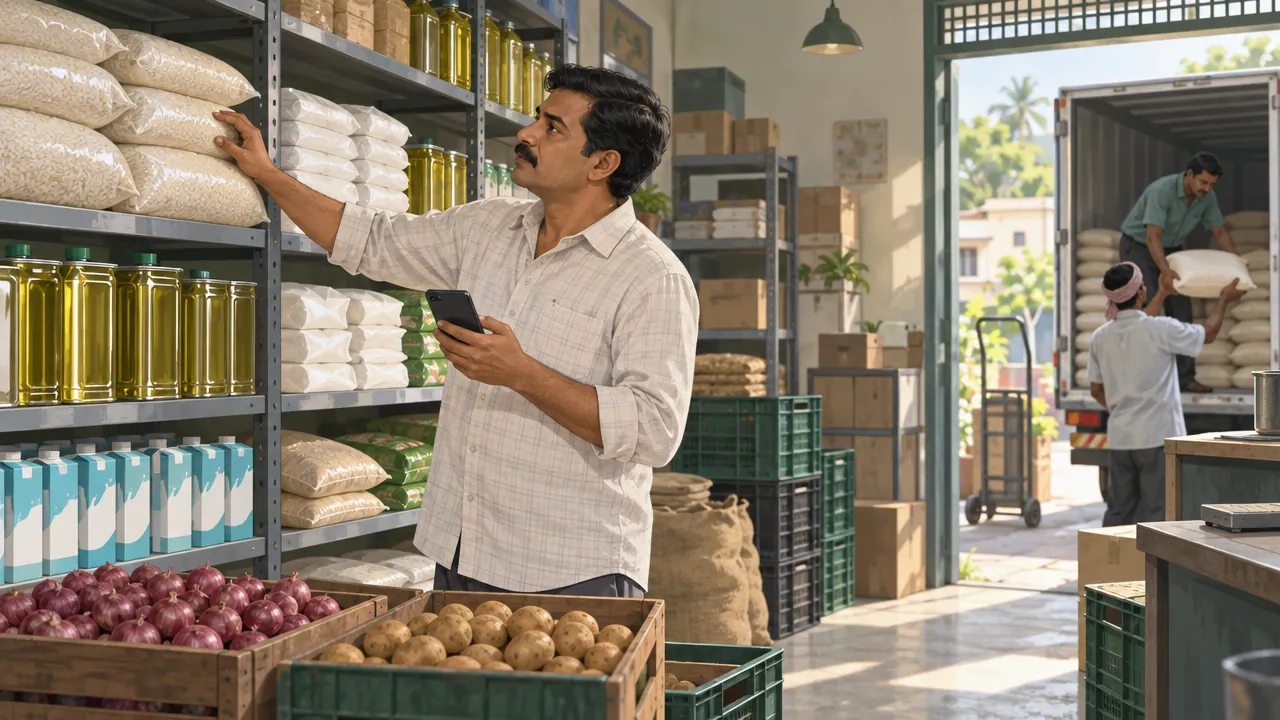
- Start with your current suppliers. Tell them you expect more volume and ask for a fixed delivery day each week.
- Keep a separate shelf for online orders if your shop is busy, so a walk-in customer does not take the last pack of something already sold online.
- Count stock for your top 100 products every day for the first month. Online orders expose gaps that walk-in sales hide.
- Agree a substitution rule and put it on your website: "We call you before replacing an item", or "We never substitute, we refund the item".
- Buy fresh produce daily and only as much as you sold the day before plus a margin. Waste is the hidden cost that turns a profitable grocery business into a loss-making one.
Step 4: Choose your first products
You do not need your whole shop online on day one. Start with what your customers buy every week:
- Staples: rice, atta, dal, oil, sugar, salt, tea.
- Daily items: milk, bread, eggs, curd, paneer.
- Fruits and vegetables, if you can keep them fresh and photograph them well.
- Household basics: cleaning liquids, detergent, soap, bin bags.
- Snacks and drinks, which raise the order value and carry better margins than staples.
A focused list of 200 to 500 products that are always in stock beats 5,000 products where half are missing. Add more each week based on what customers search for and cannot find.
Sell loose items by weight. Give each product clear options, such as 250 g, 500 g and 1 kg, each with its own price, and show the unit next to every price.
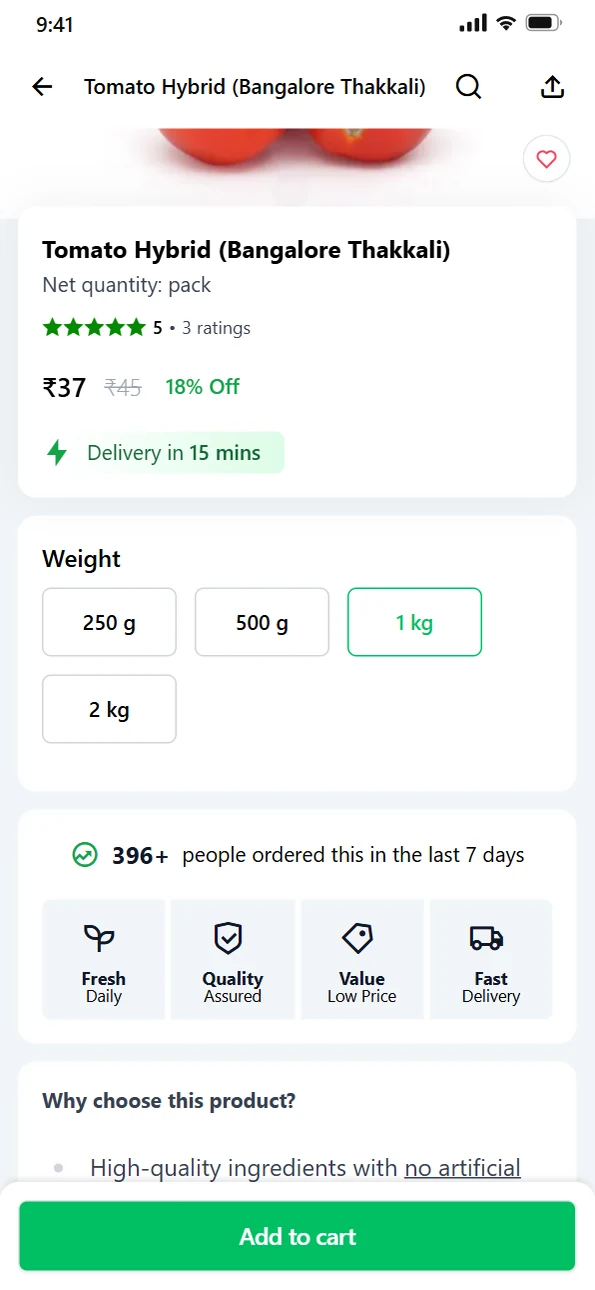
Name products the way customers search. People type "toor dal", "arhar dal" and "tuvar dal" for the same thing, and they make spelling mistakes. Use the name your customers use in the title and add the others to the description, and choose a store with search that copes with typos.
Photograph products properly. A clear photo on a plain background for each product, taken in daylight with a phone, is enough. For packaged goods, a front-of-pack photo helps customers recognise the brand they want.
Step 5: Set your delivery area, slots and charges
Grocery delivery is profitable when orders are close together. A delivery person who drops five orders in one 40-minute loop costs you a fraction of what one 8 km trip for a single basket costs.
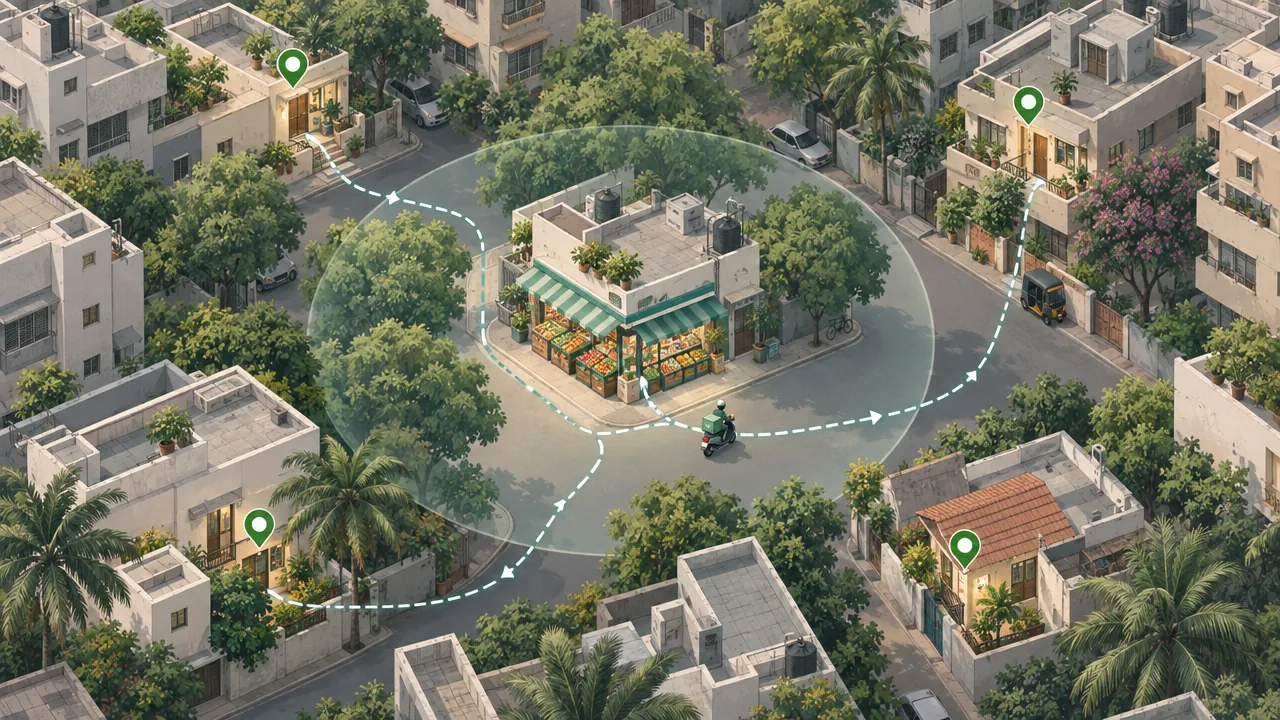
- Start with 2 to 3 km around your shop. Widen it later, area by area.
- Offer fixed slots such as 7 to 9 am and 6 to 9 pm at first. Slots let you batch orders by area.
- Set a minimum order or a free delivery threshold. Small orders can cost more to deliver than they earn.
- Charge by distance if your area is large: a lower fee close by and a higher fee further out.
- Take cash on delivery carefully. Some customers will ask for it; protect yourself with phone verification and a limit on large cash orders.
To set the threshold, divide your delivery cost by your average margin. If a delivery costs you ₹40 (a single trip; batched trips cost less, as in the ₹30 example in Step 8) and your average margin is 15%, orders above about ₹267 pay for their own delivery. Our guide on how to set delivery charges explains each method with worked examples.
Step 6: Get your online store and app
Customers will order from a website, an app or WhatsApp. You need at least the website, and an app is what turns a first order into a weekly habit, because your shop sits on their phone's home screen and can send them a reminder.
What a grocery store needs online:
- Search that fixes spelling mistakes, because people type "tomatos" and "panner".
- Weight and pack-size options on every loose product.
- Reorder from past orders, so the weekly list takes one tap.
- Payments by UPI, cards and cash on delivery.
- Delivery areas and fees that checkout works out on its own.
- An app for your delivery team, so orders reach them without phone calls.
- Your FSSAI number, policies and contact details on the site.
You can hire a developer to build this, or use a store builder that includes it. Hiring a developer means paying for the website, the app and an admin, then paying again every year to keep them working as Android, iOS and payment gateways change. Our guide on how to create a mobile app for your business compares the two in detail.
Step 7: Run deliveries with your own team
For groceries, your own delivery team is usually cheaper and faster than a courier: orders are frequent, close by and time-sensitive. Our guide on hiring and managing delivery staff covers pay, cash and daily routines.
- Give each delivery person an app that shows their orders, the address on a map and the amount to collect.
- Assign orders automatically, so nobody spends the morning calling around to see who is free.
- Confirm every delivery with an OTP from the customer. It settles "I never got my order" disputes in seconds.
- Track cash on delivery per person and settle it at the end of every shift.
- Pack cold items last and keep them in an insulated bag: milk, curd, paneer and frozen food.
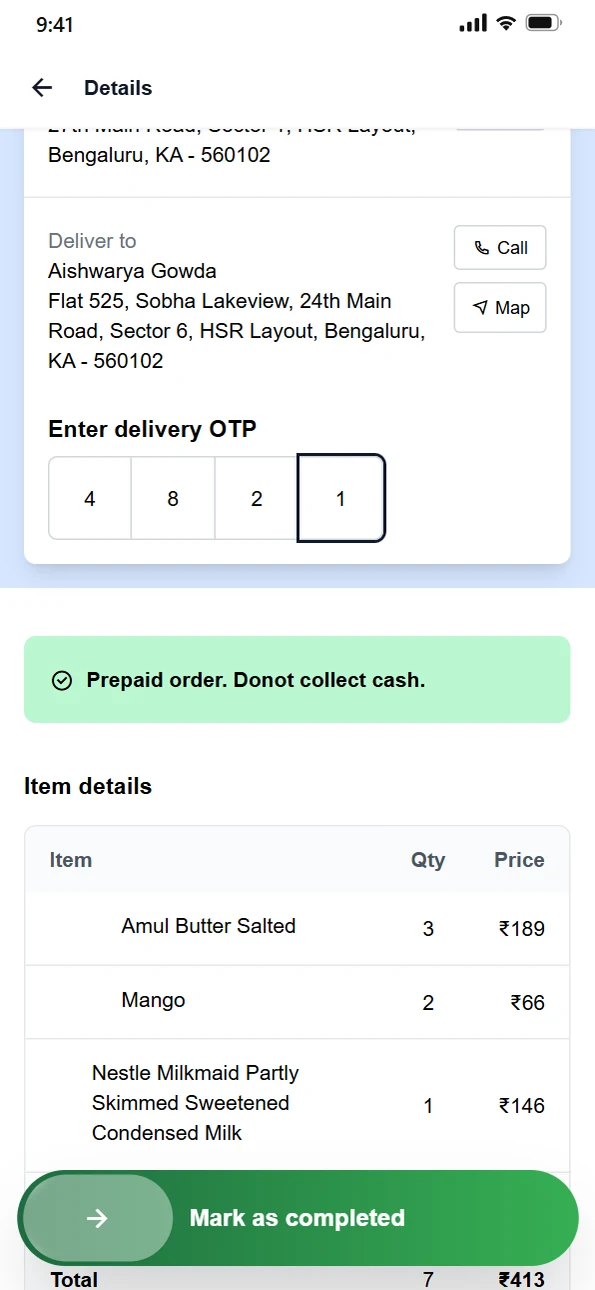
See how Zepio handles delivery zones, your own delivery team and OTP checks.
Step 8: Price for profit, not just for sales
Online prices do not have to match the cheapest app in your city. Your customers pay for convenience, freshness and a shop they trust. What you must do is make sure each order earns money after delivery and payment charges.
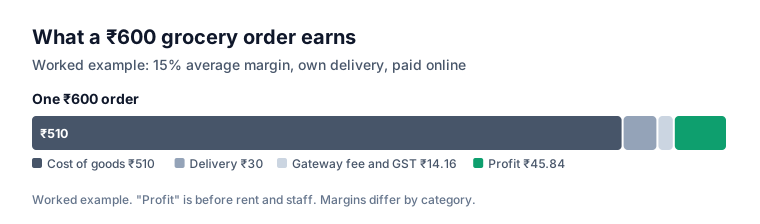
Work out three numbers for your store:
- Average margin across a typical basket. Staples such as rice and oil carry thin margins; snacks, personal care and fresh produce usually carry more. A profit margin calculator helps.
- Cost per delivery: what you pay a delivery person per trip, divided by the orders in that trip.
- Payment charges: online payment gateways charge a fee on each payment. Razorpay's standard rate, for example, is 2% plus GST on the fee (Razorpay).
If those three leave you less than you need, change the mix rather than the price of staples: promote higher-margin categories, set a free delivery threshold that encourages larger baskets, and keep the delivery area tight.
Step 9: Get your first 100 orders
Your first customers are the people who already shop with you. Spend your first month on them before you spend on ads.
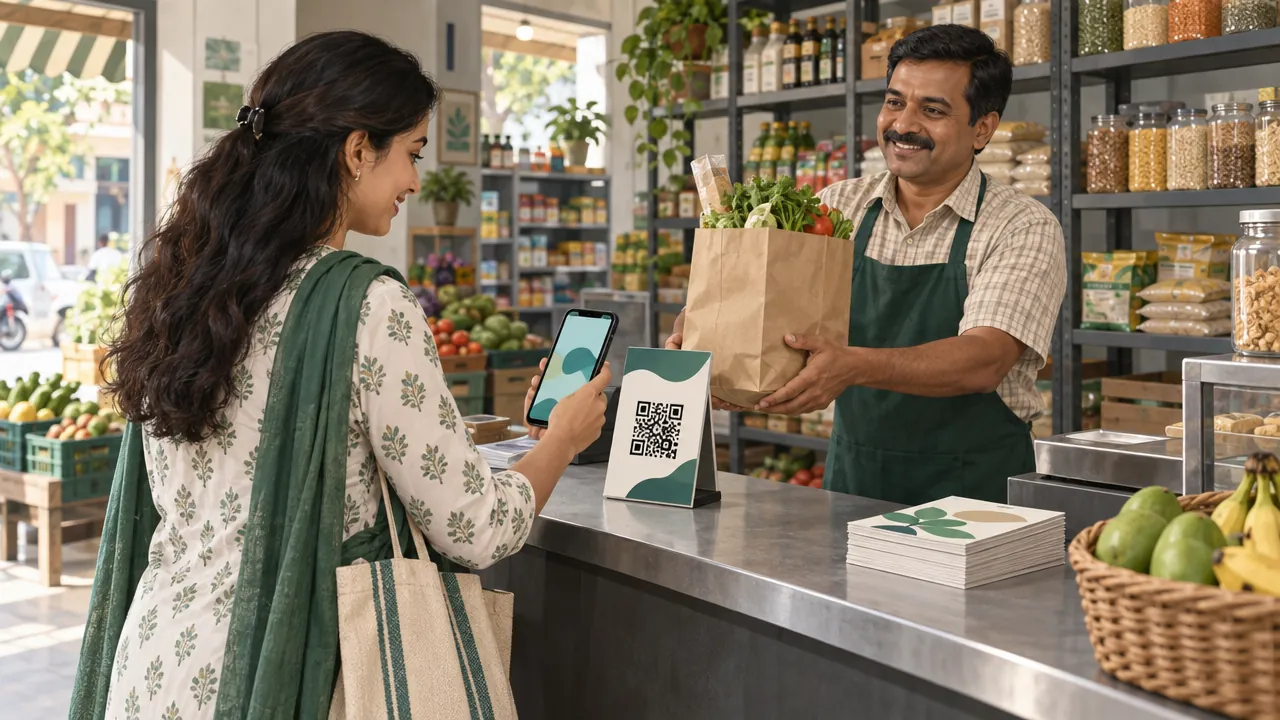
- Put a QR code at the counter that opens your store. Make one with a free QR code generator.
- Add a small flyer to every bag for two weeks, with the link and a first-order offer.
- Send one WhatsApp message to your customer contacts with the link and the delivery hours. Do not spam; one clear message works better than five.
- Ask your housing societies whether you can put up a notice or post once in their resident group.
- Use push notifications from your app for the second order: "Fresh mangoes in today", "Your weekly list is one tap away".
Track where each first order came from. If most come from the counter QR code, put your effort there.
Mistakes that sink new grocery stores
Listing products you cannot deliver. A long catalogue with gaps leads to cancelled items and refunds. Start small and always in stock.
Delivering too far, too soon. A 6 km area with few orders means one order per trip and a loss on every delivery. Grow outward only when the first area is busy.
Free delivery on every order. It wins first orders and loses money on each small one. Use a threshold.
No substitution rule. Customers hate surprise replacements. Ask first, or refund.
Treating online orders as second priority. If walk-in customers always come first, online orders go out late and stop coming. Give online orders a person, a shelf and fixed slots.
Your launch checklist
- FSSAI registration, number shown on your website and invoices
- GST registration if you need it, checked with your accountant
- Scales verified and stamped for loose items
- 200 to 500 products online with photos, prices, weights and search-friendly names
- Delivery area, slots, delivery fee and free delivery threshold set
- Payment gateway connected, plus cash on delivery with phone verification
- At least one delivery person with the delivery app and OTP confirmation
- A test order placed, packed and delivered to a friend
- QR code at the counter, flyers in bags, one message to your customers
Start small, deliver well and widen your area once your first customers order a second time. That repeat order is the clearest sign the business works; our guide on getting repeat customers shows how to earn more of them.
Questions people ask
Do I need a licence to sell groceries online in India?
How much money do I need to start an online grocery business?
How far should a grocery shop deliver?
Is an online grocery business profitable?
Should I build my own grocery app or use an app builder?
Can I run my own deliveries instead of using a delivery company?
Sources
- Order on revised turnover thresholds for registration and licensing (13 March 2026), Food Safety and Standards Authority of India
- Union Health Ministry approves major regulatory reforms to promote ease of doing business, Press Information Bureau, Government of India
- FoSCoS: FSSAI registration and licensing portal, FSSAI
- 7,500 dark stores, 100+ cities: quick commerce fuels a new urban asset class (Savills India data), Storyboard18
- Razorpay pricing, Razorpay
- Major decisions taken by the GST Council in its 32nd meeting (₹40 lakh threshold for goods), Press Information Bureau (hosted by the GST Council)
- FSSAI order mandating the licence or registration number on receipts and invoices, SCC Online
Facts were checked against these sources on 19 Oct 2026. Rules and prices change: check the source before you rely on a figure. Read our editorial standards, or write to hi@zepio.io to report a mistake.