
On this page
- What should you bake first?
- What you need to start
- Step 1: Register with FSSAI
- Step 2: Price every bake properly
- Step 3: Take orders without endless messages
- Step 4: Handle custom orders without surprises
- Step 5: Plan your baking week
- Step 6: Keep every bake safe to eat
- Step 7: Deliver cakes safely
- Step 8: Photograph your bakes so they sell
- Step 9: Grow with repeat customers
- Mistakes home bakers make
- Your launch checklist
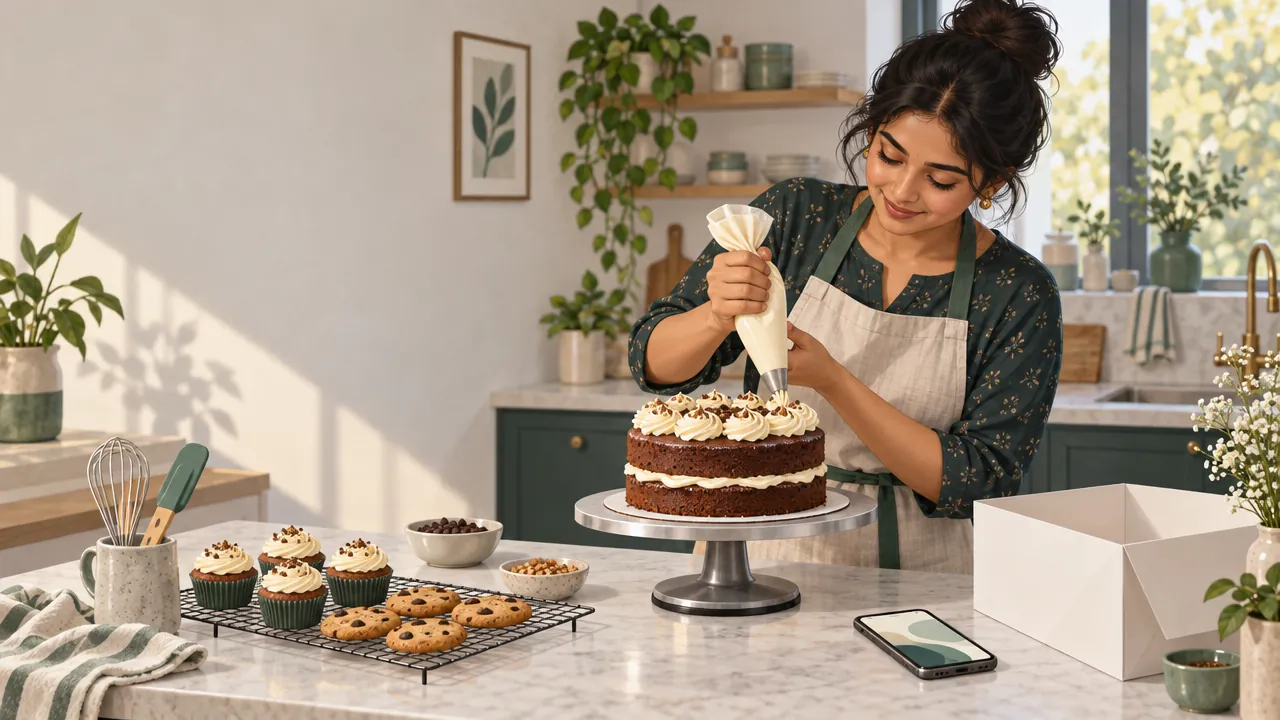
A home bakery is a baking business run from your own kitchen, selling cakes, cookies, breads or desserts to customers nearby. To start one, choose a few bakes you can make perfectly every time, register with FSSAI, work out a price that covers every cost including your time, and take orders online so each one arrives with the date, the cake message and the payment already sorted.
This guide covers each step, with a worked example of how to price a cake and the mistakes that cost home bakers the most.
What should you bake first?
Customers remember a home baker for one thing. "The person who makes the best chocolate truffle cake in the area" gets more referrals than "someone who bakes everything". Start narrow and add bakes as your regulars ask for them.
Good first products:
- Celebration cakes in two or three flavours and two sizes (half kilogram and one kilogram).
- Eggless versions, which many customers look for. Mark them clearly.
- Cupcakes, brownies and cookies: quicker to bake, easy to deliver, and good for gifting.
- Tea cakes, rusks or cookies in jars, which keep for days and can be shipped further.
Write down exactly how you make each one, with weights, oven temperatures and times, so the tenth cake tastes like the first. Consistency is what earns repeat orders.
What you need to start
You can start a home bakery with the kitchen you have, but a few things make the difference between baking for family and baking for paying customers every day.
| Item | Why you need it |
|---|---|
| An oven you know well | Consistent results depend on knowing your oven's hot spots and real temperature; an oven thermometer helps |
| A digital kitchen scale | Weighing ingredients, not using cups, keeps every cake the same |
| Cake tins in your standard sizes | Two or three sizes you sell most, so portions and prices stay fixed |
| A turntable, palette knives and piping tips | For clean, repeatable decorating |
| Fridge space for cakes | Cream cakes must be chilled before decorating and before delivery |
| Boxes, base boards and labels | Bought in bulk, in the sizes you sell |
| A clean, separate work area | Away from everyday cooking, with ingredients stored in sealed containers |
Budget for your first month of ingredients, packaging in bulk and good photos of your bakes. If you already bake at home, you probably own the larger equipment; add to it as orders grow.
Step 1: Register with FSSAI
A home baker is a food business and needs FSSAI registration before selling. From 1 April 2026, FSSAI registration covers a yearly turnover up to ₹1.5 crore, a limit few home bakeries will reach. You apply online on the FoSCoS portal. If you also cook meals, see how to start a cloud kitchen from home.
Also check:
| What | Why it matters |
|---|---|
| GST | Needed once your turnover passes your state's limit. Ask an accountant before you start invoicing. |
| Housing society rules | If customers or delivery partners will come to your door, check your society allows it. |
| Labels on packaged bakes | Pre-packaged items such as cookies in jars need a proper label. FSSAI's labelling rules require, among other things, the veg or non-veg mark and the date of manufacture and use-by date (FSSAI). |
| Your FSSAI number | FSSAI requires it on bills and invoices, and packaged food carries the FSSAI logo and number on the label (labelling rules). Show it on your website too. |
Note: Fresh cakes made to order and delivered the same day are handled differently from packaged goods sold off a shelf. Read the labelling rules for anything you package in advance, and when unsure, ask a food consultant.
Step 2: Price every bake properly
Many home bakers undercharge because they only count ingredients. A proper price covers everything that goes into the cake, including the hours you spend on it.
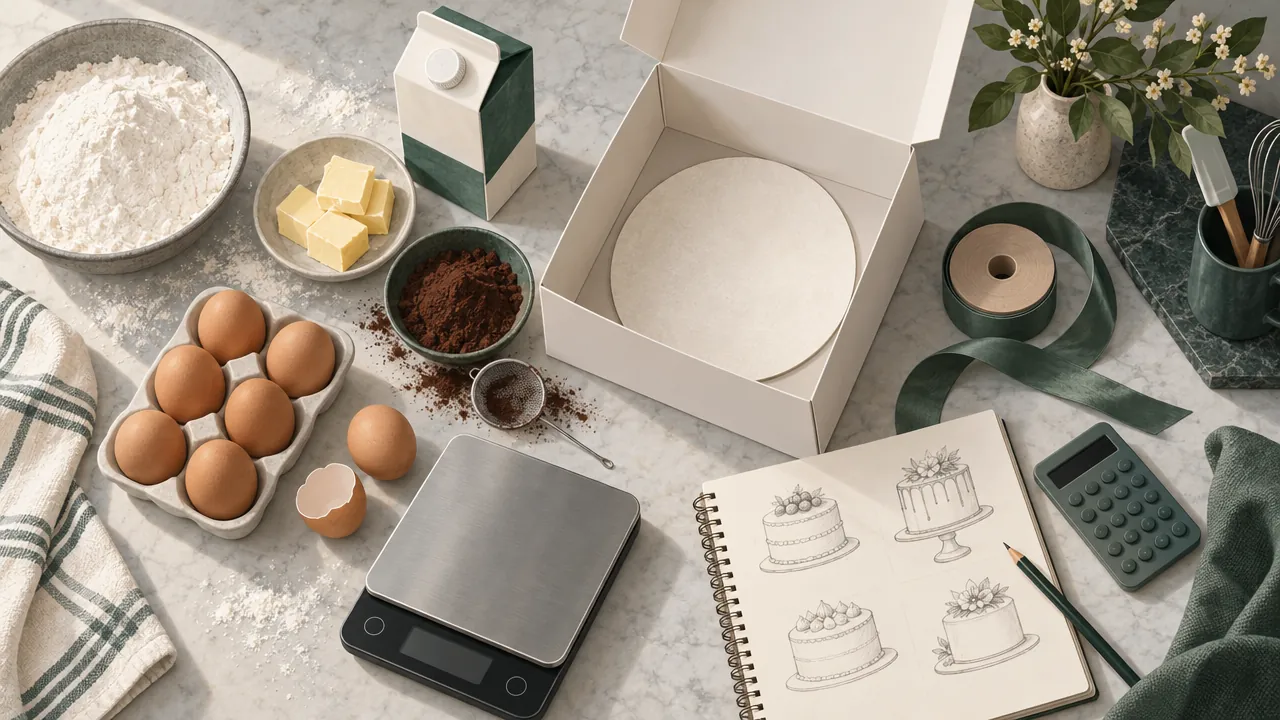
Here is what goes into a 1 kg cream cake sold for ₹1,200, as a worked example:
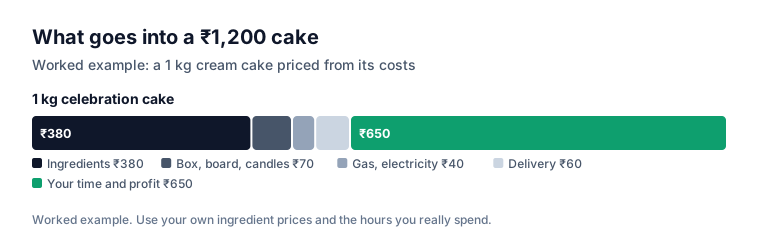
| Cost | What to count |
|---|---|
| Ingredients | Flour, butter, cream, sugar, chocolate, flavouring, decorations, by weight used |
| Packaging | Cake box, base board, candles, knife, ribbon |
| Gas and electricity | Oven and stove time for the cake |
| Delivery | Fuel, or what you pay a delivery person or service |
| Your time | Baking, cooling, decorating, packing and messages; a cream cake often takes three hours |
| Profit | What makes the business worth running |
A simple pricing method that works:
- Price standard cakes per kilogram from the table above.
- Add a fixed design charge for custom work: fondant figures, photo prints, extra tiers, special colours.
- Charge delivery separately by distance, so far-away orders do not eat your profit. See how to set delivery charges.
- Check your margin with a profit margin calculator whenever ingredient prices change. Butter and cream prices move often.
Tip: Never price below a nearby bakery to win orders. Price for quality and service, and give customers a reason to pay it: better ingredients, eggless options done well, on-time delivery.
Step 3: Take orders without endless messages
Many home bakers start on Instagram and WhatsApp. It works for the first few orders, then the messages pile up: flavour, size, message on the cake, delivery date, time, address, payment screenshot. One missed detail ruins a birthday.
An online store solves this, because the customer fills in everything at checkout:
- The cake, size and flavour they picked from your menu.
- The message to write on the cake, typed by the customer.
- The delivery date and time they chose, so you can plan your baking week.
- Payment received by UPI or card before you start baking.
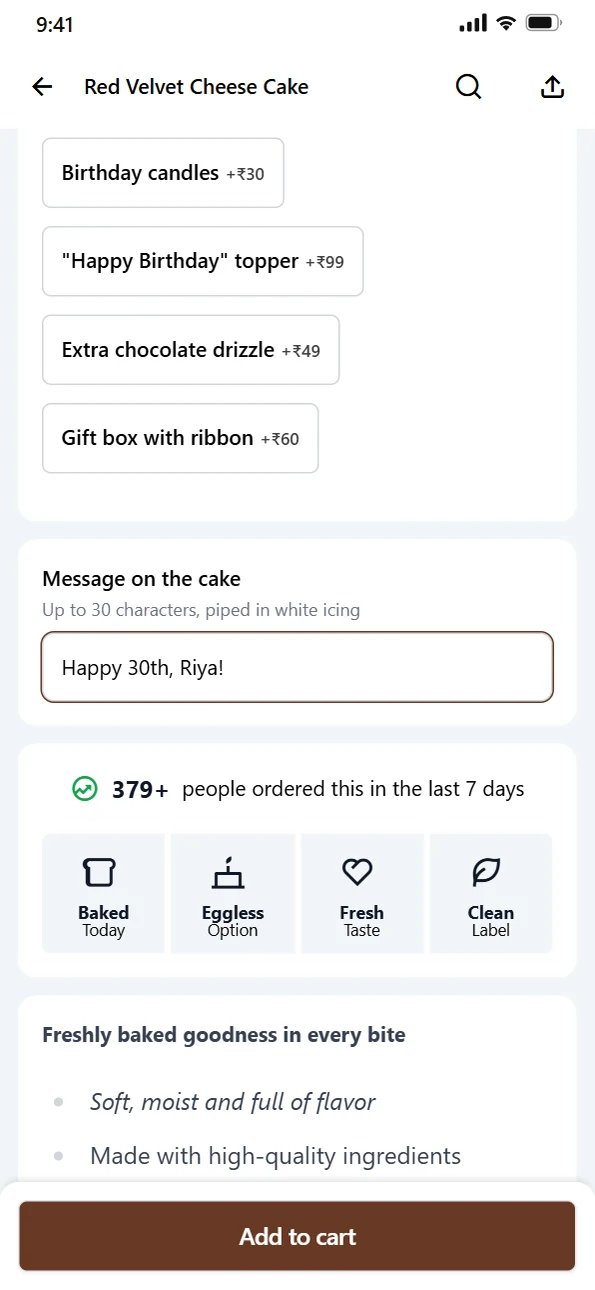
Keep Instagram for showing your work, and point every enquiry to your store link. You stop being an order-taker and get back to baking.
Step 4: Handle custom orders without surprises
Custom cakes are where home bakers earn the most and lose the most. A clear process protects both sides.
- Ask for a reference photo and agree what you will and will not copy. Say plainly if a design needs a different size or more time.
- Confirm the details in writing: flavour, size, design, message, colours, delivery date and time, and the final price.
- Take an advance for custom work. A common rule is full payment for standard cakes and at least half up front for custom designs.
- Set a change cut-off, such as no design changes within 24 hours of delivery.
- Send a photo before dispatch so the customer sees the cake before it travels.
Write your cancellation and refund rules on your store, and stick to them. A free return and refund policy generator gives you a starting draft to adapt.
Step 5: Plan your baking week
Custom cakes need time. Set clear rules and show them on your store:
- Order at least 24 to 48 hours ahead for custom cakes; longer for tiered cakes.
- Close orders for a date when you are fully booked, instead of squeezing one more in.
- Same-day orders only for ready bakes, such as brownies and cupcakes, and only before a fixed time of day.
Every evening, look at the orders for the next few days. Buy ingredients for the next two days, not the next month, so cream and butter stay fresh and nothing goes to waste.
Plan around the festival calendar
Demand for home bakes peaks around occasions. Announce special menus one to two weeks ahead and open pre-orders, so you can buy and bake to plan instead of guessing.
| Occasion | What sells |
|---|---|
| Birthdays and anniversaries | Celebration cakes all year: your steady base |
| Raksha Bandhan | Gift boxes, cookies, brownie hampers |
| Diwali | Gift hampers, cookie tins, fusion sweets, corporate boxes |
| Christmas and New Year | Plum cakes, cookies, party cakes |
| Valentine's Day | Heart cakes, cupcake boxes, chocolates |
| Mother's Day and Father's Day | Small cakes and gift boxes |
Tip: Corporate gift boxes for Diwali and New Year can be some of the largest orders a home bakery takes. Reach out to local offices in early October.
Step 6: Keep every bake safe to eat
Cream, butter and fresh fruit spoil quickly in Indian summers. A single upset stomach can end a home bakery's reputation, so treat food safety as part of the recipe.
- Keep cream cakes chilled until they leave, and tell customers to refrigerate them if they will not be eaten within a couple of hours.
- Store ingredients in sealed containers and use the oldest stock first.
- Separate eggless and egg-based work: different bowls, beaters and trays, cleaned between uses, so eggless orders stay eggless.
- Label allergens such as nuts, gluten and dairy on your menu, and ask about allergies on custom orders.
- Wash hands, cover hair and keep pets out of the baking area.
Step 7: Deliver cakes safely
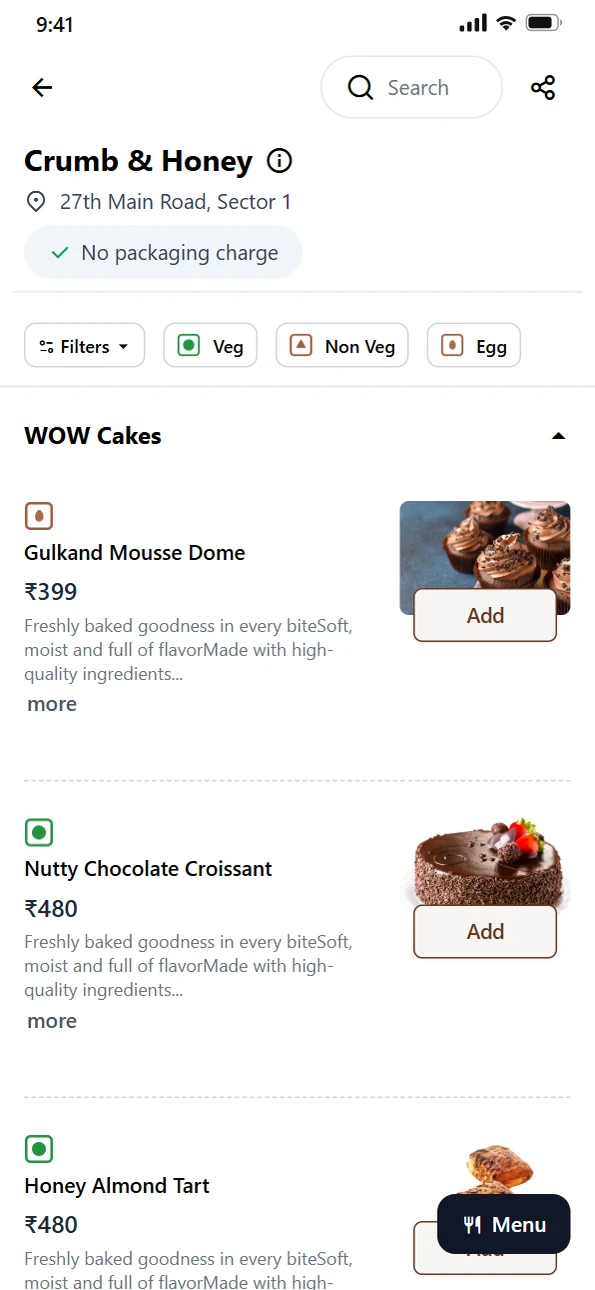
A perfect cake that arrives squashed is a lost customer, and often a refund.
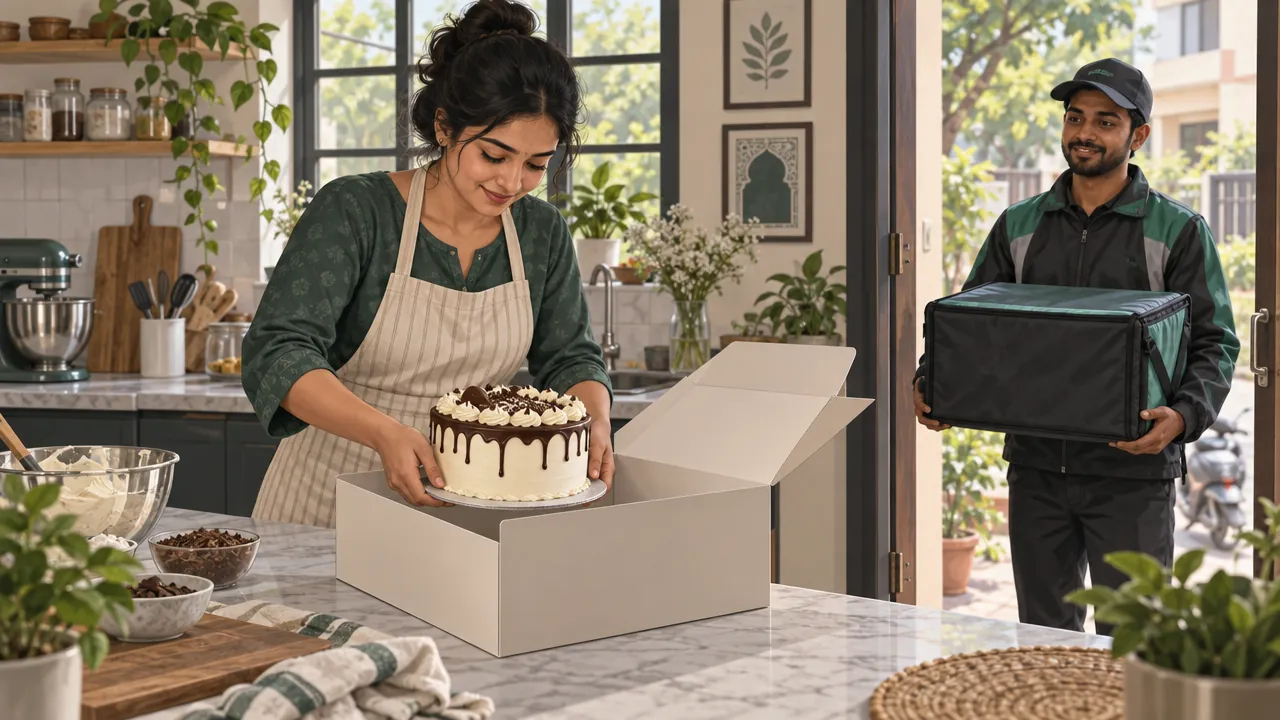
- Chill cream cakes for at least an hour before they leave.
- Use a sturdy box with a base board, one size larger than the cake, and secure the cake to the board.
- Keep the box flat, on the floor of a car or in a flat carrier on a two-wheeler, never on a lap or a seat.
- Deliver fresh cream cakes only in a small area, and ship only dry bakes, sealed and labelled, further away.
- Send a photo of the finished cake before it leaves. It reassures the customer and protects you if the delivery goes wrong.
Step 8: Photograph your bakes so they sell
Your photos are your shop window. Customers decide in a second whether a cake looks worth the price.
- Shoot in daylight near a window, never under a yellow kitchen bulb.
- Use a plain background: a white board, a wooden table or a soft-coloured cloth.
- Take three angles: the whole cake from the front, a slightly-above view, and a cut slice showing the layers.
- Show the real size with a knife or a cup beside the cake, so customers know what they are buying.
- Keep the style consistent across your menu, so your store looks like one brand.
Step 9: Grow with repeat customers
Birthdays come every year. A customer who loved one cake will order again if you remind them at the right time. Our guide on getting repeat customers has more ways to bring them back.
- Ask for the occasion and the date when they order, with permission to contact them.
- Send a reminder a week before next year's date, with a small offer.
- Put a card in every box with your store link and your WhatsApp number.
- Ask happy customers for a review and a photo you can share.
- Add seasonal bakes for festivals and holidays, announced a week or two before.
Mistakes home bakers make
Pricing from ingredients alone. Your hours and the packaging are real costs. Price for them.
Taking every order. Overbooking leads to rushed decorating and late deliveries. Close dates when you are full.
Orders in chat. Details get lost. Use a store so every order is complete and paid.
Delivering cream cakes far away. Heat and bumpy roads ruin them. Keep fresh cakes local.
No eggless option. Many customers will not order without one. Make it as good as the original.
Your launch checklist
- FSSAI registration on FoSCoS, number on your website, invoices and boxes
- Recipes written down with weights, temperatures and times
- A menu of a few cakes in two sizes, with eggless versions marked
- Prices worked out from every cost, plus a design charge for custom work
- An online store with sizes, flavours, a cake message field and delivery dates
- Order rules on the store: notice period, same-day cut-off, delivery area
- Boxes, base boards and a flat carrier for delivery
- A reminder list for next year's birthdays
Start with a few bakes you are proud of, take orders properly from the first week, and let each happy customer bring you the next one.
Questions people ask
Do I need FSSAI registration to sell cakes from home?
How should I price a homemade cake?
How far in advance should customers order a custom cake?
How do I deliver cakes without damaging them?
Can I sell homemade cookies and cakes in other cities?
Where should a home baker sell online?
Sources
- Order on revised turnover thresholds for registration and licensing (13 March 2026), FSSAI
- FoSCoS: FSSAI registration and licensing portal, FSSAI
- FSSAI prescribes labelling requirements of pre-packaged foods and display (2020), FnBnews.com (hosted on fssai.gov.in)
- FSSAI order mandating the licence or registration number on receipts and invoices, SCC Online
Facts were checked against these sources on 19 Oct 2026. Rules and prices change: check the source before you rely on a figure. Read our editorial standards, or write to hi@zepio.io to report a mistake.